
A gas oven that will not heat can turn dinner plans into a frustrating guessing game. Learning how to test oven igniter operation can help you narrow down the problem before scheduling service, but the test should always begin with safety. An igniter works around electricity, gas, and high heat, so a careful visual check is often appropriate for a homeowner, while electrical testing and replacement may be better left to a qualified technician.
Most modern gas ovens use a hot-surface igniter, also called a glow-bar igniter. When the oven is set to bake, this small part glows orange or yellow-white, draws electrical current, and opens the gas safety valve. If it cannot draw enough current, the valve may not open even when the igniter appears to glow.
Start With Safety Before Testing an Oven Igniter
Turn all oven controls off before inspecting the appliance. Let the oven cool completely, especially if it was recently used. If you need to remove oven racks, a bottom panel, or an interior cover to see the igniter, unplug the range first or switch off power at the breaker.
Avoid testing an igniter with an open gas connection, damaged wiring, or a strong gas odor. If you smell gas, stop immediately. Do not operate switches, use a flame, or continue troubleshooting. Leave the area and contact your gas provider or emergency services from a safe location.
A gas oven igniter is fragile. Its ceramic body can crack if bumped, and oil from bare fingers can shorten the life of some replacement igniters. During a visual inspection, handle surrounding panels carefully and avoid touching the igniter element unless necessary.
How to Test Oven Igniter Operation by Watching It
The simplest test is to observe what happens during a normal bake cycle. Restore power, close the oven door if your model requires it, and set the oven to a moderate baking temperature. Look through the oven window or carefully observe from a safe position.
A healthy hot-surface igniter usually begins glowing within 30 to 90 seconds. Shortly afterward, you should hear a soft click or whoosh as gas reaches the burner and ignites. The burner should light evenly, producing a steady blue flame. Once the oven reaches temperature, the burner may cycle on and off to maintain heat.
If the igniter does not glow at all, the problem could be the igniter itself, a failed control, a broken wire, a thermal fuse, or a power supply issue. A no-glow condition does not automatically prove that the igniter is bad.
If the igniter glows but the burner never lights, or takes more than 90 seconds to light, a weak igniter is a common cause. This is one of the most misunderstood oven failures. The igniter can look bright enough to the eye but still fail to pull the electrical current needed to open the gas valve.
What the glow color can tell you
A working igniter generally glows bright orange to yellow-white. A dull red glow, slow warm-up, or intermittent glow can point to a weakened part. Still, color alone is not a final diagnosis. Different igniter designs and oven interiors can make the glow appear slightly different.
Pay attention to the burner, not only the igniter. If the burner lights late with a small puff of ignition, shuts off quickly, or heats unevenly, the oven needs attention. Delayed ignition can allow gas to build up briefly before lighting, which is not a problem to ignore.
Inspect the Igniter and Burner Assembly
After turning off power and allowing the oven to cool, remove the oven racks. On many ranges, the igniter sits beneath the bottom oven panel near the burner tube. Some models have a removable flame spreader or shield over the burner. Consult the appliance’s use and care information for the correct panel arrangement, since forcing a panel can damage it.
Look for visible cracks, chips, burned spots, loose mounting screws, or damaged wire insulation. A cracked igniter should be replaced. Check the burner holes for grease, food debris, or corrosion as well. A blocked burner can cause uneven flame or poor ignition even when the igniter is working properly.
Do not scrape aggressively at burner openings or push objects into them. That can change the flow of gas or damage the burner. A light cleaning with a soft brush after the appliance is cool may remove loose debris, but serious corrosion or a damaged burner calls for professional service.
Testing With a Multimeter: What It Can and Cannot Prove
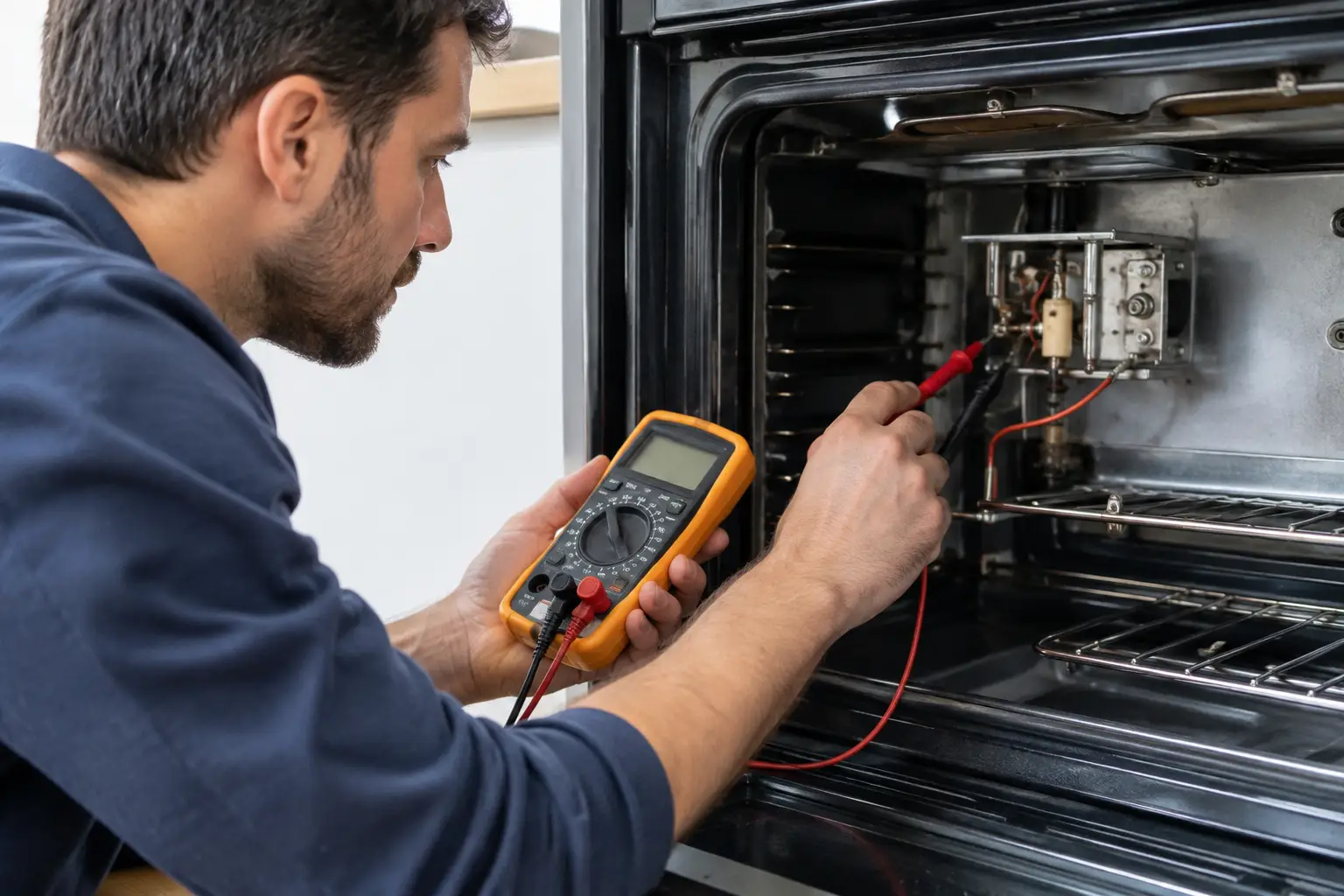
A multimeter can help test an igniter for electrical continuity, but it is not always enough to diagnose a weak hot-surface igniter. An igniter can show continuity and still fail under operating conditions because it does not draw sufficient amperage.
If you are comfortable working around appliance wiring, disconnect electrical power before accessing the igniter connector. Separate the igniter from its wire harness, then use the meter’s resistance setting to check across the igniter terminals. An open reading or no continuity often indicates a failed igniter.
Exact resistance ranges vary by manufacturer and igniter style, so do not rely on one universal number. The more meaningful professional test is an amperage draw test while the igniter is operating. That test requires live voltage and proper equipment, which creates a real shock and gas-ignition risk. For most homeowners, this is the point where scheduling a diagnostic is the safer and more cost-effective choice.
Spark igniters are different
Not every gas oven uses a glow-bar system. Some models use a spark igniter that creates a visible spark and clicking sound near the burner. With these systems, problems may involve the spark electrode, spark module, wiring, burner grounding, or gas valve.
Do not assume a clicking oven has a bad igniter. If you see a spark but no flame, the issue could also be gas flow, a clogged burner, or a valve problem. Because these components work together, a technician can prevent an unnecessary part replacement by testing the full ignition system.
Common Signs the Oven Igniter Needs Replacement
An igniter does not always fail suddenly. Many become weaker gradually, which is why an oven may work one week and struggle the next. The following symptoms make an igniter issue more likely:
- The oven takes longer than usual to begin heating.
- The igniter glows, but the burner does not light.
- The burner lights only after several minutes or with a delayed whoosh.
- The oven heats inconsistently or cannot reach the selected temperature.
- The igniter is visibly cracked, chipped, or burned.
These signs can overlap with a faulty gas valve, electronic control, thermostat sensor, or burner assembly. Replacing an igniter without a proper diagnosis can waste money, especially when the original part was not the real problem.
When to Call for Professional Oven Repair
Call for service if there is a gas smell, delayed ignition, damaged wiring, repeated breaker trips, or uncertainty about accessing the igniter safely. It is also smart to call when the igniter glows but the oven will not heat. A technician can test current draw, inspect the safety valve, verify burner operation, and confirm that the oven reaches and holds the correct temperature.
For Tampa Bay homeowners, Tampa Bay Appliance Repair provides in-home diagnostics for gas and electric oven problems across major makes and models. The diagnostic fee applies toward the repair, helping you make a clear decision without being pressured into replacing an appliance that may still have plenty of useful life left.
An oven that hesitates to light is asking for attention, not necessarily replacement. A careful observation of the ignition cycle can give you useful information, and timely professional testing can keep a small heating issue from becoming a bigger disruption at home.