
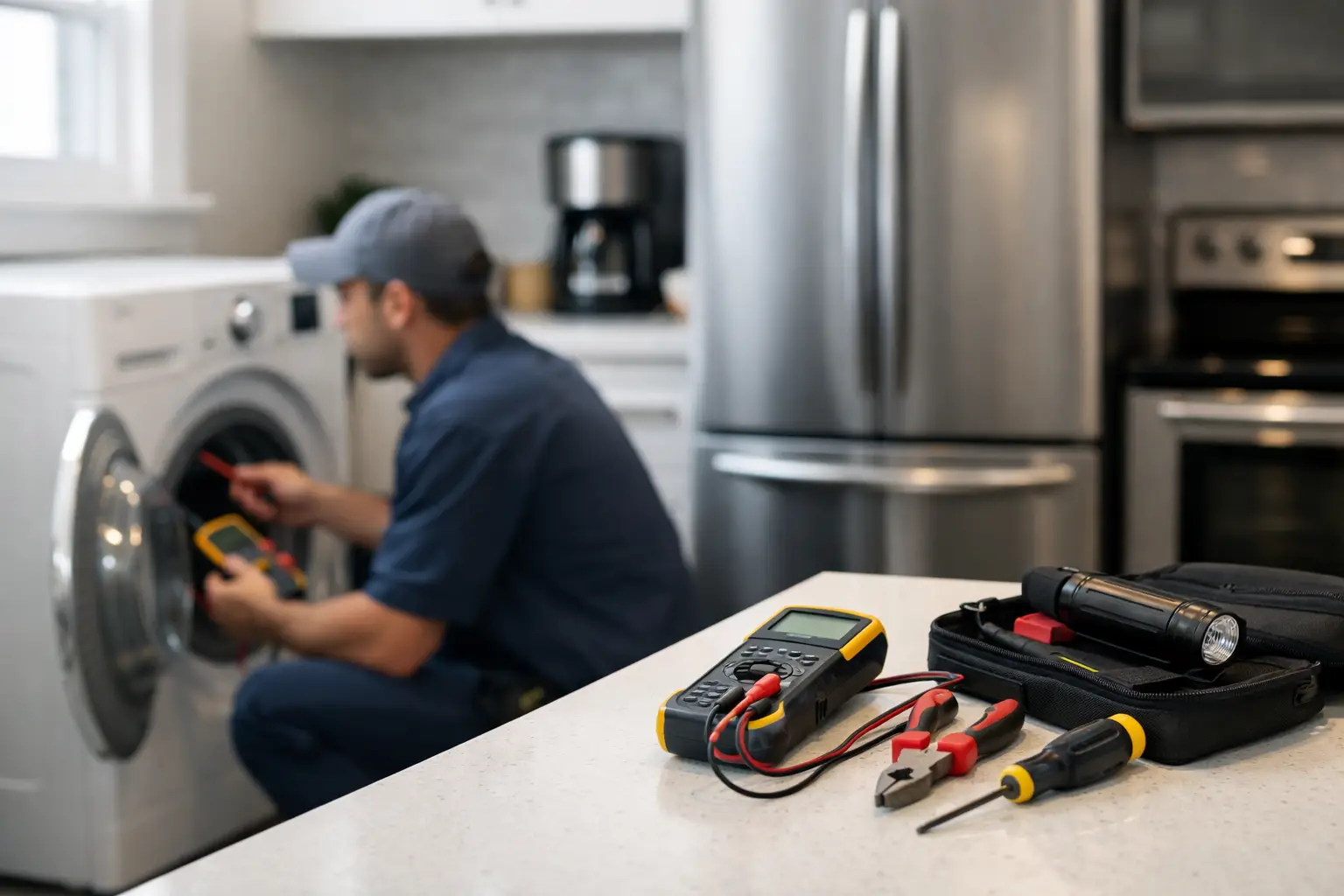

A broken refrigerator at 7 p.m. or a washer that stops mid-cycle can make any home feel upside down fast. This home appliance diagnostic fee guide is here to clear up one of the first questions most homeowners ask: what are you actually paying for before the repair even begins?
For a lot of people, the words diagnostic fee sound like an extra charge they should avoid. Sometimes it can feel that way, especially if pricing is vague or the process is not explained clearly. But in most cases, a diagnostic fee is the cost of having a trained technician come to your home, inspect the appliance, test likely failure points, and figure out what is really wrong before any repair work is approved.
What a home appliance diagnostic fee usually covers
A diagnostic fee generally covers the service call and the technician’s time to evaluate the problem. That includes travel to your home, the initial inspection, basic testing, and a professional recommendation on what needs to be repaired or replaced.
For common household appliances like refrigerators, freezers, dishwashers, ovens, stoves, built-in microwaves, washers, and dryers, this step matters more than many homeowners realize. Symptoms can be misleading. A dryer that will not heat may have a heating element issue, a blown thermal fuse, a bad thermostat, or an electrical problem. A refrigerator that is warm could have anything from a faulty fan motor to a sealed system issue. The diagnostic is what separates guessing from fixing.
In a trustworthy service model, the fee is not just about showing up. It is about getting a clear answer. You should expect the technician to explain the issue in plain language, let you know whether repair makes sense, and provide pricing before work moves forward.
Why companies charge a diagnostic fee
There is a practical reason behind it. In-home appliance repair takes time, fuel, scheduling, tools, and trained labor before a single part is installed. A technician is not only arriving with experience, but also with the ability to inspect multiple brands and models safely inside your home.
That is especially true for more complicated systems. Refrigerators and freezers may involve refrigerant-related components that require certified handling. Electric and gas cooking appliances need proper testing and safety checks. Washers and dryers often require partial disassembly just to confirm the failure point. A diagnostic fee helps cover that professional evaluation.
It also helps protect homeowners from rushed, low-quality service. Companies that skip diagnostics or promise instant pricing over the phone on every job are often estimating, not diagnosing. For simple issues, a phone estimate might be close. For many real-world appliance problems, it can be way off.
Home appliance diagnostic fee guide: what affects the price
Diagnostic fees are not always identical from one company to the next. The amount can vary based on the appliance, the complexity of the issue, your location, and how the service call is structured.
A standard dishwasher or dryer diagnostic may be priced differently than a refrigerator or freezer visit, especially if the unit shows signs of a more advanced cooling problem. Some companies charge one flat fee for all major appliances. Others set different rates depending on category.
Timing can also matter. Same-day, after-hours, weekend, or emergency scheduling may come with a higher service charge. That does not automatically mean the company is being unfair. It may simply reflect the cost of prioritizing urgent calls and adjusting the schedule.
Travel distance is another factor in some areas. If a home is outside a normal service zone, there may be an added trip fee. The key is whether that is disclosed upfront. Fair pricing is not just about the number. It is about clarity before the appointment is booked.
When the fee is applied toward the repair
One of the biggest details to ask about is whether the diagnostic fee is credited toward the final repair. Many local appliance repair companies use that model because it feels fair to the customer. You pay for the visit and diagnosis, and if you approve the repair, that amount is applied to the job.
That approach rewards homeowners who move forward with service and reduces the feeling of paying twice. It also creates a more straightforward decision process. You know the technician has identified the issue, you receive a repair quote, and the initial fee becomes part of the total rather than a separate sunk cost.
Still, it is worth confirming how the credit works. Some companies apply the full fee toward labor. Some apply it only if the repair is completed on the same visit. Others do not apply it at all. None of those arrangements are automatically wrong, but they should be explained before the technician arrives.
What a fair diagnostic process looks like
A fair process usually starts before the appointment. The company should tell you the diagnostic fee in advance, explain what it covers, and let you know whether it applies to the repair. If there are extra charges for specialty appliances, difficult access, or after-hours service, those should be stated clearly too.
Once the technician is in your home, the visit should feel professional and respectful. That means listening to the symptoms, checking the appliance carefully, and testing the likely causes instead of jumping straight to a part replacement. After the diagnosis, you should get a clear explanation of the problem, the recommended repair, and the total cost to move forward.
If replacement makes more sense than repair, a good technician should say that too. Not every appliance should be fixed. Age, part cost, repeat failures, and overall condition all matter. Honest guidance is part of what you are paying for.
Red flags to watch for
The biggest warning sign is vague pricing. If a company refuses to mention any diagnostic fee at all, or says they will figure it out once they arrive, you may end up with surprises. Another red flag is pressure. You should never feel pushed into approving a repair before you understand the issue and the cost.
Be cautious if a technician offers a major repair recommendation without much testing, or quotes a very low service call fee only to add unexpected labor charges later. The cheapest upfront number is not always the best value if the process lacks transparency.
It also helps to watch for communication style. Homeowners do not need a technical lecture, but they do deserve a real explanation. If the diagnosis sounds rushed, inconsistent, or overly dramatic, trust your instincts and ask questions.
How to compare diagnostic fees the right way
It is tempting to compare companies based on the service call price alone, but that can be misleading. A lower fee is not always the better deal if it does not apply to the repair, if the company lacks proper credentials, or if the visit results in little more than a guess.
A better comparison looks at the full picture: whether the fee is credited toward repair, whether the company is licensed and insured, whether technicians can service your appliance brand, and whether the explanation is clear and straightforward. For refrigeration work, certification matters too. If the appliance may involve refrigerant handling, you want someone qualified to diagnose that safely.
Local reputation matters just as much. In communities across Tampa Bay, many homeowners are not just looking for the cheapest appointment. They want someone punctual, respectful in the home, and honest about whether the appliance is worth fixing. That trust is often worth far more than a small difference in the diagnostic fee.
The real value behind the fee
A diagnostic fee should buy clarity. It should tell you what failed, what it will cost to repair, and whether repair is the smart choice for your household. That is valuable when you are deciding between fixing a dishwasher, replacing a dryer, or trying to keep an older refrigerator going a little longer.
At Tampa Bay Appliance Repair, the goal is to make that process feel straightforward instead of stressful. Homeowners should know what to expect, get a real diagnosis, and feel respected from the first phone call to the final recommendation.
If you are scheduling service, ask the fee upfront, ask whether it applies to the repair, and ask what happens if replacement makes more sense. A good company will answer those questions plainly, and that usually tells you a lot before the technician even knocks on the door.