
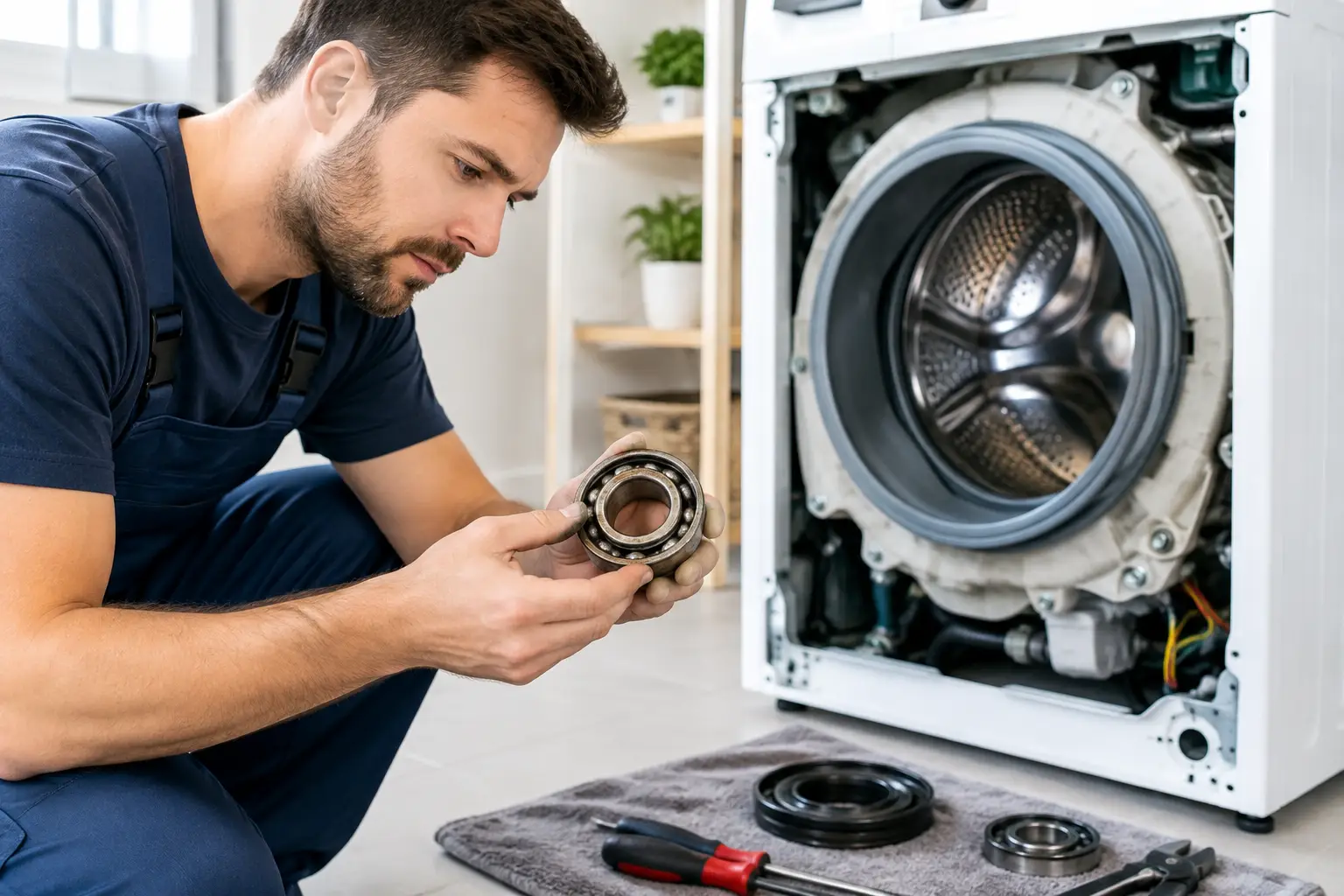

That roar during the spin cycle is not always a loose coin or an unbalanced load. Knowing how to spot a failing washing machine bearing can help you act before a worn part turns into a damaged tub, a leaking washer, or a machine that cannot complete a load of laundry.
A washing machine bearing supports the inner drum as it spins. It is designed to handle years of heavy, wet laundry, but water can eventually get past the seal that protects it. Once that happens, the bearing can corrode, wear down, and become increasingly loud. The early signs are easy to miss because the washer may still wash and drain normally. The spin cycle is usually where the problem makes itself known.
How to spot a failing washing machine bearing
The most common sign is a deep rumbling, growling, or roaring sound that gets louder as the drum spins faster. It may sound a little like a freight train, airplane engine, or a loud rolling noise behind the washer. A normal washer can hum and vibrate during spin, especially with towels or bedding inside. Bearing noise is different because it tends to be harsh, steady, and present even after you redistribute the load.
Pay attention to when the sound occurs. A failing bearing is usually quiet or less noticeable while the machine fills and agitates. The noise builds during the high-speed spin cycle, then fades as the drum slows down. If your washer has become noticeably louder from one month to the next, that change is worth taking seriously.
Another clue is excessive drum movement. With the washer turned off and empty, open the door or lid and grasp the inner basket near its top edge. Gently lift it and press it down. A small amount of movement can be normal on some models, but a loose, clunking, or visibly shifting basket may point to worn bearings, a damaged drum support, or another suspension problem.
You may also hear a rough sound when turning the basket by hand. Slowly rotate the empty drum. It should move smoothly. A grinding sensation, uneven resistance, or a rough scraping sound can indicate that the bearing is deteriorating. Do not force the drum if it feels stuck or badly out of alignment.
Warning signs that can look like a bearing problem
Washing machines have several moving parts, so a loud spin cycle does not automatically mean the bearing has failed. A professional diagnosis matters because replacing the wrong part wastes money and delays the real repair.
An unbalanced load is the simplest possibility. Bulky comforters, bath mats, and a small number of heavy items can throw a washer off balance. The machine may bang, walk forward, or stop mid-cycle. Try running a balanced load of everyday clothing before assuming there is a mechanical failure. If the loud roaring continues with a normal load or an empty spin, the issue is more likely inside the machine.
Worn suspension rods or shocks can also create strong vibration and banging. These parts keep the tub stable while it spins. They are more likely to cause thumping and dramatic shaking than the low, continuous roar associated with a bearing.
A loose object can make noise too. Coins, bra wires, buttons, and small screws sometimes get caught between the inner basket and outer tub. That usually creates a metallic scraping, ticking, or intermittent rattling rather than a constant growl. A damaged drive belt, pulley, motor coupling, or drain pump can also make noise, but the timing and sound are often different. For example, a pump may be noisy while the washer drains, even when the drum is not spinning.
Check for water or rust around the tub area
Bearings often fail after water gets through a worn tub seal. That makes visible moisture or rust an important clue. Look around the washer’s base, beneath the door opening on a front-load model, or near the rear of the tub if those areas are accessible without disassembling the appliance.
You may notice rusty water marks, a small recurring puddle, or brown streaks on laundry after a cycle. Not every leak comes from the tub seal, and not every failed bearing leaks externally. Still, a combination of spin-cycle roaring, drum play, and evidence of water is a strong reason to schedule a diagnostic.
Do not remove major panels or attempt to take apart the tub unless you have the right tools and experience. Modern washers contain sharp edges, heavy components, electrical connections, and tightly fitted assemblies. More importantly, bearing replacement often requires removing the basket and splitting the outer tub. It is not a quick weekend repair for most homeowners.
Why waiting can make the repair more expensive
A washer with a noisy bearing may keep working for a while, which can make it tempting to put off service. The trade-off is that a worn bearing can place extra stress on the shaft, drum support, seal, and outer tub. Continued use can turn a repairable bearing issue into a larger repair involving several damaged parts.
The risk is greatest when the machine is very loud, shakes excessively, leaks, leaves rust marks, or has a drum that visibly sags or scrapes. At that point, stop using it until it can be inspected. Running a washer with a badly damaged bearing can cause a high-speed failure, water damage, or permanent harm to the tub assembly.
If the noise is mild and there is no leak, you may be able to use the washer briefly while arranging service. Keep loads smaller and balanced, avoid heavy bedding, and do not leave the machine running unattended. This is a short-term precaution, not a repair.
Can a washing machine bearing be replaced?
In many cases, yes, but the best choice depends on the washer’s design, age, condition, and parts availability. Some machines use separate bearings and seals that can be replaced. Others use a sealed rear tub or bearing assembly, which raises the cost because the repair requires a larger component.
A technician should inspect the drum, shaft, spider support on applicable models, seal, and tub before recommending a repair. If water exposure has caused extensive corrosion or the basket support is cracked, replacing only the bearing may not solve the whole problem. On the other hand, a well-maintained washer with a straightforward bearing repair can be worth fixing, especially when the rest of the machine is in good condition.
This is where a clear diagnosis saves money. The goal is not to push a replacement or promise a repair before the washer is examined. It is to identify the actual source of the noise, explain the condition of the appliance, and give you a fair picture of the available options.
What to do before your service appointment
If you suspect a bearing problem, make a brief note of what you are hearing and when it happens. Does the washer roar only during high spin? Does the basket move up and down by hand? Has there been any water under the machine or rust-colored staining? These details can help speed up the diagnostic process.
Avoid running repeated test cycles just to confirm the noise. One careful observation is enough. Unplug the washer if it is leaking, grinding severely, or making a burning smell, and turn off the water supply if you see an active leak. Keep children and pets away from the appliance until it is checked.
For homeowners in the greater Tampa Bay area, Tampa Bay Appliance Repair can diagnose loud washers, bearing-related problems, leaks, and spin-cycle issues in your home. A diagnostic fee applied toward an approved repair gives you a clear path forward without guessing at expensive parts.
A noisy washer does not always need to be replaced. Catch the problem early, protect the machine from further damage, and let a qualified technician determine whether a bearing repair is the sensible next step for your household.