
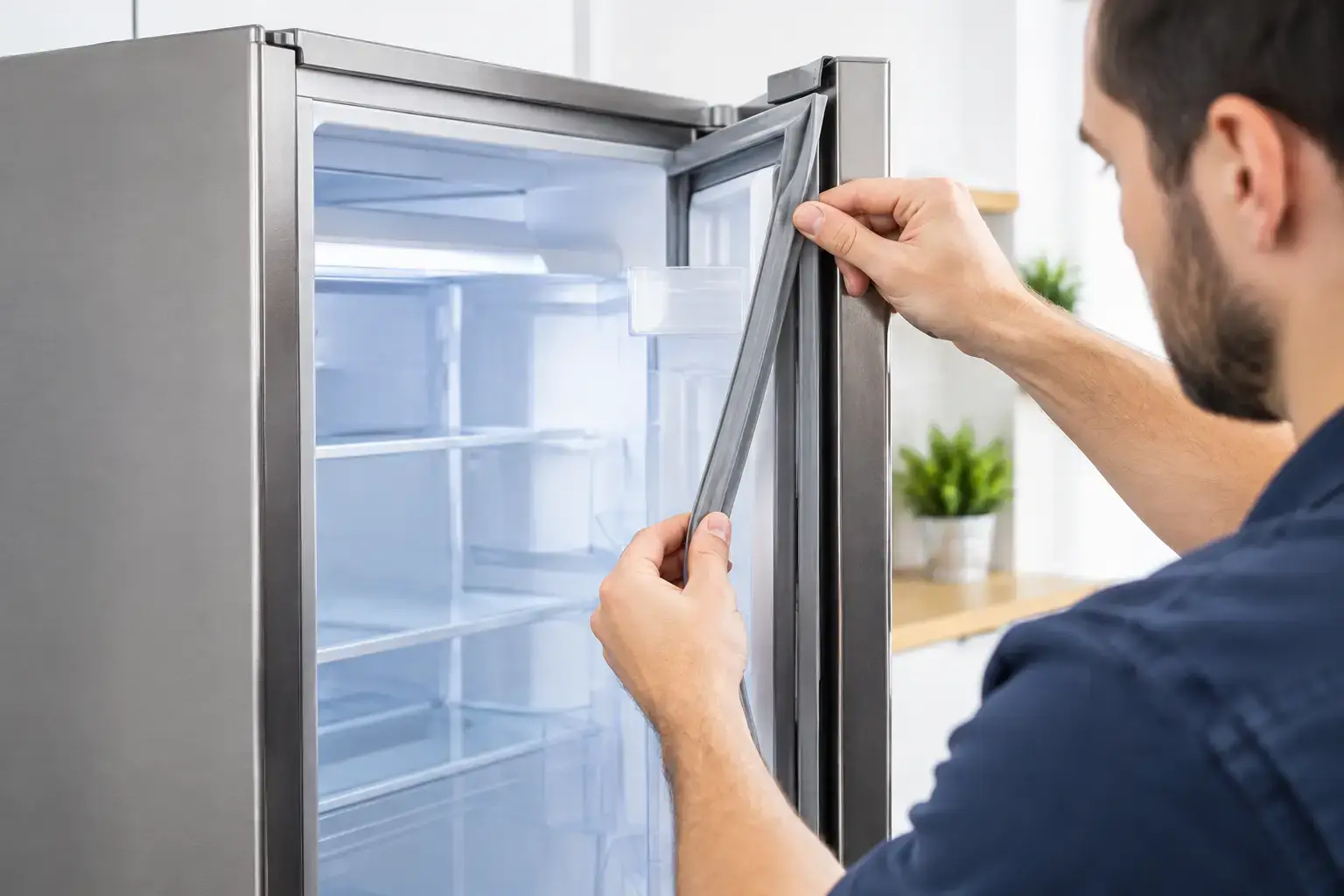

A refrigerator door that will not stay tightly shut can turn a simple grocery run into a costly problem. Cold air escapes, the compressor runs longer, and fresh food may not stay at a safe temperature. So, can refrigerator seals be replaced? In most cases, yes. The flexible rubber seal around the refrigerator or freezer door, also called a gasket, is a replaceable part on many models.
Replacing a worn seal can restore a proper closure and help your refrigerator run more efficiently. The key is confirming that the gasket is truly the issue before ordering a part or scheduling service. A door hinge, warped door, dirty gasket channel, or cooling problem can create similar symptoms.
What a Refrigerator Door Seal Does
The door gasket creates an airtight barrier between the refrigerator cabinet and the door. When the door closes, the magnetic strip inside the gasket holds it snugly against the frame. That seal keeps chilled air in and warmer, humid household air out.
When the gasket has a tear, gap, hardened section, or weak magnetic grip, outside air enters the compartment. In Tampa Bay, where heat and humidity put extra pressure on cooling appliances, that moisture can quickly lead to frost in the freezer, condensation around the door, and a refrigerator that seems to run all the time.
A bad seal is not always an emergency, but it is worth addressing promptly. The longer the appliance works overtime, the more energy it uses and the more wear it puts on components such as the compressor and evaporator fan.
Signs Your Refrigerator Seal May Need Replacement
A visual check is a good starting point. Open the door and look along the full edge of the gasket, especially at the corners and lower section where spills and heavy use take a toll. The seal should be soft, even, and firmly attached to the door.
Common signs include:
- Cracks, tears, splits, or flattened areas in the rubber
- Mold, sticky residue, or food debris that prevents full contact
- Condensation on the door frame or frequent frost buildup in the freezer
- A door that pops open, needs a push to close, or does not hold a sheet of paper when shut
The paper test is useful but not perfect. Close the door on a dollar bill or piece of paper, then gently pull it out. If it slides out with almost no resistance in several areas, the seal may be weak. Test around the entire door, not just one spot.
Also pay attention to food temperature. Milk that spoils early, soft frozen foods, or a refrigerator compartment that feels warmer than its setting may point to a sealing issue. However, those symptoms can also come from dirty condenser coils, a faulty fan, a defrost problem, or a refrigerant-related concern. A proper diagnosis keeps homeowners from replacing a part that was not the root cause.
Can Refrigerator Seals Be Replaced on Any Model?
Most refrigerator and freezer door seals can be replaced, but the process and part availability depend on the make, model, and door design. Some gaskets slide into a retaining channel, while others are secured behind an inner door panel. On certain older appliances, an exact replacement gasket may be difficult to source or may cost enough to make repair less practical.
The model number matters. It is usually found on a label inside the fresh-food compartment, along the door frame, or near the lower kick plate. A gasket that looks close is not necessarily the right fit. Even a small difference in dimensions, corner shape, or magnet placement can leave gaps.
Before replacing the seal, check whether the door is level and aligned. If the door has sagged because of loose hinges, worn hinge parts, or an overloaded door bin, a new gasket may still fail to make contact. Likewise, a bent door or damaged cabinet frame may require a different repair approach.
When Cleaning Can Fix the Problem
Not every loose seal needs to be replaced. Grease, crumbs, dried spills, and residue can keep the gasket from lying flat. Clean the gasket and the refrigerator surface it contacts with warm water, mild dish soap, and a soft cloth. Avoid harsh cleaners, abrasive pads, and sharp tools that can damage the rubber.
After cleaning, dry the gasket thoroughly and inspect its shape. If a portion is slightly misshapen, gentle warming can sometimes help it relax back into position. A hair dryer on a low setting, held at a safe distance and moved continuously, may soften the rubber enough to reshape it. Do not overheat the gasket or use an open flame.
If the seal is torn, brittle, permanently flattened, or pulling away from the door, cleaning will not solve the problem. Replacement is usually the more reliable choice.
How Refrigerator Gasket Replacement Works
For a straightforward gasket replacement, the door usually stays attached to the refrigerator. The new gasket is fitted around the door perimeter and adjusted so it sits evenly against the cabinet. Depending on the appliance, the technician may loosen screws beneath the door liner, pull the old gasket from a track, or remove a retaining strip.
A new gasket can arrive folded from packaging, so it may need time to flatten before installation. Once installed, it must be checked carefully for folds, gaps, and uneven corners. The door may also need minor alignment adjustments to ensure even contact all the way around.
This is a repair some handy homeowners can handle, especially when the gasket is easy to access and the correct part is available. Still, there are trade-offs. Incorrect installation can cause new air leaks, stripped screws, or a door that no longer closes correctly. Ordering the wrong gasket is also a common and frustrating mistake.
When to Call a Refrigerator Repair Technician
Professional help makes sense when the door is misaligned, the gasket is difficult to access, or the refrigerator has cooling symptoms beyond a visible seal issue. A technician can determine whether the problem is the gasket, hinges, door closer, cabinet alignment, or an internal cooling component.
Call for service if the refrigerator runs constantly after the gasket has been cleaned, if the freezer has heavy recurring frost, or if temperatures remain inconsistent. These can be signs of a problem that a new door seal alone will not fix.
For homeowners in the Tampa Bay area, Tampa Bay Appliance Repair can inspect the refrigerator in your home, explain what is causing the problem, and provide a straightforward repair recommendation. The diagnostic fee applies toward an approved repair, so you can make a decision with clear information instead of guessing.
Is Replacing the Seal Worth It?
A replacement gasket is often worth it when the refrigerator is otherwise cooling properly and the appliance is in good condition. It is generally a far more affordable repair than replacing a refrigerator, and it can help reduce wasted energy and protect the food you keep inside.
It may be less worthwhile if the refrigerator has several major issues at once, such as a failing compressor, significant rust around the door frame, or unavailable parts on an older model. In that situation, a technician can help compare the likely repair cost with the practical life remaining in the appliance.
A refrigerator door should close with a firm, even pull, not a slam or a struggle. If yours is leaving moisture, frost, or warm spots behind, start with a careful inspection and cleaning. When the seal is worn out, replacing it early can spare your household a bigger interruption later.