

Table of Contents
- DIY vs Professional Refrigerator Repair: When Each Makes Sense
- How to Fix a Refrigerator That Is Not Cooling
- Refrigerator Troubleshooting Checklist for Common Problems
- Refrigerator Repair Cost: DIY vs Professional Services
- Refrigerator Repair or Replace: Making the Right Decision
- Safety Risks and Liability of DIY Appliance Repair
- Conclusion
- Frequently Asked Questions
Last Updated: October 9, 2026
DIY vs Professional Refrigerator Repair: When Each Makes Sense
Deciding whether to fix your refrigerator yourself or call a professional isn’t just about saving money. It’s about knowing your limits, understanding the real risks, and protecting your home, your food, and your wallet.
At Tampa Bay Appliance Repair, we see homeowners make this decision every week. Some DIY fixes work out fine; others create bigger, costlier problems. Here’s how to know which path makes sense.
Comparison Overview
DIY refrigerator repair means you diagnose the issue and fix it yourself with parts you source and tools you own. Professional service means a licensed technician comes to your home, diagnoses the problem, and handles the repair with warranty coverage and liability protection.
The choice isn’t always obvious. Cleaning condenser coils or replacing a thermal fuse might be within reach, but a compressor failure or refrigerant leak requires specialized knowledge, equipment, and certification most homeowners don’t have.
DIY Advantages and Limitations
DIY repair saves the service call fee and labor costs. If you’re comfortable with basic troubleshooting, you can fix minor issues for the cost of parts alone, and you learn how your appliance works.
The limitations are significant. Most refrigerator problems involve electrical components or refrigerant systems. Electrical work carries real danger: you can damage the compressor, void your warranty, or injure yourself.
DIY also means you’re responsible if something goes wrong. Damage the compressor while troubleshooting and you’ve converted a $200 repair into a $1,200 replacement.
Professional Service Advantages and Limitations
Professional technicians bring expertise, proper tools, and legal protection. They diagnose quickly, access OEM parts, and warranty their work. If something goes wrong, they’re insured and liable, not you.
The limitation is cost. A service call, diagnostic fee, and labor add up fast, and for a simple repair on an older refrigerator the professional cost might exceed the appliance’s value, making replacement smarter.
Professional service also depends on availability. If your refrigerator breaks on a weekend, you might wait days for an appointment.
| Aspect | DIY Repair | Professional Service |
|---|---|---|
| Cost (parts only) | Low ($50-$300) | High ($200-$1,500+) |
| Time investment | 2-8 hours | 1-2 hours |
| Warranty | None | Yes, typically |
| Legal liability | On you | On technician |
| Skill required | Medium to high | Certified expertise |
| Risk of further damage | High | Low |
| Best for | Simple, non-electrical fixes | Complex or urgent repairs |
How to Fix a Refrigerator That Is Not Cooling
A refrigerator that isn’t cooling is one of the most common problems homeowners face. Some causes are simple and fixable; others require professional help.
Diagnostic Steps You Can Perform
Start with the basics. Check that the refrigerator is plugged in and the outlet has power.
Listen for the compressor, the motor that pumps refrigerant through the system.
Check the condenser coils at the back or bottom of the refrigerator. If they’re clogged with dust, the system can’t cool properly.
Inspect the evaporator fan motor, which circulates cold air from the freezer to the refrigerator compartment.
Check the door seal. A loose seal lets warm air in and forces the compressor to work harder.
When Cooling Issues Require Professional Help
If the compressor isn’t running, stop. A non-functioning compressor means refrigerant isn’t circulating, and refrigerant leaks, compressor electrical failures, and start relay problems all require EPA-certified technicians.
If you’ve cleaned the coils and checked the seal and the refrigerator still isn’t cooling, the problem is likely inside the sealed refrigerant system.
Temperature problems that appear suddenly, fine yesterday, warm today, often point to compressor or fan motor failure. These aren’t gradual wear issues you can patch and need immediate professional attention to prevent food spoilage.
Refrigerator Troubleshooting Checklist for Common Problems
Before you call for service, work through this checklist. Some issues resolve with simple fixes. Others confirm you need professional help.
Simple Checks Before Calling for Service
- Refrigerator is plugged in and outlet has power
- Compressor is running (listen for humming, feel for vibration)
- Condenser coils are clean (vacuum dust and debris)
- Evaporator fan is not blocked by ice or food
- Door seal is tight (dollar bill test)
- Thermostat is set to correct temperature (not too low)
- Vents inside the fridge are not blocked by food
- Drain hole at the bottom is not clogged with ice
Most refrigerators have a small drain hole at the back or bottom of the fridge compartment that drains condensation. If it’s frozen or clogged, water backs up and can freeze the evaporator coils, blocking airflow. You can sometimes clear it with warm water or a pipe cleaner.
Signs a Problem Needs Professional Diagnosis
If the compressor isn’t running, stop troubleshooting and call a professional. A silent compressor indicates electrical failure, a bad start relay, or a burned-out motor.
If coolant is visibly leaking, oily residue or a chemical odor, the refrigerant system has a leak requiring EPA-certified service.
Strange noises, grinding, squealing, or rattling, often point to compressor problems, fan motor failure, or loose components inside the sealed system. These warrant professional evaluation.
Refrigerator Repair Cost: DIY vs Professional Services
Understanding the true cost of each approach helps you decide. It’s not just the repair price; it’s the risk and the warranty.
DIY Parts and Tools Investment
Common refrigerator parts range from affordable to moderate:
- Thermal fuse: $15-$50
- Door seal: $50-$150
- Evaporator fan motor: $100-$300
- Defrost timer: $50-$150
- Compressor: $400-$800
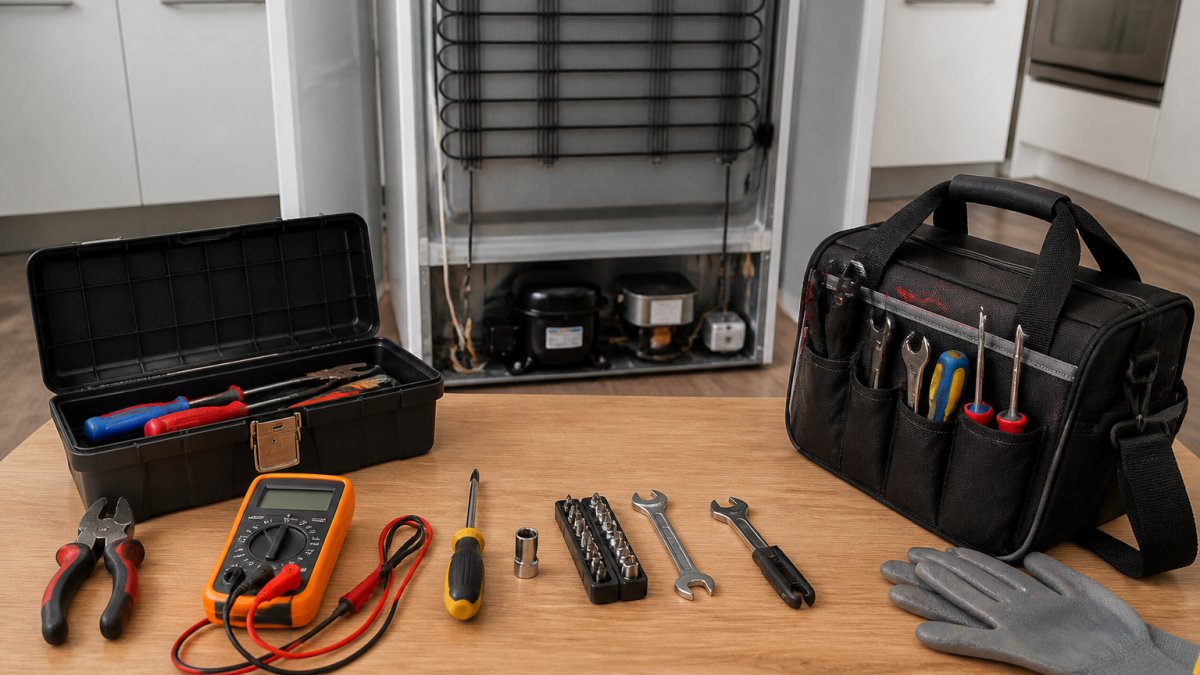
Tools you might need include a multimeter (to test electrical components), screwdrivers, a wrench set, and a vacuum with brush attachment. If you don’t own these, factor in tool costs.
The hidden cost is your time. Diagnosing a refrigerator problem takes 2-4 hours if you’re methodical. Replacing a part takes another 2-6 hours depending on complexity. If you make a mistake, buying the wrong part or damaging something during installation, you’ve sunk time and money into a failed repair.
Professional Service Pricing Structure
Professional service typically includes:
- Diagnostic fee (applied toward repair if you proceed): $75-$150
- Service call: included or $50-$100
- Labor: $100-$200 per hour
- Parts: cost plus markup (usually 20-40%)
- Warranty: typically 1 year on parts and labor
A simple repair like replacing a thermal fuse might cost $200-$300 total. A more complex repair like replacing an evaporator fan motor could run $500-$800. Compressor replacement often exceeds $1,200.
At Tampa Bay Appliance Repair, we apply diagnostic fees toward the repair cost if you move forward with service. This removes the financial sting of diagnosis and shows we’re confident in our work.
Refrigerator Repair or Replace: Making the Right Decision
Sometimes the smartest choice isn’t to repair at all. A 15-year-old refrigerator with a failed compressor might cost more to fix than to replace.
Age and Appliance Lifespan Factors
Most refrigerators last 10-15 years with reasonable maintenance. If your refrigerator is in that range and the repair costs more than 40-50% of a new unit’s price, replacement often makes financial sense.
Older refrigerators also use more energy. A 20-year-old model might cost $20-$30 more per month in electricity than a modern, efficient unit.
If your refrigerator is less than 5 years old, repair almost always makes sense unless the compressor has failed. Newer units hold their value better, and parts are usually available.
Cost-Benefit Analysis Framework
Use this framework to decide:
- Repair cost + remaining lifespan value: If a $600 repair extends a 3-year-old refrigerator by 5-7 years, it’s worth it.
- Energy efficiency: Compare your refrigerator’s annual energy cost to a new model’s. If the difference is $200+ per year, replacement pays for itself faster.
- Frequency of repairs: If you’ve had two or more repairs in the last 2 years, the appliance is likely failing. Replacement prevents future breakdowns.
- Food safety risk: A refrigerator that can’t hold temperature reliably is a health hazard. Don’t gamble with spoiled food and foodborne illness.
A simple rule: if repair cost exceeds 50% of a replacement unit’s price and your refrigerator is older than 10 years, replace it. If it’s newer than 10 years and the repair is less than 40% of replacement cost, repair it.
Safety Risks and Liability of DIY Appliance Repair
This is where many homeowners underestimate the danger. Refrigerator repair involves electrical hazards and refrigerant handling that can cause serious harm.
Electrical Hazards and Proper Safety Precautions
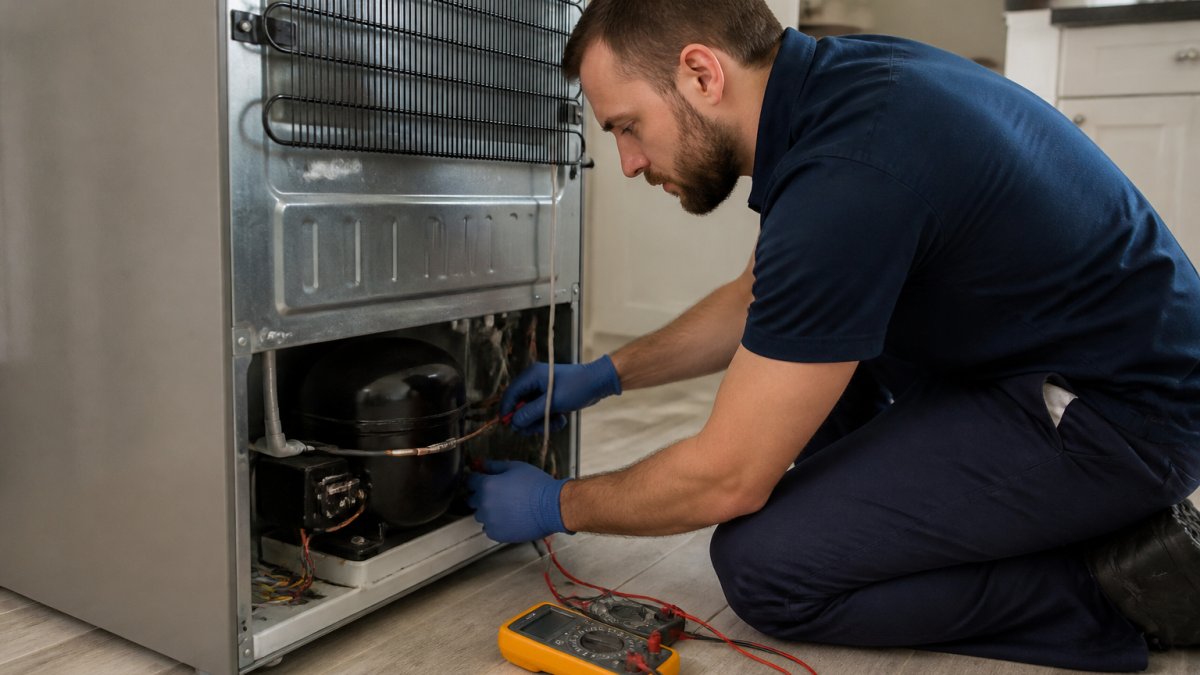
Refrigerators contain high-voltage components, particularly in the compressor and control board. Touching live electrical parts can cause electrocution.
If you must work on electrical components, use a multimeter to test for voltage before touching anything. Wear insulated gloves. Never work on a plugged-in refrigerator.
Water and electricity mix dangerously inside a refrigerator. If you’re clearing a drain or defrost line, make sure the unit is unplugged and dry before you touch anything electrical.
Refrigerant Handling and Environmental Compliance
Refrigerant is a controlled substance. Releasing it into the atmosphere is illegal under the Clean Air Act, and violations carry fines up to $37,500 per violation.
Refrigerant can also cause frostbite if it contacts your skin. Inhaling refrigerant vapor causes dizziness, organ damage, and in high concentrations, cardiac arrest.
If your refrigerator has a coolant leak, you cannot fix it yourself. A professional must identify the leak location, recover the refrigerant safely, repair or replace the leaking component, and recharge the system.
Insurance and Liability Implications
Here’s what many homeowners miss: if you cause damage while attempting a DIY repair, your homeowner’s insurance likely won’t cover it.
If you damage the refrigerator further, say, you crack the compressor casing while trying to access it, you’ve voided any remaining manufacturer warranty.
Professional service eliminates this risk. Licensed technicians carry liability insurance. If something goes wrong, they’re responsible, not you.
Conclusion
The decision between DIY and professional refrigerator repair comes down to three factors: the complexity of the problem, your mechanical skill, and the risk you’re willing to accept.
Simple fixes like cleaning coils, replacing a door seal, or clearing a drain are reasonable DIY projects. Anything involving the compressor, refrigerant system, or electrical components requires professional help.
When you need professional service, Tampa Bay Appliance Repair offers diagnostics with no charge if you move forward with repair. Our EPA-certified technicians handle refrigerators, washers, dryers, and ovens with the expertise and insurance protection your home deserves. Book online to schedule your appointment today, we respond within one business day.
Frequently Asked Questions
Which refrigerator problems can I safely fix myself?
Simple fixes you can handle include cleaning condenser coils, replacing water filters, checking door seals, and adjusting temperature settings. These require no special tools and pose minimal risk. Avoid touching electrical components, refrigerant lines, or the compressor yourself. If you’re unsure whether a problem is safe to tackle, err on the side of calling a professional, the cost of a diagnostic is far less than replacing a damaged refrigerator.
When should I call a professional refrigerator repair technician?
Call a professional if you notice compressor failure signs (humming but not cooling), coolant leaks, ice maker breakdowns, unusual noises, or water pooling inside the unit. Also contact a technician if your refrigerator repair involves electrical work, refrigerant handling, or any issue you cannot diagnose with basic troubleshooting. Professional technicians hold EPA Section 608 certification required for refrigerant handling, ensuring safe, compliant repairs.
Is it worth repairing my fridge, or should I replace it?
Use the 50% rule: if repair cost exceeds 50% of replacement cost, replacement often makes financial sense. Consider the appliance’s age, units over 10 years old approaching end-of-life typically cost more to repair than replace. Factor in energy efficiency gains from newer models and remaining warranty coverage. For units under 5 years old with a single major component failure, repair usually saves money.
How much does professional refrigerator repair cost?
Professional repair pricing depends on the specific problem, parts needed, and your location. Most services charge a diagnostic fee (applied toward repair costs if you proceed), plus labor and parts. Contact a licensed technician for a quote based on your refrigerator’s symptoms. Many local professionals offer free diagnostics so you can make an informed decision before committing to repairs.
Can DIY refrigerator repairs void the warranty?
Yes, opening your refrigerator and attempting repairs yourself can void manufacturer warranty coverage. Most appliance warranties explicitly exclude damage caused by unauthorized repairs. If your refrigerator is still under warranty, contact the manufacturer or an authorized service center before attempting any fixes. Professional repairs from certified technicians typically preserve warranty protection and may even extend coverage.