
A refrigerator that stops cooling, a washer that will not drain, or an oven that refuses to heat can disrupt a household fast. Appliance repair is often the most practical answer, but homeowners still face a fair question: is this worth fixing, or is it time to replace it?
The right choice depends on the appliance’s age, the cause of the problem, the repair cost, and how the unit has performed over time. A clear diagnostic from a qualified technician takes the guesswork out of the decision. Instead of replacing an appliance based on one frustrating symptom, you can understand what failed, what the repair involves, and what the next step is likely to cost.
When Appliance Repair Is Usually the Better Choice
A repair generally makes sense when the appliance is relatively young, has been dependable until now, and needs a common replaceable part. Many breakdowns sound serious but are not necessarily signs that the entire appliance has reached the end of its useful life.
For example, a dishwasher may stop draining because of a clogged filter, worn drain pump, or obstructed hose. A dryer that takes too long to dry may have an airflow issue, a failing heating component, or a problem with its sensors. A refrigerator that is warm inside could have dirty condenser coils, a failed fan motor, a defrost issue, or a control problem. These are situations where a proper diagnosis matters more than assumptions.
Repair is also often the better financial choice when the appliance matches your kitchen or laundry setup and replacement would create extra expenses. Built-in appliances, matching finishes, cabinet modifications, delivery fees, and installation can make a replacement cost much more than the price on the showroom tag.
For Tampa Bay homeowners, acting quickly can also protect what is inside the appliance. A refrigerator or freezer issue can lead to spoiled groceries, while a leaking washer or dishwasher can create water damage if it is left unattended. Prompt service may prevent a manageable repair from becoming a larger home expense.
Signs It May Be Time to Replace an Appliance
Replacement can be the sensible call when an appliance has a history of repeated breakdowns or needs a major repair late in its expected lifespan. There is no single rule that applies to every model, but age and repair history should carry real weight.
If a machine has needed several service calls in the past year, it may be costing more in parts, labor, missed time, and inconvenience than it is worth. The same is true when a technician finds multiple worn components, corrosion, major electrical damage, or a sealed-system issue in an older refrigerator. In those cases, fixing one failed part may not provide a long-term solution.
Energy and water use can matter as well, although savings should be viewed realistically. A newer appliance may be more efficient, but efficiency alone does not always justify replacing a unit that needs a straightforward repair. The stronger case for replacement is a combination of age, high repair cost, frequent issues, and declining performance.
A trustworthy technician should explain that difference plainly. You should not feel pressured into a repair that does not make financial sense, and you should not be pushed toward replacement before the problem has been properly identified.
What a Professional Appliance Repair Visit Should Include
A good in-home service call begins with listening. The technician should ask what the appliance is doing, when the issue started, whether there were warning signs, and if the problem is constant or intermittent. Those details can narrow down the possible causes before testing begins.
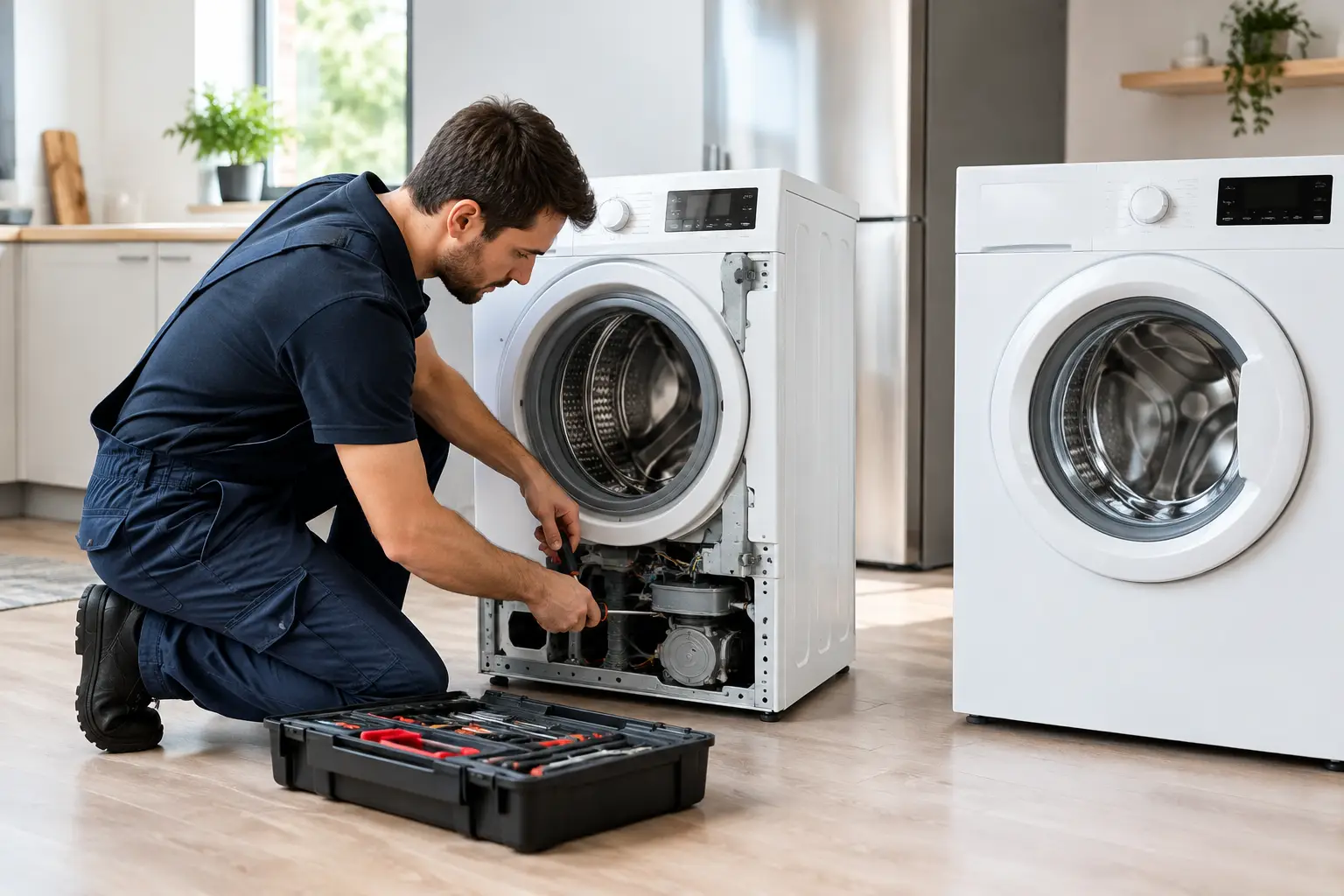
The diagnostic process should include inspecting the appliance, checking the relevant mechanical and electrical components, and identifying the underlying failure rather than only addressing the visible symptom. A washer that will not spin, for instance, might have an unbalanced load or a lid-lock problem, but it could also involve the drive system, motor, control board, or drainage issue. The repair needs to match the cause.
Once the issue is identified, you should receive a straightforward explanation of the recommended repair and the expected cost. Ask whether the diagnostic fee is applied toward the repair, whether parts need to be ordered, and whether there are any reasonable alternatives. Clear answers are part of fair service.
Professional credentials matter, especially when a repair involves electrical connections, gas components, or refrigerant. Refrigerant-related refrigerator and freezer work should be handled by a properly certified technician. Licensed and insured service also gives homeowners greater peace of mind when inviting someone into their home.
Common Problems That Deserve a Service Call
Some appliance issues are obvious, while others start small and gradually get worse. Calling for service early can reduce the chance of damage or complete failure.
A refrigerator or freezer needs attention if it is not holding temperature, runs constantly, leaks water, makes unusual noises, or builds excessive frost. Do not ignore food-safety concerns. If you are unsure whether food has remained at a safe temperature, treat the situation carefully and avoid relying on appearance alone.
Dishwashers should be checked when they leave dishes dirty, fail to drain, leak around the door, make grinding sounds, or do not complete a cycle. With washing machines, watch for leaks, standing water, banging during spin cycles, error codes, or a door that will not unlock. Dryer warning signs include no heat, unusually long drying times, burning odors, loud operation, and a drum that will not turn.
For ovens, stoves, and built-in microwaves, inconsistent heating, ignition issues, damaged door seals, error messages, or tripping breakers call for professional attention. Do not attempt a repair involving gas lines, high-voltage components, or internal electrical wiring unless you are qualified to do the work safely.
What You Can Check Before Scheduling Service
A few simple checks can save time, but they should never replace safe diagnosis. Confirm that the appliance has power, check the circuit breaker, and make sure the controls are set correctly. For laundry appliances, verify that water supply valves are open and that the drain hose has not become kinked. For a dishwasher, clean the accessible filter if your model allows it and look for obvious food debris.
It also helps to write down the brand, model number, and any error code before the appointment. Note when the problem occurs and whether it happens during a particular cycle. A short video of a noise or display message can be useful if the issue is intermittent.
Avoid repeatedly restarting an appliance that is leaking, smoking, giving off a burning smell, or making a harsh mechanical noise. Unplug it or turn off the appropriate breaker when it is safe to do so, and arrange service. For a suspected gas leak, leave the area and follow the appropriate emergency safety steps rather than trying to troubleshoot the appliance yourself.
Choosing a Local Appliance Repair Company
The lowest advertised price is not always the lowest total cost. Look for a company that provides clear diagnostic pricing, explains the repair before work begins, services your appliance type and brand, and treats your home with respect. Punctuality and follow-up matter, too, especially when you are waiting on a part or managing a refrigerator, washer, or oven that your household uses every day.
Local service can make the process feel less impersonal. You want a technician who understands that a broken appliance is not just an inconvenience on a checklist. It affects dinners, school uniforms, grocery budgets, and the normal rhythm of a home.
Tampa Bay Appliance Repair provides in-home diagnostics and repairs for major kitchen and laundry appliances across the area, with licensed, insured technicians and EPA Section 608 certification for refrigerant-related work. The goal is simple: give homeowners an honest answer, a fair repair option when one makes sense, and respectful service from start to finish.
When an appliance starts acting up, do not let uncertainty make the decision for you. A timely diagnostic can turn a stressful breakdown into a clear, practical plan for your home.