
A refrigerator that suddenly cannot keep milk cold on a Florida afternoon is more than an inconvenience. The best signs refrigerator compressor fails often start quietly: food spoils faster, the freezer softens, or the appliance seems to run all day without catching up. Because several refrigerator problems can look alike, the goal is not to guess at a costly repair. It is to recognize the warning signs early and have the system properly diagnosed.
The compressor is the heart of your refrigerator’s cooling system. It circulates refrigerant through the sealed system, helping move heat out of the cabinet so the fresh-food and freezer sections can stay cold. When it weakens or fails, the refrigerator may lose cooling altogether. But a bad fan, dirty condenser coils, failed start relay, defrost issue, or control-board problem can create similar symptoms.
Best Signs a Refrigerator Compressor Is Failing
The refrigerator runs constantly but is not cold enough
A refrigerator normally cycles on and off throughout the day. If you hear it running almost nonstop but the fresh-food section is warm or the freezer cannot hold temperature, the compressor may be struggling to compress refrigerant effectively.
Check the actual temperature before assuming the worst. The refrigerator section should generally stay around 37 to 40 degrees Fahrenheit, while the freezer should be at or near 0 degrees. A crowded refrigerator, frequent door opening, a door left slightly open, or hot leftovers placed inside can temporarily raise temperatures. If the issue continues after those conditions are corrected, it needs attention.
Constant operation also puts stress on other components and raises energy use. In Tampa Bay’s heat and humidity, a refrigerator already works hard, so a unit that never seems to rest should not be ignored.
You hear clicking, humming, or an unusual buzz from the back
Most compressors make a low, steady hum while operating. A loud buzz, repeated clicking every few minutes, or a brief hum followed by a click can point to a compressor that is having trouble starting.
That said, the compressor itself is not always the failed part. The start relay and overload protector are less expensive components that help the compressor turn on safely. When one of those parts fails, it can produce the same click-hum-click pattern. A technician should test the electrical components and compressor windings before recommending a major repair.
Do not repeatedly unplug and plug the refrigerator back in to stop the sound. Give it several minutes before restoring power if you must move it or reset a breaker. Rapid power cycling can place additional strain on the system.
The compressor is very hot to the touch
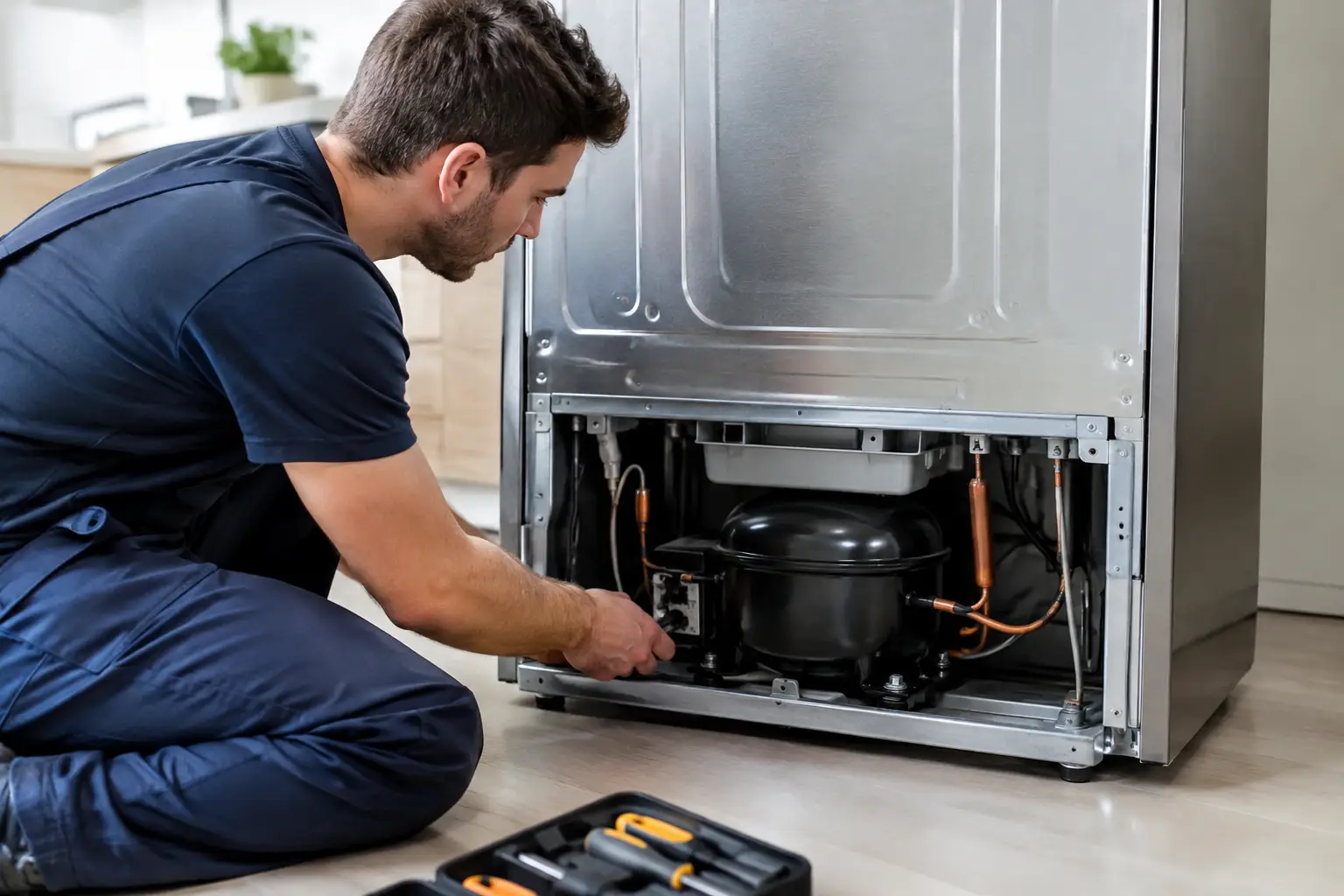
The compressor sits behind the refrigerator near the floor, usually under a rear access panel. It gets warm during normal operation, but it should not be so hot that you cannot briefly touch the surrounding area without discomfort. An overheated compressor may be working too hard, overheating internally, or receiving inadequate airflow.
Before calling it a compressor failure, consider the basics. Dust, pet hair, and debris on condenser coils can trap heat and make the system run hotter. Poor clearance behind the refrigerator can do the same. Cleaning accessible coils with a vacuum and soft brush can help efficiency, but do not bend tubing or remove sealed-system parts.
If the compressor remains extremely hot and cooling is poor, turn your attention to protecting the food inside. Move perishables to another refrigerator or a cooler with ice while arranging service.
The freezer is thawing or the refrigerator is warm in both sections
A failing compressor can affect the whole appliance. Ice cream becomes soft, frozen foods develop frost from partial thawing, and the refrigerator compartment climbs above a safe food-storage temperature. In many models, cold air is made in the freezer first and then circulated into the refrigerator section. That means a freezer problem can quickly become a whole-refrigerator problem.
However, one warm section does not automatically mean the compressor has failed. If the freezer is cold but the refrigerator compartment is warm, an evaporator fan, air damper, frost buildup, or airflow blockage may be more likely. This distinction matters because those repairs can be far more affordable than compressor work.
You notice a burning smell, tripped breaker, or electrical odor
An electrical or burning smell near the refrigerator is a stop-and-call-for-service issue. A failing compressor, damaged relay, wiring problem, or control component can overheat. If the refrigerator trips a breaker, do not keep resetting it just to see whether it will run.
Unplug the appliance if it is safe to do so, especially if you smell burning insulation or see discoloration near the outlet or rear of the refrigerator. Keep food safety in mind, but prioritize electrical safety first. A licensed and insured appliance technician can identify whether the problem is within the appliance or whether an electrician should inspect the outlet or circuit.
The refrigerator has a new rattling, knocking, or vibrating sound
Rattling is often something simple, such as a loose drain pan, an uneven refrigerator, or an item vibrating against the cabinet. A deeper knocking or persistent mechanical sound from the compressor area can be more concerning, particularly when it occurs along with weak cooling.
Try leveling the refrigerator if it rocks, and make sure it is not touching a wall or cabinet. If the noise continues after that, avoid taking panels apart or attempting to open the sealed system. Refrigerant work requires proper equipment and EPA Section 608 certification.
Problems That Can Mimic Compressor Failure
A compressor is one possible answer, not the automatic answer. This is why a professional diagnostic is valuable before deciding whether to repair or replace the refrigerator.
Common look-alike problems include dirty condenser coils, a failed condenser fan, a defective evaporator fan, a bad start relay, a faulty temperature sensor, damaged door gaskets, ice blocking airflow, or an electronic control issue. A refrigerant leak or restriction in the sealed system can also cause long run times and poor cooling, even when the compressor is still operating.
The age, brand, condition, and repair history of the refrigerator all affect the best next step. Replacing a small electrical part on a refrigerator that is otherwise in good condition can make excellent financial sense. A major sealed-system repair on an older unit may not. A straightforward technician will explain what failed, what the repair involves, and whether replacement deserves consideration.
What You Can Safely Check Before Scheduling Service
You do not need to troubleshoot a compressor yourself, but a few simple checks can provide useful information. First, make sure the temperature controls were not accidentally changed. Then confirm the doors close fully and the gaskets are not torn, dirty, or blocked by food containers.
Listen for whether the refrigerator is running continuously, clicking repeatedly, or staying completely silent. Look behind and beneath the unit for excessive dust around accessible coils, and check that there is breathing room around the appliance. If the refrigerator has no cooling at all, transfer meat, dairy, leftovers, and other perishables promptly. When in doubt, discard food that has been held above safe temperatures for too long.
Avoid piercing lines, handling electrical connections, or using refrigerant products sold as quick fixes. Those steps can create a safety risk and may turn a repairable issue into a larger one.
When to Call for Refrigerator Compressor Diagnosis
Call for service promptly if both sections are warming, the compressor area is unusually hot, the refrigerator clicks but will not start, or you notice a burning smell. Fast diagnosis can sometimes prevent food loss and helps you avoid spending money on the wrong part.
For homeowners in the greater Tampa Bay area, Tampa Bay Appliance Repair can diagnose refrigerator cooling concerns in your home and explain the repair options clearly. The diagnostic fee applies toward an approved repair, so you can make a decision with real information rather than a guess.
A refrigerator does not have to fail completely before it deserves attention. If its sounds, run time, or temperatures have changed, scheduling a diagnosis early is often the fairest way to protect your food, your budget, and your peace of mind.