

Table of Contents
- Assess Your Refrigerator’s Problem Before Deciding
- How to Fix Refrigerator Not Cooling: DIY Troubleshooting Steps
- Professional Repair vs. Replacement: Cost Analysis
- Temporary Food Storage Solutions During Outages
- Signs of Compressor Failure and Sealed System Issues
- Disposal, Recycling, and Upcycling Options
- Choosing a Reliable Repair Service
- Frequently Asked Questions
Last Updated: October 2, 2026
Assess Your Refrigerator’s Problem Before Deciding
A broken refrigerator doesn’t automatically mean you need to replace it. Before you start shopping for alternatives to replacing a broken refrigerator, take a step back and diagnose what’s actually wrong. Many appliance failures are fixable, and the cost of a professional repair often comes out to a fraction of what you’d spend on a new unit.
The first thing to understand: not every cooling problem signals the end of your fridge’s life. A thermostat stuck on the wrong setting, dirty condenser coils, or a faulty door seal can all make your refrigerator stop cooling effectively. These are typically inexpensive fixes. At Tampa Bay Appliance Repair LLC, we’ve found that roughly half the “broken” refrigerators homeowners call about need nothing more than a thorough cleaning and a minor adjustment.
Start by checking the basics yourself. Is the unit plugged in? Is the thermostat set to an actual temperature rather than the off position? These sound obvious, but they’re the first things to verify. Next, listen to the compressor. A humming sound means power is reaching the cooling system. Silence suggests an electrical issue.
Once you’ve ruled out the obvious, you’re facing a decision: pay for a professional diagnosis or assume the worst and replace the unit. The diagnostic fee is usually modest, and if you decide to repair, many shops apply that fee toward the repair cost. This approach gives you real information before you commit to either path.
Get a professional diagnostic before making any replacement decision. A licensed technician can identify whether you’re looking at a $150 fix or a $1,500 replacement in under an hour. The diagnostic fee is a small investment compared to the cost of guessing wrong.
How to Fix Refrigerator Not Cooling: DIY Troubleshooting Steps
If your refrigerator isn’t cooling, several components could be at fault. The good news is that some problems are simple enough to address yourself. Before you assume alternatives to replacing a broken refrigerator are your only option, try these troubleshooting steps.
Check the Thermostat and Temperature Settings
Your thermostat controls whether the compressor runs. If it’s set too low or switched to the off position, the unit won’t cool at all. Check your model’s manual to confirm the correct setting for your climate and desired temperature.
Temperature settings vary by refrigerator design. Some use a numerical dial (1-5, with higher numbers meaning colder). Others use actual temperature readings. Whichever system your fridge uses, verify that it’s set somewhere in the middle of the recommended range. If you’ve recently adjusted it, that might be your entire problem.
Also check whether your fridge has a power-saving mode or an eco setting that reduces cooling during certain hours. Some models default to these settings, and they can make the unit seem broken when it’s actually functioning as designed.
Clean the Condenser Coils
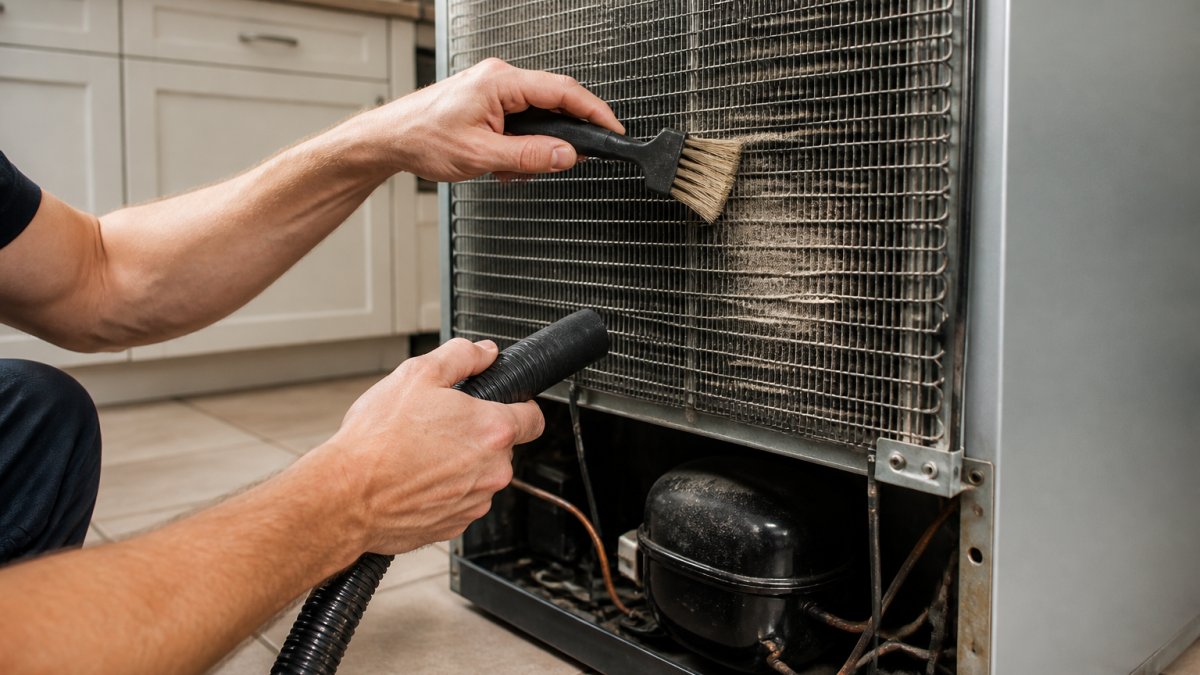
Condenser coils sit either behind or beneath your refrigerator. Over time, they collect dust, pet hair, and debris. When they’re clogged, the compressor has to work harder to cool the unit, and eventually, it can’t keep up.
Unplug the refrigerator first. Locate the coils (usually behind a kickplate at the bottom or behind the rear panel). Use a soft brush or a coil-cleaning brush to gently remove the buildup. Vacuum up the debris as you go. This simple maintenance task takes about 20 minutes and costs nothing.
After cleaning, plug the unit back in and wait several hours. You should notice a difference in cooling performance. Many refrigerators that seem to be failing just need this basic preventative maintenance.
Dirty condenser coils are one of the most common reasons refrigerators lose cooling ability. A 20-minute cleaning often restores normal function without any repair cost.
Inspect the Door Seal and Evaporator Fan
A damaged door seal lets warm air leak into the unit constantly. The compressor runs overtime trying to maintain temperature, and eventually, it can’t keep up. Check the seal by closing the door on a dollar bill. If it slides out easily, the seal isn’t tight enough.
Seals are relatively affordable to replace, and the job is straightforward for a technician. If the seal looks visibly cracked or torn, replacement is worth considering before you explore alternatives to replacing a broken refrigerator entirely.
The evaporator fan circulates cold air from the freezer into the refrigerator compartment. If it’s broken, the fridge stays cold but the main compartment warms up. Listen for a quiet fan noise when the compressor is running. No sound could mean the fan has failed.
Both of these components are repairable, though the evaporator fan replacement typically requires a technician. The cost is usually modest compared to full replacement.
Professional Repair vs. Replacement: Cost Analysis
At some point, you need to decide whether repair makes financial sense. This isn’t just about the repair cost itself. It’s about the appliance lifespan, the likelihood of future failures, and the energy efficiency gap between your current unit and a new one.
A general rule: if the repair costs less than one-third the price of a replacement, repair almost always makes sense. If it’s between one-third and one-half, you’re in the gray zone. If it exceeds half the replacement cost, replacement usually wins.
Consider the age of your refrigerator too. Units over 10-12 years old are more likely to develop additional problems soon after one repair. A newer unit with a sealed system issue might be worth fixing. An older model with a compressor failure is a different calculation.
Energy efficiency matters more than many homeowners realize. Older refrigerators consume significantly more electricity than modern models. Over several years, the energy savings from a new, efficient unit can offset a substantial portion of the replacement cost. Check your current model’s energy rating and compare it to what’s available now.
| Factor | Repair Makes Sense | Replacement Makes Sense |
|---|---|---|
| Refrigerator age | Under 8 years | Over 12 years |
| Repair cost | Less than 30% of replacement | More than 50% of replacement |
| Compressor status | Working, other components failing | Compressor failure |
| Energy rating | Still reasonable for age | Significantly outdated |
| Remaining warranty | Active coverage available | Warranty expired long ago |
Temporary Food Storage Solutions During Outages
When your refrigerator fails, you have a narrow window to prevent food spoilage. The USDA recommends that perishable food should not sit above 40°F for more than two hours (one hour if the room is above 90°F). Knowing your alternatives to replacing a broken refrigerator includes understanding how to preserve food temporarily.
If repair will take a few days, several options exist. A cooler filled with ice can hold perishables safely for 24-48 hours. Use block ice rather than cubes, it melts more slowly. Keep the cooler in the coolest part of your home, away from direct sunlight.
Dry ice is another option, though it requires careful handling. It’s roughly twice as cold as regular ice and lasts longer, but it can cause freezer burn on food and poses a safety risk if handled improperly. Never touch dry ice with bare hands. If you go this route, research proper handling procedures first.
Some communities have emergency cooling centers or food banks that can temporarily store perishables during appliance failures.
Signs of Compressor Failure and Sealed System Issues
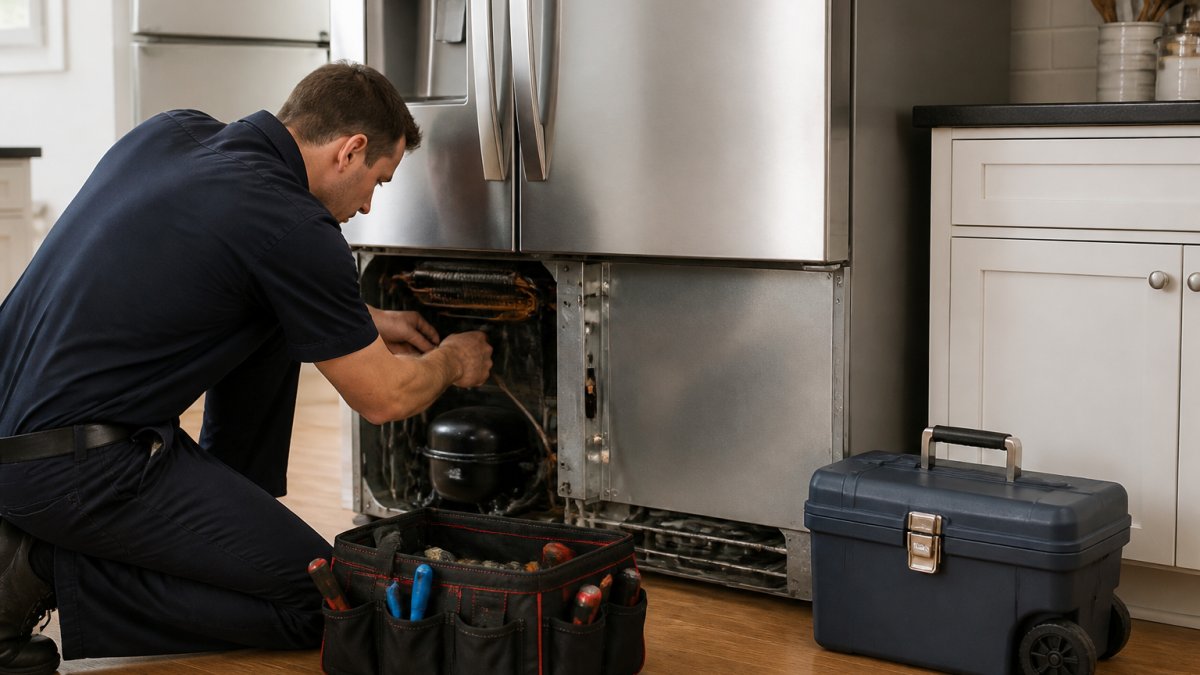
The compressor is the heart of your refrigerator. It pumps refrigerant through the cooling system. When it fails, you’re facing a major repair or replacement decision.
Compressor failure and sealed system leaks are serious issues. They’re also expensive to repair. If your refrigerator is older and showing these signs, replacement often makes more financial sense than attempting to fix a failing sealed system.
Disposal, Recycling, and Upcycling Options
If you do decide that replacement is the right choice, you’ll need to dispose of the old unit responsibly. Refrigerators contain hazardous materials, including refrigerant and foam insulation. Dumping one illegally is both environmentally harmful and illegal in most jurisdictions.
Choosing a Reliable Repair Service
If you’ve decided that repair is the right path, selecting a qualified technician matters. Not all repair shops are equally reliable, and a bad repair can cost you more than a replacement.
Homeowners in the Tampa Bay area who need a professional diagnosis before deciding whether to repair or replace.
Frequently Asked Questions
What can I use instead of a refrigerator while waiting for repairs?
Several temporary solutions work during a repair wait. Dry ice keeps food cold for 24-48 hours. A cooler filled with ice packs maintains safe temperatures if refilled every 4-6 hours. For short outages, a neighbor’s fridge or cooler borrowed from friends provides immediate relief. Avoid leaving perishables at room temperature beyond 2 hours; bacteria multiply rapidly. Always prioritize food safety protocols during outages to prevent spoilage and foodborne illness.
Is it cheaper to have a refrigerator repaired or replaced?
The cost of refrigerator repair vs replacement depends on the appliance’s age, the specific failure, and the model’s replacement cost. Repairs typically cost less upfront, but if your refrigerator is over 10 years old, frequent repairs may exceed replacement costs within 2-3 years. A compressor failure or refrigerant leak on an older unit often tips the balance toward replacement. Request a professional diagnostic to compare the repair estimate against the cost of a reliable replacement model before deciding.
What should I do with a non-working refrigerator if I decide not to repair it?
If replacement is your choice, you have several options. Appliance retailers often haul away old units when delivering new ones. Local recycling centers accept refrigerators and recover valuable metals and materials. Never dispose of refrigerators in landfills; they contain refrigerant and hazardous materials requiring proper handling. Contact your local waste management authority for appliance recycling programs in your area. Some recyclers offer free pickup for large appliances, making responsible disposal both accessible and environmentally sound.
How do I know if my refrigerator is worth repairing?
A few factors determine repair viability. If the appliance is under 7 years old and the repair cost is less than 50% of a replacement unit’s price, repair typically makes sense. Check the specific failure: thermostat calibration or evaporator fan issues are usually affordable fixes. However, compressor failure, sealed system repair, or refrigerant leaks on older units often justify replacement. Licensed repair technicians can provide an honest assessment and cost estimate to help you decide whether repair or replacement aligns with your budget and timeline.