
A stove that clicks once or twice as a burner lights is doing its job. A stove that keeps clicking after the flame is on, or clicks when every knob is off, is asking for attention. The right stove clicking fix depends on whether the issue is moisture, food debris, a misaligned burner part, or a failing ignition component. The good news is that some causes are simple to address safely. Others should be diagnosed before they become a bigger inconvenience.
Why a Gas Stove Keeps Clicking
Gas burners use an electric igniter to create a spark near the burner. When you turn a control knob to the light position, the igniter clicks rapidly until the gas catches fire. On many ranges, one burner being activated can make all of the igniters spark at the same time. That is normal.
The clicking should stop shortly after a steady flame appears. If it does not, the ignition system may still be detecting the need to spark, or it may be getting an unwanted electrical signal. In homes around Tampa Bay, humidity and spill-related moisture are especially common triggers. A pot that boiled over or a damp cleaning cloth can leave enough moisture around the burner or control area to keep the igniter firing.
The timing of the problem gives useful clues. Clicking immediately after a spill is often caused by moisture or residue. Clicking that happens randomly on dry days, returns after cleaning, or continues with the knobs off can point to a worn spark module, switch, wiring issue, or damaged igniter.
Start With Safety, Not Cleaning
Before attempting any stove clicking fix, turn every burner knob fully to the off position. If the stove is clicking but there is no gas smell, unplug the range or switch off the circuit breaker before removing burner parts or cleaning near the igniters.
If you smell gas, hear hissing, or a burner will not light properly, do not keep testing it. Avoid turning electrical switches on or off, open windows if you can do so safely, leave the area, and contact your gas utility or emergency services as appropriate. A persistent gas odor is not a cleaning project.
Also avoid poking metal objects into burner ports or scraping the ceramic igniter with a knife. Igniters are fragile, and bending or cracking one can turn a minor issue into a repair call.
A Safe Stove Clicking Fix You Can Try
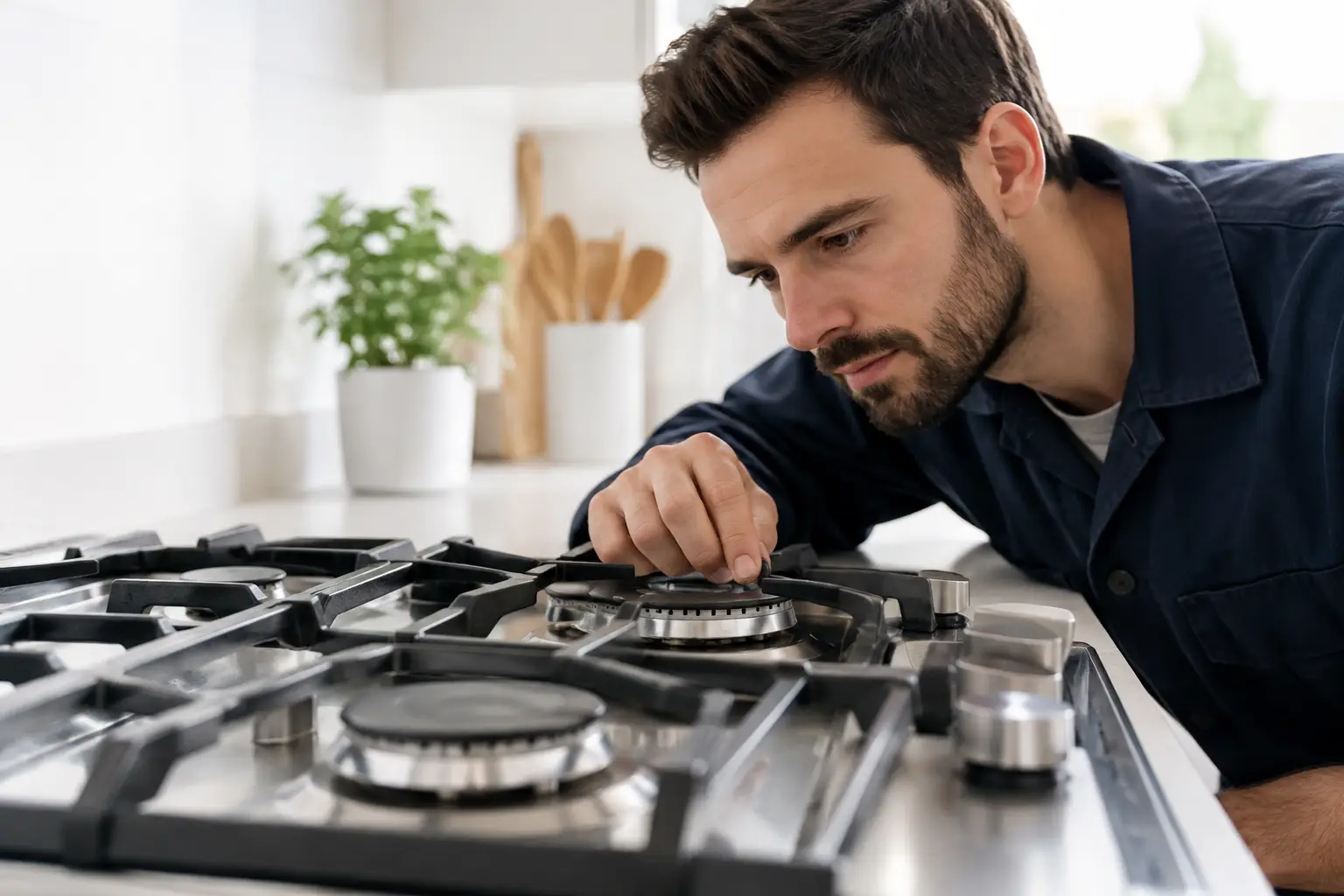
When there is no gas odor and the problem began after cooking or cleaning, start with the parts you can see. Let the cooktop cool completely, then remove the grates, burner caps, and removable burner heads. Take a quick photo first if you are unsure how the pieces fit together.
Wipe away food residue, grease, and standing water with a dry, soft cloth. Pay close attention to the small ceramic igniter beside each burner and the area beneath the burner cap. A little moisture or cooked-on residue can redirect the spark and cause continued clicking.
Do not soak the igniters or pour water into the burner openings. If the burner caps and heads need washing, clean them separately with warm water and mild dish soap, then dry them thoroughly. Give the cooktop and components time to air-dry before reassembling. A fan nearby can help, but do not use an open flame or high heat to speed up drying.
Once every part is dry, set each burner head and cap back in its proper position. This matters more than many homeowners realize. A cap that is slightly off-center can prevent the burner from lighting evenly and may leave the ignition system clicking. The cap should sit flat, without rocking or gaps.
Restore power and test one burner at a time. A healthy burner should produce a quick spark and light into a mostly even blue flame. A brief orange flicker can happen from dust or moisture, but a consistently yellow, uneven, or weak flame deserves professional attention.
Check for These Common Clues
A closer look can help you decide whether drying and reassembly solved the problem or whether the stove needs service:
- Clicking stops after the burner area dries, suggesting moisture was the likely cause.
- One burner clicks but will not light, even though neighboring burners work, suggesting a burner cap, igniter, or gas-flow issue at that location.
- All burners click continuously, including when the knobs are off, which can indicate a switch or ignition module problem.
- The clicking started after a deep clean, heavy boil-over, or humid day, making trapped moisture more likely.
When Cleaning Will Not Solve the Problem
Not every clicking range has a simple surface-level cause. If the stove continues clicking after it has been thoroughly dried and correctly reassembled, an internal part may be failing. Common repair needs include a weak or cracked spark igniter, a damaged ignition wire, a stuck burner switch, or a faulty spark module.
A failing igniter may spark in the wrong place, spark weakly, or continue firing even after the flame is established. A defective switch can send a signal to the ignition system when no burner is being used. Since these components involve electricity, gas connections, and parts specific to your range model, they are best handled by a qualified appliance technician.
It can be tempting to ignore the sound if every burner still lights. But constant clicking wears on the ignition system, can become disruptive, and may leave you without a working burner at an inconvenient time. If the range trips a breaker, sparks intermittently, lights with a delay, or clicks at random through the night, schedule a diagnostic rather than repeatedly unplugging it and hoping it settles down.
Preventing Future Clicking Problems
Most spill-related ignition trouble is preventable with a few simple habits. Wipe up boil-overs after the cooktop has cooled, especially around burner caps and igniters. When cleaning, use a lightly damp cloth instead of spraying cleaner directly around the ignition area. Make sure removable caps and burner heads are fully dry before putting them back.
It also helps to place cookware squarely on the grates and use pots sized for the burner. Oversized pans can trap heat and moisture around the burner area, while frequent boil-overs send food and liquid exactly where the igniter needs to spark.
For rental properties or busy family kitchens, do not assume a child, guest, or cleaning service reassembled the burners correctly. A quick check that caps are level and matched to their correct burner can prevent a frustrating no-light condition later.
When to Call for Professional Stove Repair
Call for service if the stove keeps clicking after you have safely dried and reseated the burner components, if there is any gas smell, or if a burner will not light reliably. Professional diagnosis is also the practical choice when the problem occurs with the knobs off, the range has electrical symptoms, or you are not comfortable removing cooktop parts.
A technician can identify whether the issue is limited to an igniter or burner assembly, or whether the control switches and spark module need attention. That distinction matters because replacing parts without testing can waste money and still leave the clicking unresolved.
For homeowners in the Tampa Bay area, Tampa Bay Appliance Repair provides in-home diagnostics for gas stove ignition problems across makes and models. The diagnostic fee applies toward the repair, so you can get a clear explanation of the issue before deciding how to proceed.
A clicking stove is rarely something to panic about when there is no gas odor, but it is worth taking seriously. Dry the obvious moisture, confirm the burner pieces are seated properly, and let a qualified technician handle a problem that keeps coming back. A quiet, reliable cooktop makes everyday meals easier and keeps a small annoyance from turning into a rushed replacement decision.