
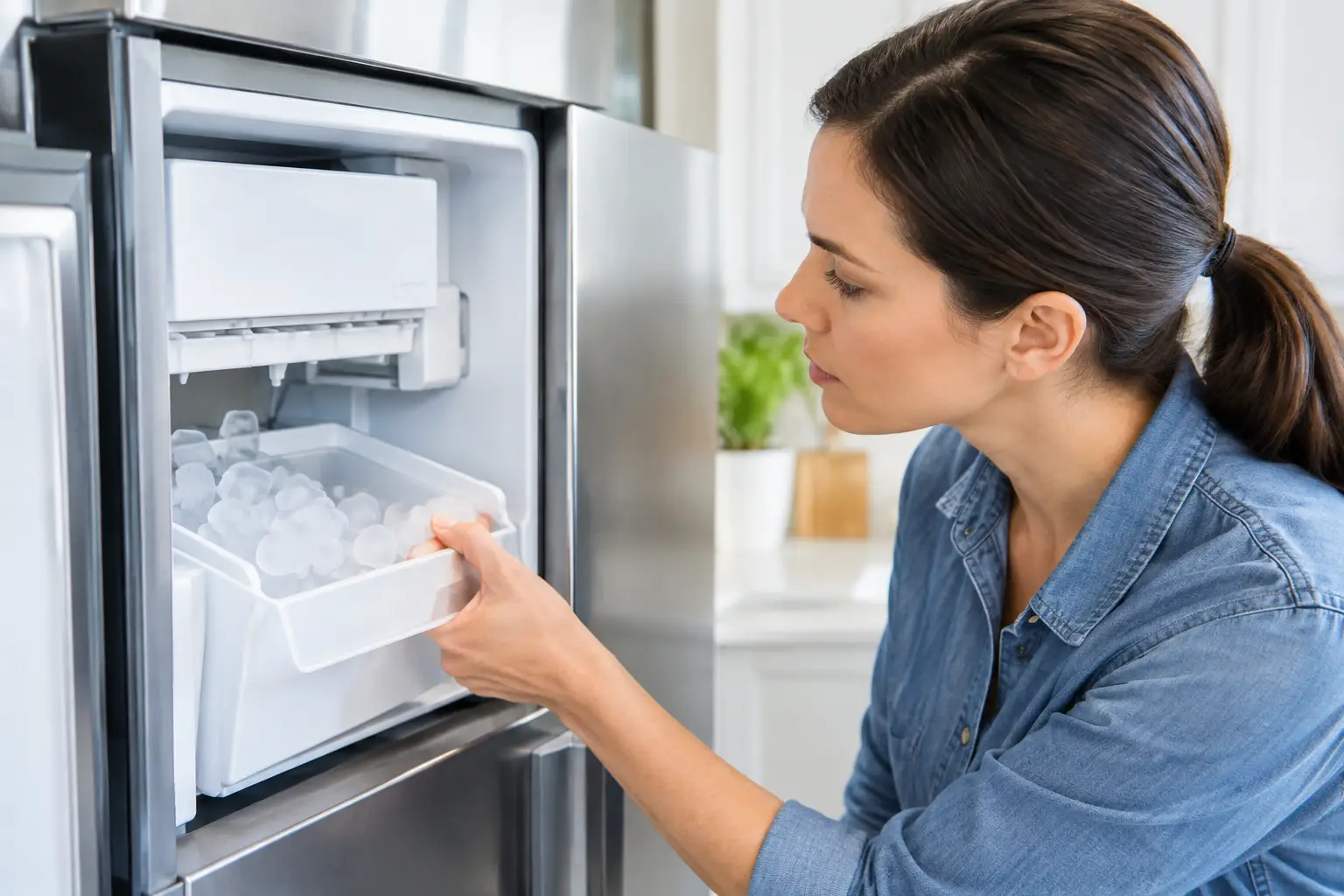

A freezer can be holding a full week of groceries, yet the missing ice is often what gets noticed first. Before you buy bags of ice or assume the refrigerator needs to be replaced, learning how to troubleshoot ice maker problems can help you rule out a few common, fixable causes.
Ice makers depend on several refrigerator systems working together: the freezer must stay cold enough, the water supply must be open, and the ice maker needs power and room to operate. A quick check can sometimes get production moving again. Other times, the symptoms point to a part that needs professional diagnosis.
Start With the Simple Ice Maker Checks
Open the freezer and look at the ice maker itself. If your model has a wire shutoff arm, make sure it is in the down or on position. This arm can be lifted by a full bin, a bag of frozen food, or ice that has piled up in the wrong spot. On models with an electronic switch, check that the ice maker has not been turned off accidentally.
Next, look inside the ice bin. If cubes are stacked high, fused together, or blocking the ice maker, empty the bin and remove loose ice. Ice can clump when the freezer door is opened frequently or left slightly ajar, allowing humid Florida air to enter. The ice maker may sense that the bin is full even when it is not.
Also check for a recently changed setting. Some refrigerators have a separate ice maker button on the control panel, while others offer options such as “ice off,” “vacation,” or a locked dispenser. A setting change after a power outage, cleaning, or moving food around can be an easy explanation.
Check Freezer Temperature Before Anything Else
An ice maker cannot cycle properly in a freezer that is too warm. For most refrigerators, the freezer should be set around 0 degrees Fahrenheit. If it is consistently warmer than about 10 degrees, ice production may slow down or stop altogether.
Place a freezer thermometer inside for a more accurate reading than the control panel alone can provide. If the freezer feels warm, check whether food packages are blocking air vents. Cold air needs to circulate around the compartment, and an overpacked freezer can create warm pockets near the ice maker.
Look at the door gasket as well. A torn, dirty, or loose seal lets humid air in and cold air out. You may notice frost buildup, soft ice cream, or condensation around the freezer door. Cleaning the gasket and making sure the door closes fully may help, but persistent temperature problems can involve the evaporator fan, defrost system, control board, or sealed refrigeration system.
Inspect the Water Supply
If the ice maker is on and the freezer is cold, water supply is the next likely issue. Start with the refrigerator’s water dispenser if it has one. Slow flow, no water, or sputtering from the dispenser often points to the same supply problem affecting the ice maker.
Make sure the shutoff valve behind or beneath the refrigerator is fully open. It is easy for this valve to be bumped during cleaning or when the appliance is moved. Then inspect the visible water line for kinks, especially if the refrigerator was recently pushed back against the wall.
A clogged water filter is another common cause of small cubes, hollow cubes, or an empty ice tray. Most refrigerator manufacturers recommend replacing filters on a regular schedule, often every six months, though actual timing depends on use and local water conditions. If the filter is overdue, replace it with the correct approved filter for your model and allow time for the system to refill.
Do not bypass a filter unless your refrigerator manual specifically allows it. Some models need a filter bypass plug to maintain proper water flow, and forcing the wrong setup can create leaks or poor performance.
Look for Frozen Fill Tubes and Ice Jams
A frozen fill tube can stop water from reaching the ice maker. The fill tube is the small passage where water enters the ice tray. If you see a solid piece of ice at that opening, the ice maker may not receive water for the next cycle.
This can happen after a small water valve leak, low water pressure, or a freezer temperature issue. You can gently melt visible ice with a warm cloth, but do not use sharp tools, a hair dryer near plastic parts, or an open flame. Those methods can damage the refrigerator liner, wiring, or water components.
If the fill tube freezes again, there is usually an underlying reason. The water inlet valve may not be closing completely, or the ice maker may be cycling incorrectly. Repeatedly thawing it treats the symptom, not the cause.
Ice can also jam in the dispenser chute. If the refrigerator makes ice but will not dispense it, remove the bin and break apart any large clumps. Wash and dry the bin thoroughly before putting it back. Sticky ice clumps are often a sign of moisture entering the freezer, so check the door seal and make sure the ice bin is seated correctly.
Reset the Ice Maker Carefully
Many modern ice makers have a reset button or test button. The location varies by brand and model, but it is often found underneath the ice maker, behind a small cover, or on the side of the assembly. Consult the owner’s manual for the correct reset procedure for your refrigerator.
After a reset, wait patiently. It may take several hours for the ice maker to cycle and up to 24 hours for a newly installed refrigerator or recently restored unit to make a full bin of ice. Opening the freezer repeatedly to check can slow the process because it raises the compartment temperature.
If you hear the ice maker cycle but no water enters the tray, focus on the water line, filter, inlet valve, or frozen fill tube. If water fills the tray but never freezes or ejects, the issue may be related to freezer temperature, the ice maker motor, thermostat, sensor, or control board.
When to Stop Troubleshooting an Ice Maker
Some refrigerator repairs are best left to a trained technician. Turn off the water supply and schedule service if you see a water leak, damaged water line, burning smell, repeated tripped breaker, or heavy frost buildup that returns after cleaning. Water and electrical components are close together in many refrigerator designs, so a temporary fix can become a bigger problem if the source is not identified correctly.
Professional help also makes sense when the freezer is not holding temperature, the ice maker freezes up repeatedly, or replacing the filter and checking the basics does not restore production. The ice maker itself may be faulty, but it is not always the part to blame. A proper diagnosis can prevent paying for an ice maker assembly when the real issue is the inlet valve, fan, defrost system, or electronic control.
For homeowners in the Tampa Bay area, Tampa Bay Appliance Repair provides in-home refrigerator and freezer diagnostics with licensed, insured technicians who service all major makes and models. The diagnostic fee applies toward the repair, so you can get a clear answer before deciding how to proceed.
A few hours without ice is inconvenient. A refrigerator that is warming up, leaking, or building frost deserves quicker attention, especially when there is food to protect. Trust what the appliance is telling you, handle the safe checks first, and get help before a small ice maker issue turns into a refrigerator emergency.