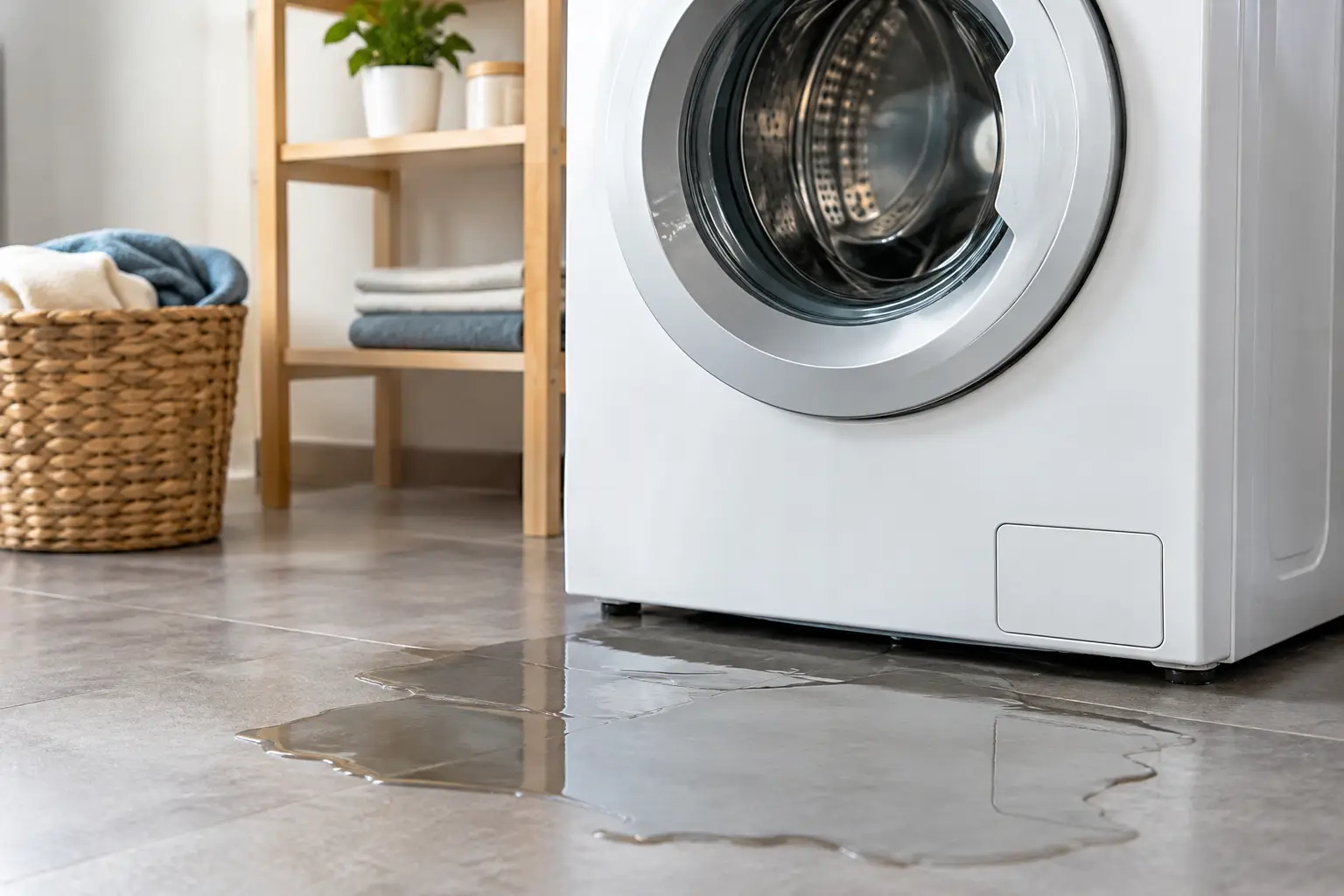

A small puddle beside the laundry room wall can turn into warped flooring, mildew, or a much larger cleanup faster than most homeowners expect. If you are wondering what causes washer leaks, the answer usually depends on when the water appears: while the machine fills, during agitation, while it drains, or only after a completed cycle. That timing gives a technician valuable clues and can help you avoid guessing at a repair.
Before inspecting anything, unplug the washer and turn off its water supply valves. If water is actively flowing, shut off the valves immediately and avoid running another load until the source is clear.
What causes washer leaks at different points in a cycle?
A washing machine uses several separate water paths. Fresh water enters through supply hoses and inlet valves, circulates through the tub, then leaves through a drain hose and pump. A leak can occur at any point, but the stage of the cycle often narrows down the likely problem.
Leaks while the washer is filling
If water appears shortly after you start a load, begin with the supply hoses behind the machine. Hot and cold water hoses can loosen at their connections, develop cracks, or wear out from age. A connection may drip only when water pressure is applied, which is why it can look perfectly dry between loads.
Check for moisture around the hose fittings, the shutoff valves, and the back panel where the hoses attach. Do not overtighten a connection with excessive force. A worn rubber washer inside the hose, a damaged fitting, or a corroded valve may need replacement instead.
The water inlet valve is another possible source. This internal component opens to let hot or cold water into the washer. When its housing cracks or a connection fails, water can leak from the rear or inside the cabinet during filling. Because reaching the valve often requires opening the machine, this is usually a job for a qualified appliance technician.
An overflowing washer also points to a filling-related issue. On many models, that can involve a faulty water-level pressure system, a defective inlet valve that does not close properly, or a control issue. Do not keep restarting the cycle to test it. Overflowing water can spread quickly and damage nearby walls or flooring.
Leaks during washing or agitation
When the leak starts after the tub has filled and the washer begins moving, the issue may be related to the door, lid area, detergent use, or the tub itself.
For front-load washers, inspect the rubber door gasket, often called a boot seal. Small tears, worn spots, trapped objects, and buildup around the seal can prevent the door from closing watertight. A sock, coin, hairpin, or other item caught between the gasket and glass may be enough to create a slow leak. Wipe the seal clean and look carefully for damage, especially along the bottom edge where water collects.
For top-load washers, water can splash over the tub if the machine is overloaded, badly unbalanced, or used with too much detergent. High-efficiency washers require HE detergent, and even then, using more than the recommended amount can create excess suds. Those suds may push water out through places that normally stay dry, making a detergent problem look like a mechanical failure.
A cracked outer tub is less common but more serious. This can happen after years of use, from an object left in a pocket, or from damage to internal components. Tub repairs vary widely by washer model. In some cases, repairing the affected part makes sense; in others, the labor and parts cost may make replacement the more practical choice.
Leaks when the washer drains or spins
A washer that leaks near the end of a cycle often has a drain-related problem. The drain hose may be loose, split, kinked, or incorrectly positioned in the household standpipe. If the hose is shoved too deeply into the drain pipe or sealed too tightly, draining can be affected and water may back up.
Look behind the washer for a hose that has slipped from the drain opening or shows obvious cracking. Also check whether the household drain itself is overflowing. If water rises from the standpipe when the washer drains, the appliance may be working normally while the home’s drain line is partially blocked. That calls for plumbing service rather than washer repair.
Inside the washer, a damaged drain pump, loose pump hose, or worn clamp can cause leaks during draining. The pump moves a large volume of water quickly, so even a small crack can create a noticeable puddle. Some pumps also leak only during high-speed spin, when vibration shifts the machine and puts pressure on a weak connection.
Common washer leak sources homeowners can safely check
A quick inspection can help you describe the problem clearly when scheduling service. With the washer unplugged and the water supply off, look for visible moisture around the supply hoses, drain hose, detergent dispenser, door gasket, and floor beneath the cabinet.
Pay attention to the water’s location. Water at the back of the washer often suggests supply hoses, inlet valves, or drain connections. Water at the front of a front-load machine may point toward the door seal or dispenser. Water directly underneath can be harder to identify because it may come from a pump, tub hose, or internal seal.
It also helps to think about the load that was running. A leak after washing a bulky comforter may be caused by an unbalanced load. A leak after adding a new detergent or extra detergent may be a sudsing issue. If the problem happens with every load, regardless of size or settings, a worn part becomes more likely.
Do not remove panels or tip a heavy washer without proper help. Washing machines are awkward, heavy appliances, and internal electrical components can remain hazardous if the unit is not handled correctly.
When a washer leak needs professional repair
Call for service promptly if the leak is recurring, coming from inside the cabinet, accompanied by unusual noises, or paired with poor draining. You should also stop using the machine if you smell burning, see damaged wiring, or notice water reaching an electrical outlet.
A professional diagnostic can distinguish between a simple hose replacement and a more involved repair involving a drain pump, inlet valve, tub seal, or door gasket. That matters because replacing parts based on guesswork can cost more than a proper diagnosis. A fair repair recommendation should explain the failed component, the expected repair, and whether the cost makes sense for the washer’s age and condition.
For Tampa Bay homeowners, humidity makes it especially worthwhile to address laundry-room moisture quickly. Even a slow leak can feed mold growth behind the washer or beneath flooring where it is not immediately visible. Tampa Bay Appliance Repair provides in-home diagnostics for major washer brands and models, with clear communication before repair work begins.
Can you prevent future washer leaks?
Not every failure is preventable, but a few habits reduce the risk. Avoid overloading the tub, use the correct amount and type of detergent, and inspect the supply hoses periodically for bulges, rusted fittings, or cracks. Replace aging rubber hoses before they fail, particularly if the washer is several years old.
Leave the door or lid open after a load when practical so moisture can evaporate. For front-load washers, wipe the door gasket occasionally and remove debris before it damages the seal. If the washer begins shaking, walking, or banging during spin, have it leveled or inspected rather than waiting for vibration to loosen hoses and internal connections.
A washer leak is rarely something to ignore, but it also does not automatically mean you need a new machine. Turning off the water, noting when the leak occurs, and getting a clear diagnosis can protect your home and make the next step much less stressful.