
A freezer rarely quits at a convenient time. One evening it is keeping groceries solidly frozen; the next, you find softened ice cream, a puddle near the door, or food that no longer feels as cold as it should. Knowing the best signs of freezer failure can help you act before a minor part problem becomes a costly food loss or a complete appliance breakdown.
Not every change means the freezer is finished. A door left slightly open, a crowded air vent, or a recent power interruption can cause temporary temperature trouble. But when symptoms continue, get worse, or appear together, it is time to take the issue seriously.
1. Food Is Softening or Thawing
The clearest warning sign is food that is no longer consistently frozen. Meat may feel pliable, vegetables may be partially thawed, and ice cream may turn soft or icy. A healthy freezer should hold food at 0°F or below, not merely feel cool when you open the door.
Check the temperature with an appliance thermometer rather than relying only on the control setting. If the temperature stays above 0°F for more than a short period, move food to another freezer or a well-stocked cooler with ice while you arrange service. Avoid repeatedly opening the door, since every opening lets warm, humid Tampa Bay air inside.
2. Heavy Frost Builds Up Inside
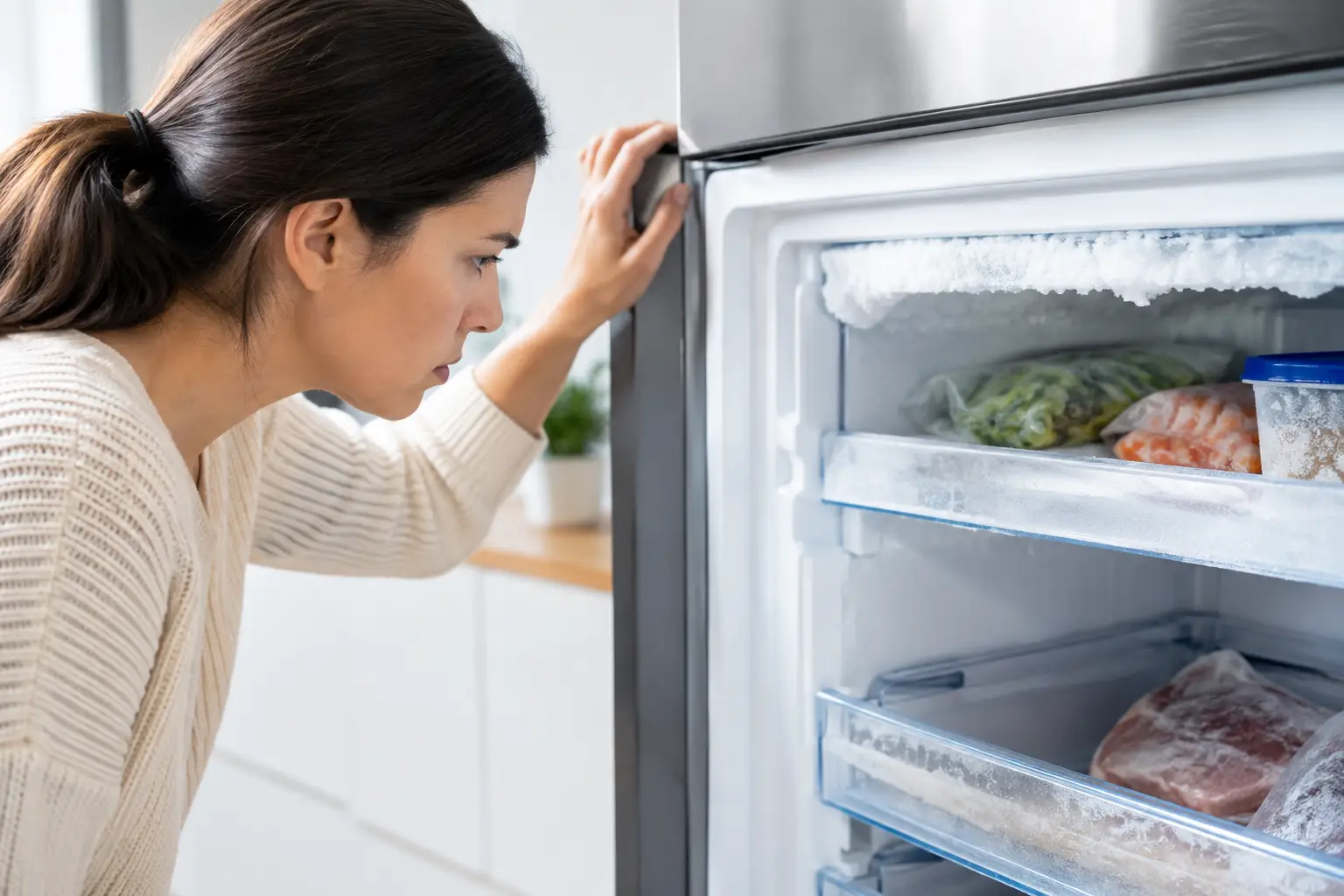
A light coating of frost can happen occasionally, especially after the door has been opened often. Thick frost on walls, drawers, packages, or the back interior panel is different. It may point to a worn door gasket, a defrost system problem, or a door that is not closing squarely.
Frost takes up storage space and restricts airflow. In frost-free models, ice can also build behind the back panel and block the evaporator coils, leaving the freezer running but unable to circulate cold air properly. Scraping ice away may offer temporary relief, but it will not correct the cause.
3. The Freezer Runs Almost Constantly
Most freezers cycle on and off throughout the day. If yours seems to run nearly nonstop, it may be working too hard to reach its set temperature. You may notice this as a steady hum that continues for hours, warmer food, or a higher electric bill.
Sometimes the fix is simple: clean dusty condenser coils, allow space around the appliance for ventilation, and make sure the door seal is clean. If those basics are in order, a constantly running freezer may have a failing fan motor, defrost issue, compressor concern, or refrigerant-related problem. Those are issues best diagnosed by a qualified technician.
4. You Hear New or Unusual Noises
Freezers are not silent. A mild fan sound, a hum, and occasional clicks can be normal. What deserves attention is a sudden change: loud buzzing, repeated clicking, grinding, rattling, or a fan-like scraping sound.
A clicking compressor may be struggling to start. Grinding can come from a worn evaporator or condenser fan motor. Scraping may indicate ice striking a fan blade, which is often connected to excess frost behind an interior panel. Record when the sound occurs and whether the freezer is still cooling. That information can make a diagnosis faster and more accurate.
5. Water Is Pooling on the Floor or Inside the Cabinet
Water under a freezer creates a slip risk and can damage flooring, especially if the leak goes unnoticed. Inside the unit, water may collect below drawers or later freeze into a sheet of ice. A blocked defrost drain is a common cause, but the source can also be a damaged water line on models with an ice maker, a door-seal issue, or condensation from warm air entering the cabinet.
Do not ignore a recurring puddle just because the freezer still seems cold. Water and electrical appliances are a poor combination, and repeated leaking can lead to more expensive repairs around the home.
6. The Door Will Not Seal Tightly
A freezer door should close with a firm, even seal. If it pops open, sags, needs a hard push to latch, or has visible gaps around the gasket, cold air is escaping. The appliance then runs longer, moisture enters, and frost follows.
Start by checking for food packages or drawers that are preventing the door from closing. Wipe the gasket with warm, mild soapy water and inspect it for cracks, tears, stiffness, or sections that have pulled away. A simple test is to close the door on a sheet of paper. If the paper slides out easily at several points, the seal may not be doing its job.
7. Ice Maker Problems Appear Alongside Cooling Problems
An ice maker that suddenly makes smaller cubes, hollow cubes, clumped ice, or no ice at all is not always an ice maker failure. It can be an early clue that the freezer is not reaching the proper temperature. Ice production needs stable cold conditions, and even a modest temperature increase can affect it.
There are other possibilities, including a clogged water filter, water supply problem, or faulty ice maker component. Still, if poor ice production happens with soft food, frost, or a constantly running freezer, treat the cooling issue as the priority.
8. The Interior Light Works, but It Is Not Cold
It is easy to assume a freezer has power because the interior light turns on. The light only confirms electricity is reaching part of the appliance. It does not mean the compressor, fans, controls, or cooling system are operating correctly.
This situation can be particularly misleading after a storm-related outage or power surge. Check the breaker, confirm the outlet is working, and verify the temperature setting was not accidentally changed. If the freezer has power but remains warm, keep the door closed as much as possible and schedule a diagnostic rather than waiting to see whether it recovers on its own.
9. The Back or Side Feels Excessively Hot
It is normal for certain exterior areas of a freezer to feel warm while the cooling system is operating. Excessive heat, however, especially when paired with poor cooling or nonstop operation, can indicate the system is under strain.
Make sure the appliance has adequate clearance and that the condenser area is not packed with dust or pet hair. If cleaning and ventilation do not improve the problem, professional testing is the sensible next step. Continuing to run an overheating freezer can put additional stress on major components.
10. There Is a Burning Smell, Smoke, or a Tripping Breaker
These are urgent warning signs. Turn the appliance off or unplug it if it is safe to do so, and avoid using an outlet that appears damaged. A burning odor, visible smoke, sparks, or a breaker that repeatedly trips can point to an electrical fault rather than an ordinary cooling issue.
Do not try to keep the freezer running by resetting the breaker over and over. Protect your household first, then have the appliance and electrical connection evaluated by the appropriate professional.
What to Do When You Notice Freezer Trouble
Start by protecting the food. Keep the door closed, move valuable perishables to another freezer if available, and use coolers with ice for items that must stay cold. Frozen food that still contains ice crystals may often be refrozen, but food that has been above safe temperatures for too long should be discarded. When in doubt, prioritize food safety over saving a package of groceries.
Next, check the straightforward causes: confirm the temperature setting, make sure the door is fully closed, look for blocked vents, and inspect the breaker. Do not chip at heavy ice with a knife or sharp tool. That can puncture an interior liner or cooling component and turn a manageable repair into a replacement decision.
For homeowners in Tampa Bay, prompt diagnosis is often the most affordable path when a freezer is failing. Tampa Bay Appliance Repair can inspect any major make or model in your home, explain the issue plainly, and help you understand whether repair makes financial sense. The diagnostic fee applies toward the repair, so you can make a decision with clearer information instead of guessing.
A freezer problem does not always mean you need a new appliance. Catch the warning signs early, protect your food, and address persistent cooling issues before a small inconvenience becomes a fully thawed freezer.