
A pan that suddenly stops heating halfway through dinner can make an induction cooktop feel more complicated than it should. The good news is that many induction stove repairs address a specific, identifiable problem – not a reason to replace the whole appliance. A qualified technician can test the cooktop safely, explain what failed in plain language, and help you decide whether repair is the sensible choice.
Induction stoves use magnetic energy to heat compatible cookware directly instead of relying on a traditional glowing heating element. That makes them fast, efficient, and easier to clean, but it also means their controls, sensors, cooling system, and power components need professional attention when something goes wrong.
Signs Your Induction Stove Needs Repair
Some problems are obvious, such as a burner that will not turn on. Others are more intermittent: the cooktop clicks repeatedly, shuts down after a few minutes, or heats only at certain power levels. These symptoms are frustrating, but they can also point a technician toward the affected component.
A repair visit is a good idea when one or more cooking zones no longer recognize cookware that previously worked, the display shows an error code, controls do not respond consistently, or the stove trips the breaker. Unusual buzzing, a fan that runs excessively, a cracked surface, or a burning odor also deserve prompt attention.
Do not ignore an appliance that is tripping a breaker, sparking, or giving off a burning smell. Turn the unit off at the breaker and avoid using it until it has been inspected. An induction stove operates on high-voltage electrical components, so this is not a safe appliance for trial-and-error repairs inside the cabinet or beneath the glass surface.
Common Induction Cooktop Problems
Not every cooking issue means the stove itself has failed. Induction cooking depends on the right pan, correct placement, and a stable power supply. A quick check can sometimes rule out a simple cause before scheduling service.
The Burner Will Not Detect a Pan
Induction cooktops require cookware with a magnetic base. Cast iron and many stainless steel pans work well, while aluminum, copper, glass, and some stainless cookware may not. A magnet is a simple test: if it does not stick firmly to the bottom of the pan, the cookware is unlikely to work on induction.
If a compatible, flat-bottomed pan still is not detected on one zone, the issue may involve the burner sensor, induction coil, wiring, or control board. If none of the zones recognize proper cookware, the diagnosis may point to a broader electrical or control problem.
The Cooktop Heats Unevenly or Shuts Off
A cooking zone that cycles off too quickly may be responding to overheating, poor airflow, a cooling fan issue, or a failing sensor. Induction appliances have internal protections designed to prevent damage. When those protections activate because a component is not working correctly, the stove may reduce power or turn off entirely.
Heat can also seem inconsistent when a pan is warped, undersized for the burner, or not centered. But when the same pan performs normally on other zones, it is time to have the affected area checked.
Touch Controls Do Not Respond
Touch controls can be affected by moisture, food residue, a control lock setting, or an electronic fault. First, clean and dry the surface completely, then confirm that the control lock is not activated. If the controls remain unresponsive, flicker, or activate randomly, professional diagnosis is the safer next step.
The glass surface may look simple, but the electronic controls underneath are not. Replacing parts without confirming the source of the problem can add expense without solving it.
The Stove Shows an Error Code
An error code is the appliance’s way of reporting a condition it cannot resolve on its own. The exact meaning varies by make and model. Some codes relate to cookware detection or temporary overheating, while others can indicate a cooling, communication, voltage, or internal board issue.
Write down the code, note which burner was in use, and take a photo if it disappears quickly. This information helps the technician begin the diagnostic process efficiently. Avoid repeatedly resetting the breaker to clear a code, especially if it returns right away.
Why Professional Induction Stove Repairs Matter
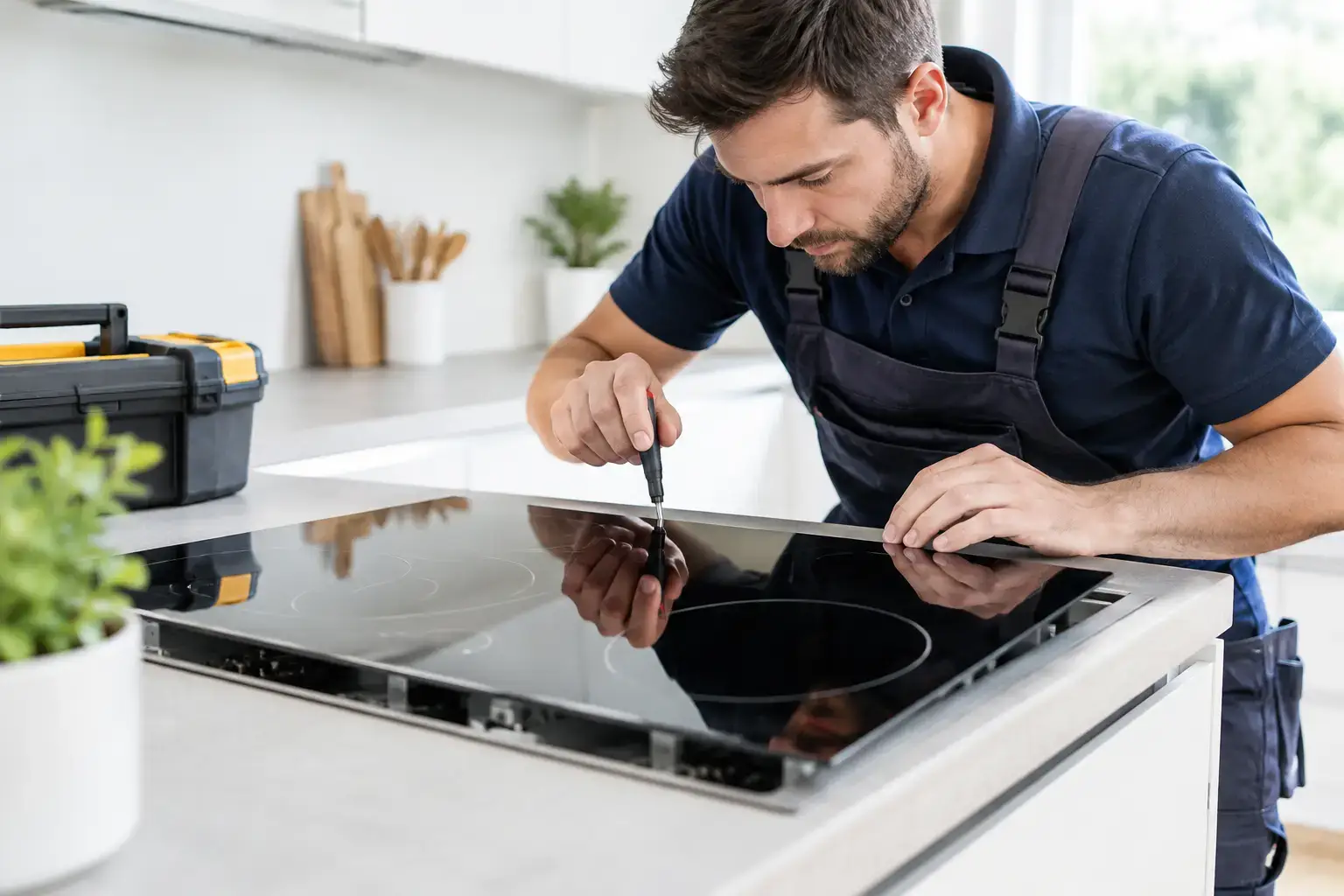
Induction ranges and cooktops combine high-voltage electricity with sensitive electronic components. A repair may involve testing power at the terminal block, checking wire connections, evaluating cooling fans, inspecting coils, or determining whether a control board is communicating correctly. Those checks require the right tools, service information, and safety procedures.
There is also a practical reason to call for help early. A minor issue, such as a weak cooling fan or loose connection, can place extra strain on other components if the appliance continues to run. Timely repairs may prevent a smaller service call from becoming a larger one.
For Tampa Bay homeowners, humidity and everyday kitchen use can add to the challenge. Steam, spills, and grease do not automatically cause a failure, but moisture around controls and vents should be cleaned promptly. Keeping the area around the appliance clear also supports proper ventilation.
What to Do Before Scheduling Service
You do not need to troubleshoot the appliance extensively. A few safe observations can help make the appointment more productive. Check whether the issue affects one burner or all of them, whether the breaker has tripped, and whether compatible cookware works on other zones. If the display presents a code, record it.
You can also clean the cooktop with a product approved for glass surfaces and make sure no moisture is resting on the control area. Do not use abrasive pads, attempt to lift the glass top, or remove panels to inspect wiring. A cracked glass surface should be evaluated before further use, even if the cooktop still appears to operate.
When you schedule a diagnostic, share the appliance brand, model number, approximate age, and symptoms. The model number is commonly found on the appliance frame, in the manual, or on a label that becomes visible when a drawer or oven door is opened. That information can help identify common issues and potential parts needs.
Repair or Replace? A Fair Way to Decide
The right answer depends on the appliance’s age, condition, repair cost, and the availability of replacement parts. If your induction stove is relatively new, in good overall shape, and has a single failed component, repair is often the more affordable path. A professional diagnostic gives you the facts needed to make that decision rather than guessing.
Replacement may make more sense when the cooktop has extensive physical damage, repeated major electronic failures, or parts that are no longer available. It can also be worth considering if the repair cost is unusually high compared with a comparable replacement. A trustworthy technician should be clear about those trade-offs, not pressure you toward an option that does not fit your household.
Tampa Bay Appliance Repair provides in-home diagnostics for major appliance brands and models, with a diagnostic fee applied toward the repair. Licensed and insured technicians can identify the issue, discuss the repair clearly, and treat your home with the respect a neighbor should expect.
A reliable cooktop makes daily life easier, whether you are getting breakfast ready before work or putting dinner on the table for your family. If yours is flashing codes, failing to heat, or shutting off without warning, arranging a professional diagnostic can replace uncertainty with a clear, practical next step.