

Last Updated: November 22, 2026
Quick Summary
The clearest signs your refrigerator needs repair are a fridge that won’t hold temperature, food spoiling early, new noises, leaks, and frost where it shouldn’t be. One symptom alone can be minor, but two or more together usually point to a failing component. A fridge should hold steady between 35°F and 38°F, with the freezer near 0°F.
- Temperature swings are the number one sign of trouble, so check readings with a thermometer over two days.
- Discard perishables that have been above 40°F for more than two hours rather than tasting them.
- Loud humming or clicking means the compressor or start relay is straining and may be near failure.
- Vacuum the condenser coils and test the door seal with a dollar bill before calling a technician.
- The average lifespan of a refrigerator is about 10 to 15 years, after which repairs cost more than the unit is worth.
Table of Contents
- Why Tampa Heat Makes Fridge Problems Worse
- Warning Signs Your Refrigerator Needs Repair
- Signs Your Refrigerator Compressor Is Going Out
- What to Do When Your Fridge Stopped Working Suddenly
- Safe Checks You Can Do Before Calling a Technician
- Refrigerator Repair Cost and the Repair-or-Replace Decision
- The Average Lifespan of a Refrigerator and When to Stop Repairing
- Book Same-Day Refrigerator Repair in Tampa Bay
- Frequently Asked Questions
Why Tampa Heat Makes Fridge Problems Worse
A refrigerator in Tampa works harder than one in almost any other U.S. market. Summer heat and near-constant humidity push the condenser to shed more heat, and the fridge runs longer to hold temperature.
A unit that would coast in a cooler climate can struggle by mid-afternoon in July. The compressor cycles more, the coils collect dust and moisture, and the door seals wear out sooner from constant use.
Below, we break down the warning signs in the order they usually appear, plus what you can safely check before you call anyone.
Warning Signs Your Refrigerator Needs Repair
The clearest signs your refrigerator needs repair are a fridge that won’t hold temperature, food spoiling early, new noises, leaks, and frost where it shouldn’t be. One symptom alone can be minor.
Here’s the full list, from most urgent to least.
It’s Not Staying Cold and Temperatures Keep Fluctuating
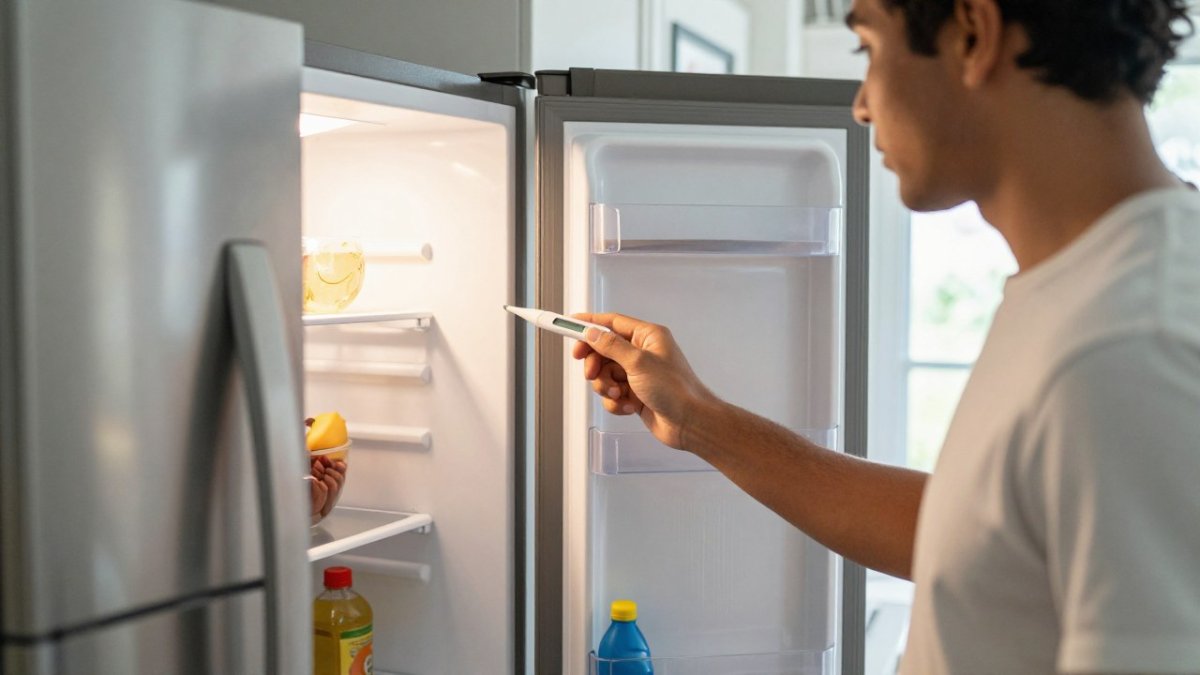
Temperature swings are the number one sign of trouble. The fridge should hold steady between 35°F and 38°F, and the freezer near 0°F.
Likely causes: a failing thermostat, dirty condenser coils, a worn door gasket letting warm air in, blocked vents, or a compressor that’s starting to go. Urgency: high.
A quick thermometer check over two days tells you whether the problem is real or just a door left open. Place a fridge thermometer on a middle shelf and a freezer thermometer between packages, and note the readings morning and evening.
Food Spoils Faster Than Usual
Perishable food going bad ahead of schedule is a quiet warning. If lettuce wilts in two days or leftovers smell off overnight, the fridge isn’t holding safe temperatures.
Likely causes: the same cooling and airflow problems above, plus an overpacked fridge that blocks cold-air circulation or a door seal that isn’t sealing. Urgency: high, because this is a food-safety issue. Perishables should be discarded if they’ve been above 40°F for more than two hours.
Watch out: don’t taste food to test it. When in doubt, throw it out. A fridge that can’t keep food cold is a food-safety issue, not just an inconvenience.
Unusual Noises, Condensation, Leaks, and Frost Buildup
Sound and moisture tell you a lot. Here’s what each symptom usually means and how urgent it is:
- Loud humming or clicking: the compressor or start relay is straining. Urgency: high if cooling has also dropped; the compressor may be near failure.
- Rattling or buzzing: a fan blade is hitting ice or debris, or the condenser fan motor is failing. Urgency: moderate; continued running can damage the fan.
- Sweating or condensation on the exterior or between doors: a bad door seal, a blocked drain, or high Tampa humidity overwhelming the seal. Urgency: moderate; fix the seal before it causes frost and cooling loss.
- Water on the floor: a clogged defrost drain line or a cracked drain pan. Urgency: moderate; clean the drain line and dry the area to prevent water damage.
- Frost in the freezer or on the back wall: a failing defrost system, a bad defrost heater or timer, or an ice maker that’s leaking. Urgency: moderate to high; frost buildup insulates the coils and reduces cooling over time.
For a deeper look at the sounds themselves, our guide on why your fridge is making noise breaks down each one.
It’s Running Constantly or Cycling Unusually
A fridge that never seems to shut off, or one that clicks on and off in short bursts, is working too hard. Likely causes: dirty condenser coils, a failing thermostat, a weak compressor, or a door gasket leaking warm air. Urgency: moderate; constant running raises your electric bill and shortens compressor life. Clean the coils and check the seal first, then call if the behavior continues.
The Motor or Compressor Area Feels Hot
A warm back panel or a compressor that’s hot to the touch can be normal during a Tampa summer, but excessive heat combined with poor cooling points to a failing compressor or a condenser that can’t shed heat. Urgency: high if cooling has dropped; keep the area around the fridge clear and schedule a diagnostic.
Your Energy Bill Is Climbing
A sudden jump in electricity use with no other explanation often traces back to a fridge running longer than it should. Likely causes: dirty coils, a failing door seal, or a compressor losing efficiency. Urgency: low to moderate; address it before the component fails completely.
Signs Your Refrigerator Compressor Is Going Out
The compressor is the heart of the cooling system. When it fails, the fridge stops cooling entirely. The signs your refrigerator compressor is going out include a fridge that runs constantly, a hot back panel, clicking sounds, and no cold air at all.
A compressor that overheats or cycles on and off in short bursts is telling you it’s near the end. This is a job for a licensed tech, not a DIY fix.
If you suspect the compressor, read our full breakdown of the signs a refrigerator compressor is failing before you decide on next steps.
What to Do When Your Fridge Stopped Working Suddenly
A fridge that stopped working suddenly needs fast action. First, keep the doors closed. A closed fridge holds cold air for hours. Then move perishables into a cooler with ice, and check the basics: power at the outlet, the breaker, and the temperature setting.
If the outlet works and the fridge is still dead, the problem is internal. Appointment requests receive a response within one business day.
Safe Checks You Can Do Before Calling a Technician
You can rule out simple problems yourself before you call. Here’s a checklist we give homeowners:
- Confirm the fridge has power and the breaker isn’t tripped
- Set the thermostat to the recommended temperature
- Pull the fridge out and vacuum the condenser coils
- Check the door seal by closing a dollar bill in the door
- Clear any ice or debris blocking the vents
- Check the drain line for clogs
These steps take about 20 minutes and cost nothing. If the problem persists, it’s time for a professional repair.
Refrigerator Repair Cost and the Repair-or-Replace Decision
Repair cost depends on the part and the model, so a quote is best obtained after diagnosis. Diagnostics are offered free with any repair. That said, you can set expectations before you call by understanding what drives the bill.
What drives the cost:
- The part. A door gasket or fan motor is a relatively low-cost part; a compressor or sealed-system repair is at the high end because it requires refrigerant handling and more labor.
- The model. French-door and built-in refrigerators with electronic controls and dual evaporators cost more to diagnose and repair than a basic top-freezer unit.
- Access and labor. A fridge tucked into a tight Tampa kitchen alcove takes longer to pull out and service than one with clear access.
- Diagnostic fee. Many shops charge a diagnostic fee that is credited toward the repair if you proceed. Ask before you book whether the fee is waived with repair.
Warranty and service expectations:
- Ask whether the repair carries a parts-and-labor warranty and how long it lasts, since terms vary by provider.
- Confirm the technician is licensed and insured, and that the company is EPA Section 608 certified if refrigerant work is involved.
- Ask whether the quote includes the diagnostic, parts, labor, and any disposal or haul-away fees.
- Get the quote in writing before work begins.
Questions to ask a technician before you approve the repair:
- What failed, and what caused it to fail?
- Is this repair likely to last, or is it a symptom of a larger problem?
- What’s the total out-of-pocket cost, including the diagnostic?
- What warranty covers this repair?
- If I replace instead, will you credit the diagnostic toward the new unit or installation?
Use this simple framework to decide:
| Situation | Likely Move |
|---|---|
| Fridge is under 8 years old | Repair |
| Repair is a minor part (seal, fan, thermostat) | Repair |
| Compressor fails on an older unit | Weigh replacement |
| Unit is over 15 years old and failing often | Replace |
For a detailed look at what drives the bill, see our refrigerator repair cost guide.
The Average Lifespan of a Refrigerator and When to Stop Repairing
The average lifespan of a refrigerator is about 10 to 15 years. Past that range, repairs start to cost more than the unit is worth. If your fridge is 12 years old and needs a major part, replacing it often makes more sense.
Our guide on whether to fix or replace an appliance walks through the math. The rule we use: if a repair costs more than half the price of a new unit, and the fridge is past 10 years, lean toward replacing.
Book Same-Day Refrigerator Repair in Tampa Bay
Tampa heat won’t wait, and neither should a warm fridge. If you’ve spotted the signs your refrigerator needs repair, don’t let food spoil while you decide. Tampa Bay Appliance Repair LLC offers free diagnostics with repair and licensed, insured technicians.
Ready to get your fridge back to cold? Book a same-day refrigerator repair in Tampa Bay and we’ll take it from there.
A warm fridge is a race against spoilage. Tampa Bay Appliance Repair LLC is here to win it for you. Our licensed and insured techs offer free diagnostics with repair, EPA Clean Air section 608 certification for Freon work, and same-day scheduling across the Tampa Bay area.
Frequently Asked Questions
What is the most common refrigerator failure?
Cooling problems top the list. A refrigerator that runs constantly but never gets cold usually points to a failing compressor, a dirty condenser coil, a bad thermostat, or a defrost system that has quit. In Tampa’s heat, a struggling compressor works harder and fails sooner. If the fridge is warm but the freezer still works, the evaporator fan or a clogged air passage is often the cause. A licensed technician can run a diagnostic and confirm which component failed before you spend money on parts.
Is an 8-year-old refrigerator worth repairing?
Often yes, if the repair is a seal, fan, thermostat, or drain line. The average lifespan of a refrigerator is about 10 to 15 years, so an 8-year-old unit still has years left. The math changes when the compressor or sealed system fails, since that repair costs more. A common rule: if the repair costs more than half the price of a new fridge, replacement usually wins. Ask for a written quote before committing so you can compare.
How can I tell if my refrigerator compressor is going out?
Watch for a fridge that runs nonstop but stays warm, a clicking sound every few minutes as the compressor tries to start, or a compressor that feels hot to the touch. You may also notice the back of the unit vibrating more than usual. These are classic signs your refrigerator compressor is going out. Stop unplugging and replugging it, and call for a diagnostic. EPA Section 608 certified technicians can handle sealed-system work safely.
What should I do if my fridge stopped working suddenly?
First, check that the outlet has power and the breaker has not tripped. Confirm the temperature setting was not bumped and that the door seal is closing fully. Move perishable food into a cooler with ice within two hours to protect food safety. Then call a repair service. Tampa Bay Appliance Repair responds to appointment requests within one business day and offers free diagnostics with any repair.
