

Table of Contents
- 1. Run a Hot-Water Cycle with White Vinegar to Remove Washer Odors
- 2. How to Clean a Smelly Washing Machine with Baking Soda
- 3. Clean the Washer Gasket to Stop Mildew Growth
- 6. Clean the Detergent Drawer and Drain Filter
- 7. Fix Clothes That Smell Bad After Washing
- Prevent Washer Odors with Routine Maintenance
- Frequently Asked Questions
Last Updated: October 20, 2026
1. Run a Hot-Water Cycle with White Vinegar to Remove Washer Odors
A hot-water cycle with white vinegar is one of the most effective ways to remove washer odors fast. The acidity in vinegar dissolves soap residue and detergent buildup that trap bacteria and create musty smells. This method works for both front-load and top-load machines.
Here’s how to do it:
- Fill the detergent dispenser with 2 cups of white vinegar (or pour it directly into the drum for top-loaders)
- Run your washer on the hottest water setting available with an empty drum
- Let the cycle complete fully
- Wipe down the interior, paying special attention to the rubber gasket and door seal
- Leave the door open for 30 minutes to air dry
The hot water helps break down mineral deposits and soap scum while the vinegar neutralizes odors at their source. Many homeowners notice a significant improvement after just one cycle. For stubborn smells, repeat the process weekly for two to three weeks.
White vinegar is safe for most washer materials, but check your manufacturer’s manual first. Some machines have specific recommendations about vinegar use. Never mix vinegar with bleach or other cleaning products, the combination creates toxic fumes.
This approach prevents mold and mildew from returning by eliminating the organic buildup they feed on. It’s also one of the most affordable solutions, costing just a few dollars per treatment.
2. How to Clean a Smelly Washing Machine with Baking Soda
Baking soda neutralizes odors by absorbing them rather than masking them. Unlike vinegar, which dissolves buildup, baking soda works best when combined with heat and moisture to penetrate fabric fibers and drum surfaces where bacteria hide.
Follow these steps:
- Sprinkle 1/2 cup of baking soda directly into the empty drum
- Run a hot-water cycle with no clothes or detergent
- While the cycle runs, use a damp cloth to wipe the rubber gasket and door seal
- Once the cycle finishes, leave the door open for at least one hour
- For extra-stubborn odors, make a paste with baking soda and water, apply it to problem areas, and let it sit for 15 minutes before wiping clean
Baking soda is gentler on washers than some commercial cleaners and won’t damage rubber seals or internal components. It’s particularly effective for top-load washers where you can easily access the drum and spray the mixture around the agitator.
Never use baking soda and vinegar together in the same cycle, they neutralize each other’s cleaning power. Use one method, wait a few days, then try the other if needed.
The combination of baking soda’s deodorizing properties and hot water creates an environment where odor-causing bacteria cannot survive. This method also helps remove fabric softener residue that contributes to musty smells over time.
3. Clean the Washer Gasket to Stop Mildew Growth
The rubber gasket (or door seal) on front-load washers is the most common source of washer odors.
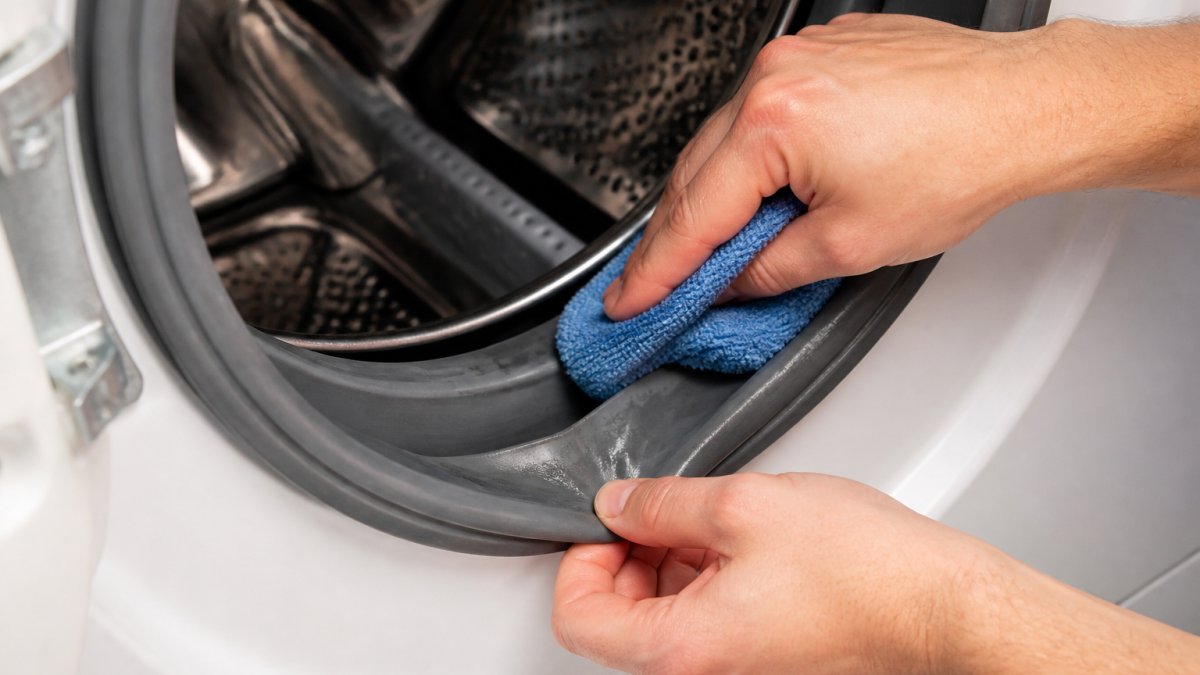
The gasket collects detergent residue, lint, and hair in its crevices. When moisture sits in these areas, bacteria multiply rapidly.
To address gasket odors:
- Inspect the gasket visually for visible mold or mildew (usually black or pink spots)
- Wipe the outer surface with a damp cloth
- Pull back the gasket gently and wipe the hidden inner folds
- For stubborn growth, use a cloth dampened with white vinegar or a diluted bleach solution
- Dry thoroughly with a clean towel
- Leave the door open after every wash to allow air circulation
Gasket cleaning should become part of your monthly maintenance routine. Many washer odor problems disappear once you establish this habit.
(/repair-versus-replace-washing-machine/) in ways that vinegar and baking soda cannot match.
Several effective options exist. Affresh is designed to dissolve detergent residue and works in a single cycle. Carbona targets mold and mildew specifically. Glisten and OxiClean both address buildup and odor simultaneously.
How to use commercial cleaners:
- Read the label instructions carefully, dosage varies by product
- Run an empty hot-water cycle with the product
- Do not add clothes or detergent
- Allow the cycle to complete fully
- Wipe down the gasket and drum after the cycle finishes
- Run a second empty cycle with water only to rinse away any remaining product residue
Commercial cleaners work best when used monthly as preventive maintenance rather than only when odors appear. They’re particularly effective for washers that have developed strong, persistent smells that baking soda and vinegar haven’t resolved.
Households with heavily-soiled laundry or hard water that accelerates buildup. Also effective for washers that have gone months without deep cleaning.
The advantage of commercial products is speed and reliability. They dissolve buildup faster than natural methods and require less hands-on scrubbing. The tradeoff is cost, they range from a few dollars to more per use, whereas vinegar and baking soda are nearly free.
6. Clean the Detergent Drawer and Drain Filter
Two overlooked areas contribute significantly to washer odors: the detergent dispenser drawer and the drain filter. Both trap moisture and residue that feed bacteria and mold.
Cleaning the detergent drawer:
- Remove the drawer by pressing the release button (location varies by model)
- Rinse it under hot running water to remove dried detergent
- Soak it in hot water for 15 minutes
- Use an old toothbrush to scrub away stubborn residue
- Dry it completely before reinserting
- Wipe the cavity where the drawer sits with a damp cloth
Cleaning the drain filter:
- Locate the drain filter (usually a small panel at the bottom front of the washer)
- Place a towel underneath to catch water
- Slowly open the filter to release trapped water
- Remove any lint, hair, or debris by hand
- Rinse the filter under running water
- Replace it and ensure it’s sealed properly
The drain filter collects lint and fabric particles that create a breeding ground for odor-causing bacteria. A clogged filter also prevents proper water drainage, leaving standing water in the drum that develops a sewer-like smell.
Clean these components monthly as part of your routine maintenance. The detergent drawer is especially important if you use liquid detergent, which leaves more residue than powder formulations.
7. Fix Clothes That Smell Bad After Washing
Sometimes the problem isn’t the washer itself, it’s that clothes have absorbed odors or developed mildew before they dry.
If your clothes smell bad after washing:
- Rewash immediately in hot water with 1 cup of white vinegar and no detergent
- Do not add more detergent, it will trap the smell deeper in the fabric
- Use the hottest water setting your fabrics can tolerate
- Run the full cycle and remove clothes immediately when it finishes
- Dry them in direct sunlight if possible (UV light kills odor-causing bacteria)
- If line drying isn’t available, use a dryer on high heat
The key is speed. Clothes left in a warm, damp washer for more than 8-12 hours absorb bacteria that cause permanent odors. Rewashing as soon as you notice the smell prevents it from setting into the fabric.
For persistent fabric odors, soak clothes in a mixture of 1 part white vinegar to 4 parts water for 30 minutes before rewashing. This breaks down the bacterial biofilm that causes stubborn smells.
Set a phone reminder to move wet clothes to the dryer immediately after the wash cycle ends. This single habit prevents most clothes-smell problems.
Never leave damp laundry in a closed hamper or basket. Air circulation is essential. Hang items to dry or spread them out on a clean surface where air can reach all sides of the fabric.
Prevent Washer Odors with Routine Maintenance
The best way to handle washer odors is to prevent them from developing in the first place. Routine maintenance costs almost nothing but saves time and frustration.
Weekly habits:
- Leave the washer door open after each load to allow air circulation
- Wipe the gasket with a dry cloth after washing
- Run a rinse cycle if clothes sit in the washer for more than a few hours
Monthly maintenance:
- Run a hot-water cycle with white vinegar or baking soda
- Clean the gasket thoroughly with a brush
- Empty and rinse the detergent drawer
- Check and clean the drain filter
Quarterly deep cleaning:
- Use a commercial washer cleaner if natural methods haven’t prevented odors
- Remove and soak the gasket if your model allows it
- Inspect all internal components for visible mold or mildew
The investment of 15 minutes per month prevents the frustration of dealing with persistent smells and extends the life of your machine.
Hard water accelerates buildup, so if you live in an area with mineral-heavy water, increase your cleaning frequency to every two weeks. Similarly, if you wash heavily-soiled items regularly, monthly deep cleaning becomes essential rather than optional.
Washer odors develop gradually, but they disappear quickly once you address the root causes. Our licensed technicians diagnose washer problems that DIY cleaning can’t fix, and we offer free diagnostics with any repair so you know exactly what’s wrong before we start work.
Frequently Asked Questions
How do I eliminate a bad smell in my washing machine?
Bad smells in your washer usually come from mold, mildew, detergent residue, or bacteria trapped in the drum, gasket, or drain. Run a hot-water cycle with white vinegar or baking soda monthly, clean the rubber gasket and detergent drawer regularly, and leave the door open between washes to allow moisture to evaporate. If the smell persists after these steps, a clogged drain filter or internal mold growth may require professional inspection.
Is it safe to put vinegar in your washing machine?
Yes, white vinegar is safe for most washers and effectively dissolves detergent buildup and neutralizes odors. Use one to two cups of white vinegar in an empty hot-water cycle. However, avoid mixing vinegar with bleach or other cleaners, as this creates toxic fumes. Check your washer’s manual first if you have a high-efficiency (HE) model, as some manufacturers recommend limiting vinegar use. Never use vinegar in machines with rubber hoses, as the acidity can degrade them over time.
Why do my clothes still smell bad after washing in the washing machine?
Clothes smell bad after washing when the washer itself harbors bacteria, mold, or detergent residue that transfers odor back onto fabric. This happens especially if wet laundry sits in the washer too long or if the machine has mildew in the gasket or drum. Rewash the load immediately in a hot-water cycle with vinegar or baking soda, then dry clothes promptly in fresh air or a dryer. Going forward, remove laundry within two hours of the cycle ending and clean your washer monthly to prevent recurrence.
How often should I clean my washing machine?
Clean your washer monthly with a hot-water cycle and vinegar or baking soda to prevent odor buildup. Additionally, wipe the rubber gasket and door seal after every few loads, especially if you notice moisture or visible mold. Empty the detergent drawer quarterly and rinse the drain filter monthly. Homes with hard water or high humidity may need more frequent cleaning. Leaving the door open between washes and using the correct amount of detergent also slows odor development.