
A washer that stops with a tub full of water can throw off an entire week of laundry. This washer repair appointment guide helps you turn that frustrating moment into a clear, productive service visit – without guessing at the problem or taking unnecessary risks with the machine.
A little preparation helps your technician diagnose the issue faster, explain the repair in plain language, and give you a straightforward path forward. Whether your washer will not drain, will not spin, leaks on the floor, makes a loud noise, or simply will not start, the goal is the same: get reliable answers before deciding whether to repair or replace it.
When to Schedule a Washer Repair Appointment
Some washer problems are obvious emergencies. If water is actively leaking, turn off the water supply valves behind the machine if you can safely reach them, then unplug the washer or switch off its circuit breaker. Do not run another cycle to see whether the leak returns. A small leak can quickly damage flooring, baseboards, cabinets, or a downstairs ceiling.
Other problems may not require immediate shutoff, but they still deserve prompt attention. A washer that leaves clothes soaking wet, stops partway through every cycle, produces a burning smell, or bangs violently during spin is telling you something is wrong. Continuing to use it can turn a manageable repair into a larger one.
It is usually reasonable to schedule a diagnostic visit when the same symptom happens more than once. One unbalanced load may explain a noisy spin cycle. Repeated shaking, drain failures, error codes, or puddles around the washer point to a mechanical, electrical, or plumbing-related issue that needs a closer look.
What to Tell the Repair Company When You Book
The most useful appointment request starts with the washer’s make and model number. The model tag is often located around the door or lid opening, on the back of the control panel, or near the frame of the unit. A photo of the tag is often easier than trying to read a long string of letters and numbers over the phone.
Describe what the washer does, not what you think is broken. For example, say, “It fills with water but will not spin,” or “It drains slowly and shows an error code.” That gives the technician meaningful clues without locking the conversation into a guess about a pump, belt, motor, or control board.
Also share when the issue began and whether anything changed beforehand. A problem that started after a power outage, a move, a heavy bedding load, or a new detergent can provide useful context. If there is an error code, write it down exactly as shown. If the washer makes an unusual noise, a short video can be helpful, as long as recording it does not put you near leaking water or a moving machine.
When scheduling, ask about the diagnostic fee, the appointment window, and whether the diagnostic charge applies toward an approved repair. Clear answers upfront make it easier to compare options fairly and avoid surprises after the technician arrives.
How to Prepare Your Home Before the Visit
You do not need to pull the washer apart or attempt a complicated fix before the appointment. In fact, removing panels, disconnecting hoses, or forcing a stuck door can make diagnosis harder and may create additional damage. A few simple preparations are enough.
Leave the Washer in Its Current Condition
If possible, leave the washer as it was when the problem occurred. A tub that will not drain, a door that remains locked, or clothing left wet after a failed spin can help confirm the symptom. If you had to remove water or laundry for safety, tell the technician what happened and what the machine displayed.
Avoid repeatedly restarting the washer. A reset may temporarily clear an error code while leaving the underlying problem unresolved. If you have already tried turning the washer off and back on, mention that during the visit.
Create Safe Access Around the Machine
Clear laundry baskets, cleaning supplies, and other items away from the front and sides of the washer. Technicians may need room to inspect water hoses, the drain connection, the power cord, or the rear and lower portions of the machine.
If your laundry room is tight, moving lightweight items beforehand saves time. Keep pets in a comfortable separate area during the appointment, and let the repair company know if there are gate codes, parking considerations, or access instructions for a condo or managed property.
Have the Details Ready
Keep the model number, purchase paperwork if available, and any extended warranty information nearby. This does not mean every repair will be covered, but it is useful information to have before authorizing work. If your washer is stacked with a dryer or installed in a closet, mention that when booking so the technician can plan for the setup.
What Happens During an In-Home Diagnosis
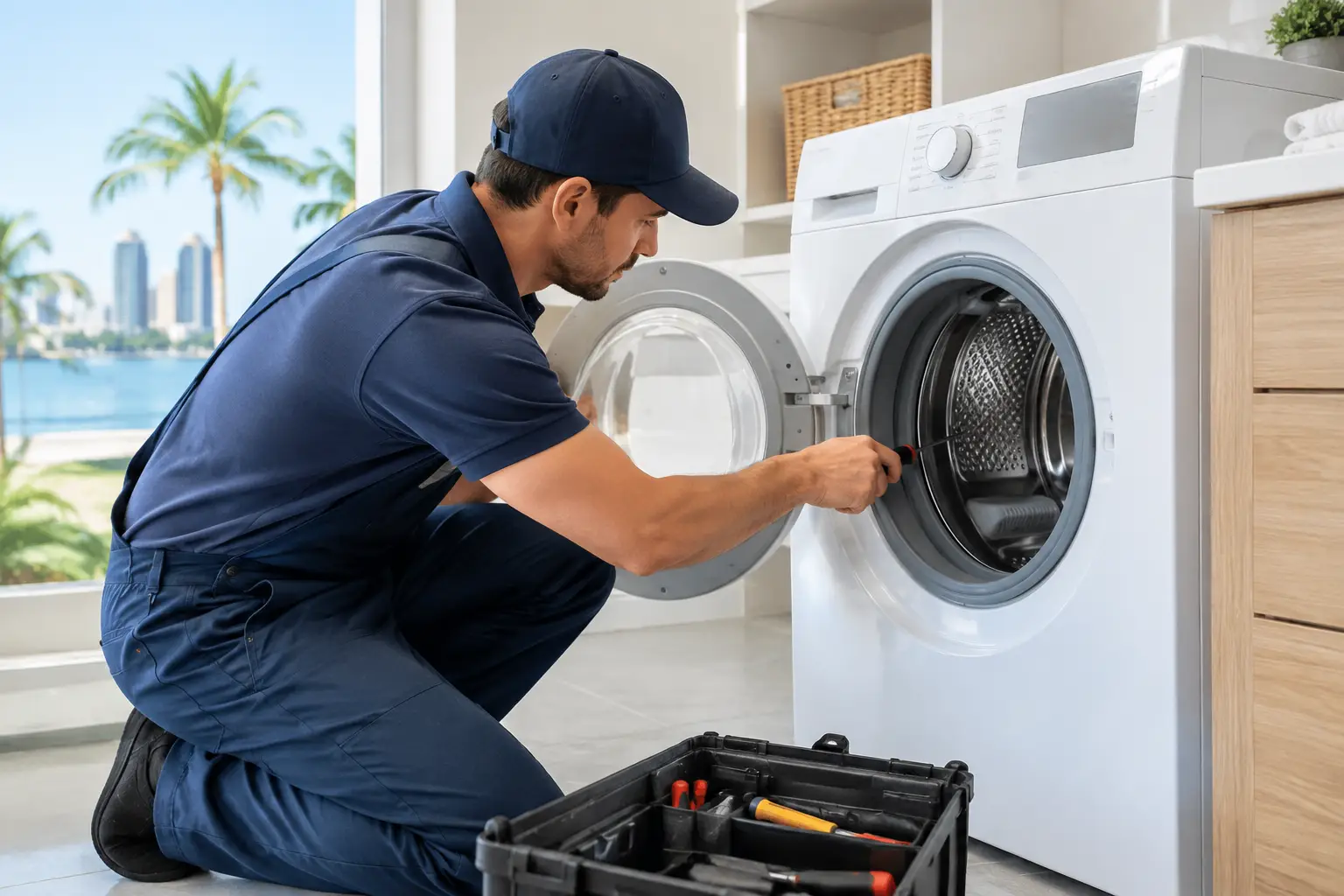
A professional washer repair visit should begin with a conversation, not a rush to replace parts. The technician will ask what you noticed, inspect the washer and its connections, and test relevant functions when it is safe to do so. Depending on the symptom, that may include checking how the washer fills, drains, agitates, locks, balances, or responds to the controls.
Many washer symptoms have more than one possible cause. Failure to drain could involve a clogged drain path, a worn drain pump, a damaged hose, or an electrical issue. A loud spin cycle may be caused by an unlevel washer, a suspension problem, worn bearings, or an item caught where it should not be. Proper diagnosis matters because replacing the wrong part wastes money and does not solve the disruption to your home.
After testing, the technician should explain the likely cause in terms you can understand. You should receive a repair recommendation and pricing before work begins. If a part must be ordered, ask about the expected timing, whether the washer can remain safely unused, and how follow-up scheduling works.
Tampa Bay Appliance Repair provides in-home diagnostics and repair for washing machines of all major makes and models. The focus is practical: identify the issue, explain the options clearly, and help you make a decision that fits your household and budget.
Deciding Whether Repair Makes Sense
The right choice depends on the washer’s age, condition, repair cost, and how well it has performed otherwise. A machine with a single failed component may be well worth repairing, especially if it has been dependable and meets your household’s needs. Replacing a washer also involves delivery, installation, disposal, and the possibility that a new unit will not fit the existing space as expected.
On the other hand, replacement may be the better value when an older washer has several ongoing problems or needs a major repair that approaches the cost of a comparable new machine. There is no one rule that applies to every household. A trustworthy technician should give you the information needed to decide, not pressure you into a repair that does not make financial sense.
If you are leaning toward repair, ask whether the replacement part is covered by a warranty and whether there is a workmanship guarantee. These questions are reasonable, especially when your washer is essential to a busy family routine.
A Few Things Not to Do Before Help Arrives
Do not use a power strip or extension cord to test a washer that will not turn on. Washers require a properly grounded electrical connection, and electrical work should be left to a qualified professional. Do not tip a washer backward by yourself, either. These machines are heavy, awkward, and can shift suddenly.
Be cautious with online repair videos as well. They can be useful for recognizing a symptom, but the same error code or sound can have different causes across brands and models. If water, electricity, or a locked door is involved, a professional diagnosis is usually safer than trial and error.
A washer repair appointment should leave you with more than a working appliance. It should give you a clear explanation, fair options, and the confidence that your laundry room is back in capable hands.