
A washer that smells musty or a dryer that suddenly takes two cycles to dry can disrupt an entire household. In Tampa Bay, heat and humidity can make moisture, mildew, and lint problems show up faster. This washer and dryer maintenance guide focuses on the simple habits that protect your laundry appliances, help them run efficiently, and give you an early warning when a repair is needed.
Most maintenance takes only a few minutes at a time. The goal is not to take appliances apart or attempt risky repairs. It is to keep the areas homeowners can safely reach clean, use the machines correctly, and call for professional help before a small issue turns into water damage, a worn-out motor, or a dryer safety concern.
Washer and Dryer Maintenance Guide: Start With Every Load
The highest-value laundry maintenance happens during normal use. Before starting the washer, check pockets for coins, tissues, pens, screws, and other small items. They can damage the drain pump, catch inside the drum, or make their way into hoses and filters. Close zippers and fasten hooks when possible, especially on delicate clothing.
Do not pack the washer until clothing is wedged tightly against the door or agitator. An overloaded load can leave clothes poorly cleaned, strain the suspension system, and cause banging during the spin cycle. A good rule is to leave enough room for clothes to move freely. Large comforters and bulky items may need a laundromat-sized machine if they fill most of the drum dry.
Use the amount of detergent recommended for your machine and water conditions. More detergent does not mean cleaner clothes. Excess soap can leave residue in the washer, trap odors, and reduce rinsing performance. High-efficiency washers need high-efficiency detergent, usually marked HE, and generally require less than older top-load machines.
For the dryer, clean the lint screen before every load. This one habit supports airflow, shortens drying time, and reduces the chance of lint buildup in the vent system. If the screen looks coated with fabric-softener residue, wash it gently with warm water and mild dish soap, then let it dry completely before reinstalling it.
Keep Your Washing Machine Clean and Dry
Washer odor is usually a moisture and residue problem, not a sign that the appliance needs to be replaced. Front-load washers are especially prone to mildew around the door gasket because water can remain in the folds of the rubber seal. Top-load washers can also develop odors when detergent buildup and standing moisture are left unattended.
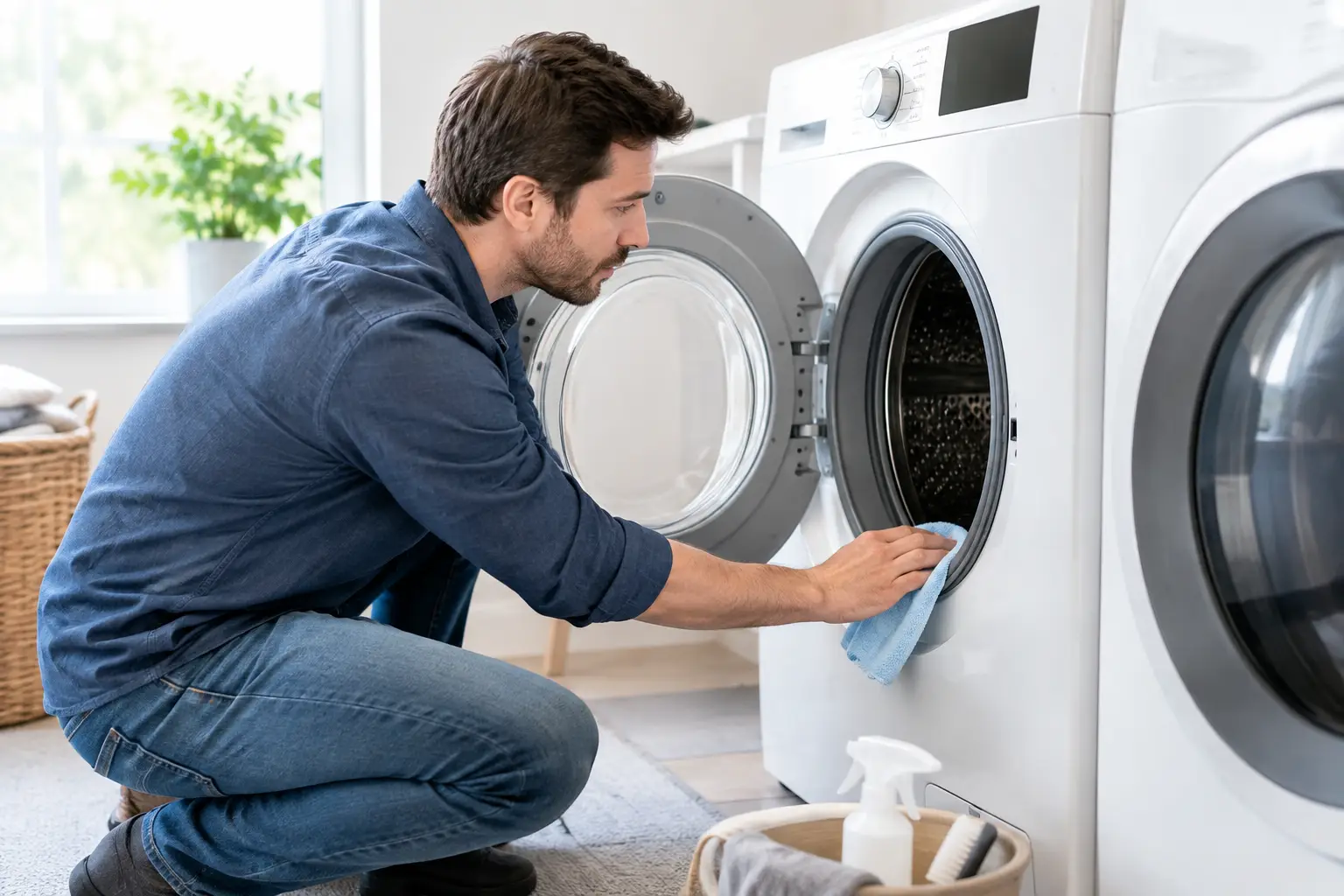
After laundry day, leave the washer door or lid open for a few hours so the interior can dry. Pull back the front-loader door gasket carefully and wipe away moisture, hair, lint, or debris. A soft cloth is enough for routine care. If you see dark spotting, clean the gasket according to the appliance manufacturer’s instructions and avoid harsh products that could damage the rubber.
Run the washer’s cleaning cycle about once a month, or more often if the machine has a persistent odor or handles frequent loads. Use a washer cleaner made for that purpose, following the package directions. If your model does not have a cleaning cycle, select the hottest and longest cycle recommended in the owner’s manual. Do not mix cleaning products, and never combine bleach with vinegar or other cleaners.
The detergent dispenser also deserves attention. Remove it if the model allows, rinse away sticky residue, and dry it before putting it back. Buildup can keep detergent or fabric softener from dispensing properly, leading to streaks on clothing or disappointing wash results.
Check Hoses and Connections Every Few Months
A washing machine can work perfectly one day and cause major water damage the next if a hose fails. Every three to six months, look behind the washer with a flashlight. Check hot and cold water hoses for bulges, cracks, corrosion around fittings, and signs of slow leaking. Make sure the drain hose is secure and has not worked loose from its standpipe.
If rubber supply hoses are aging, damaged, or more than a few years old, replacing them with quality braided stainless-steel hoses is often a sensible preventive upgrade. The right choice depends on the home’s plumbing setup and the appliance manufacturer’s guidance. Do not overtighten connections, and turn off the water supply before changing hoses.
Pay attention to changes in operation. Repeated banging, walking across the floor, or excessive vibration may mean the washer is not level, a load is unbalanced, or internal suspension components are wearing out. Adjusting the leveling feet may solve a simple stability issue. Persistent noise, leaking, failure to spin, or standing water in the drum calls for a professional diagnostic.
Give Your Dryer the Airflow It Needs
Dryers rely on clear airflow to remove heat and moisture. When lint restricts that airflow, clothes take longer to dry and the appliance works harder. With an electric dryer, that can mean higher utility use and extra wear on heating components. With a gas dryer, any concern involving the gas connection, burner, or unusual smell should be handled by a qualified technician.
In addition to cleaning the lint screen with every load, inspect the lint-screen housing periodically. Use a vacuum crevice tool carefully to remove visible lint near the opening. Avoid pushing objects deep into the housing, where they can damage components or compact lint farther down.
The dryer vent behind the appliance and the vent outlet outside need regular attention. A clean, properly installed metal vent allows air to move safely to the exterior. Crushed ducting, loose joints, long runs with too many bends, and plastic or foil-style flexible ducts can all restrict airflow. Because dryers are heavy and vent systems can be difficult to reach, many homeowners are better served by scheduling a professional cleaning and inspection rather than forcing the machine away from the wall.
Signs Your Dryer Vent May Need Service
Do not ignore the warning signs of poor dryer airflow. They often start gradually, which makes them easy to explain away as a heavy load or humid weather. Schedule service if you notice several of these issues:
- Clothes need more than one normal cycle to dry.
- The top, door, or laundry room feels unusually hot during use.
- The lint screen has less lint than usual, even with lint-producing loads.
- The outdoor vent flap does not open while the dryer is running.
- You notice a burning odor, or the dryer shuts off before the load is dry.
A burning smell, visible smoke, or a dryer that becomes excessively hot is a stop-use situation. Turn it off, unplug it if it is safe to do so, and arrange for qualified service. Cleaning the lint screen alone does not rule out a blockage or mechanical problem elsewhere in the system.
Use the Right Settings for the Load
The right cycle protects fabrics and appliances alike. High heat can be useful for towels and sturdy cotton items, but it can shrink delicate fabrics and place more stress on the dryer than necessary. Use sensor-dry settings when available. They are usually more efficient than timed drying because the machine can stop when the load reaches the selected dryness level.
Shake out wet clothing before moving it to the dryer. This reduces tangling and helps air circulate through the load. Do not dry rubber-backed rugs, foam items, or materials marked as unsuitable for machine drying. These items can create heat and fire risks or damage the dryer drum.
For the washer, separate very heavy items from lightweight fabrics when practical. A single wet blanket mixed with a few small garments can throw a washer out of balance. Balanced loads reduce strain and help the machine spin water out effectively, which also makes the dryer’s job easier.
Know When Maintenance Becomes a Repair Call
Regular care can prevent many avoidable problems, but it cannot fix a failing drain pump, worn belt, broken heating element, damaged control board, or faulty door lock. Homeowners should be cautious about DIY appliance repairs involving electrical wiring, gas connections, internal components, or major disassembly. A repair that starts as a simple guess can become more expensive if additional parts are damaged.
Call for a diagnostic when the washer leaks, will not drain, will not spin, displays recurring error codes, makes grinding sounds, or leaves clothing soaking wet. For dryers, arrange service when there is no heat, poor drying continues after lint and vent checks, the drum will not turn, the machine squeals, or the appliance trips a breaker.
Tampa Bay Appliance Repair provides in-home diagnostics and repair for major laundry appliance makes and models. A trained technician can identify whether the issue is a maintenance concern, a replaceable part, or a repair that may no longer be cost-effective based on the appliance’s age and condition.
A few steady habits can keep laundry from becoming an emergency: clear the lint screen, let the washer dry out, avoid overloading, and respond early when something sounds, smells, or performs differently. Your appliances do a lot of quiet work for the household. A little attention helps them keep doing it reliably.