
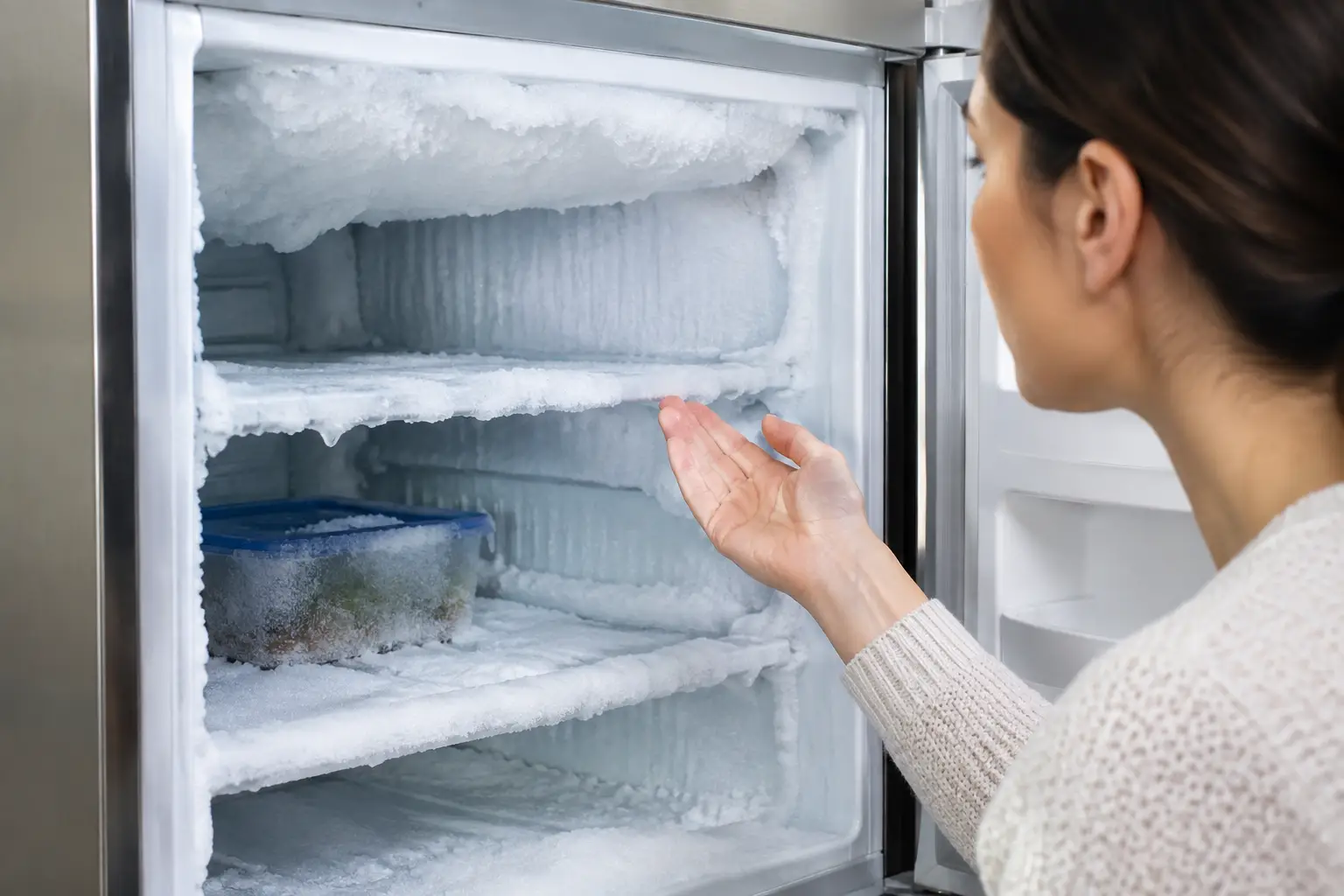

A light coating of frost after a freezer door has been open is normal. Thick white frost on the walls, food packages, shelves, or door frame is not. If you are wondering why freezer builds up frost, the short answer is moisture is getting inside and freezing before the appliance can remove it. The longer answer matters because the source may be as simple as a blocked door seal or as involved as a failed automatic defrost component.
Frost can make your freezer less efficient, take up valuable storage space, and eventually interfere with airflow. That can leave food soft in one area, overly frozen in another, or cause the refrigerator section to feel warmer than it should. Finding the cause early is usually easier and less expensive than waiting for a complete cooling problem.
Why Your Freezer Builds Up Frost
Every time warm, humid air enters a freezer, the moisture in that air turns to frost on cold surfaces. In Tampa Bay, where indoor and outdoor humidity can be high for much of the year, a door left slightly open can create frost surprisingly fast.
A frost-free freezer is designed to manage a small amount of moisture. It periodically warms the evaporator coils just enough to melt accumulated frost, then drains that water away. When too much humid air enters the compartment or that defrost process stops working, frost builds faster than the appliance can handle.
The pattern of frost offers useful clues. Frost concentrated around the door opening usually points to an air leak. Frost covering the back interior panel often suggests an automatic defrost issue. Heavy frost throughout the freezer can result from either problem, especially if it has been developing for weeks.
The Most Common Causes of Freezer Frost
The door is not sealing completely
A worn, dirty, torn, or twisted door gasket is one of the most common reasons for freezer frost. The gasket is the flexible rubber seal around the door. When it cannot make full contact with the cabinet, warm room air slips in continuously.
Check for food packages, drawer edges, or ice buildup preventing the door from closing. Then inspect the gasket for crumbs, sticky residue, cracks, gaps, and sections pulling away from the door. A warm cloth with mild soapy water can clean the seal and improve contact if dirt is the issue.
A simple paper test can also help. Close the door on a sheet of paper and gently pull it out. Some resistance is normal. If the paper slides freely in several places, the gasket may not be sealing well. This test is not a complete diagnosis, but it is a good reason to schedule service if frost keeps returning.
The door is being opened often or left open too long
Frequent freezer use does not automatically mean something is broken. Still, every open door lets in humid air. A busy household, kids looking for snacks, meal prep, or standing with the door open while organizing food can all add moisture.
Try deciding what you need before opening the freezer and close the door firmly after removing items. Make sure bins and shelves are positioned correctly, since a misaligned drawer can keep the door from shutting all the way. If your freezer has a door alarm, do not ignore it. It is often warning you about the very condition that creates frost.
Hot or uncovered food is adding moisture
Steam from warm leftovers or uncovered foods becomes frost once it reaches freezer surfaces. Let cooked food cool briefly before freezing it, but do not leave perishable food at room temperature for an extended period. Use airtight containers or freezer bags with as much excess air removed as practical.
This cause usually creates a moderate amount of frost, not a thick blanket over the entire compartment. If you are packaging food properly and frost continues to return, look for a seal or defrost problem instead.
The automatic defrost system is not working
Most modern refrigerators and upright freezers use an automatic defrost system. Key parts may include a defrost heater, defrost thermostat or sensor, control board or timer, evaporator fan, and drain system. If one component fails, frost can coat the evaporator coils behind the rear freezer panel.
As the coil becomes blocked with ice, air cannot move properly through the appliance. You may notice a fan running but weak cooling, food near the vents becoming unusually cold, or the fresh-food section warming while the freezer appears frosty. In some cases, the freezer may still keep food frozen for a while, which can make the problem easy to overlook.
This is not usually a good DIY repair. Reaching defrost parts often requires disassembling interior panels, testing electrical components, and correctly identifying the failed part. Replacing a part based on a guess can waste money and leave the real issue unresolved.
A clogged or frozen defrost drain is causing ice buildup
During a defrost cycle, melted frost should flow through a drain to a pan beneath the appliance. When that drain is blocked by debris or frozen water, moisture may refreeze inside the freezer. Depending on the model, you may see a sheet of ice on the floor, water under drawers, or recurring ice near the back panel.
A visible ice sheet is different from normal frost, but the two problems can happen together. Clearing a drain incorrectly can damage plastic components or create a water leak, so service is worthwhile when the problem keeps coming back.
The temperature setting is too low or airflow is restricted
A freezer should generally be set around 0 degrees Fahrenheit. Setting it far colder than necessary can make moisture freeze more aggressively, though an overly cold setting alone rarely causes major frost. Use an appliance thermometer if you are unsure whether the display or control setting reflects the actual temperature.
Overpacking can also restrict air movement, while an almost empty freezer may struggle to hold a stable temperature when the door opens. Leave room around vents and avoid stacking packages against the rear wall. Good airflow helps the freezer cool evenly and complete its normal defrost cycles.
What You Can Safely Do Before Calling for Repair
Start by checking the basics: confirm the door closes freely, clean the gasket, remove anything blocking the seal, and make sure food is covered. Adjust the temperature to approximately 0 degrees Fahrenheit if it is set unusually low. These small corrections can stop minor frost buildup before it becomes a larger problem.
If frost is already thick, a full manual defrost may restore space and airflow temporarily. Move food to a cooler or another freezer, unplug the appliance, and leave the doors open with towels around the base to catch water. Do not chip ice away with a knife, screwdriver, or other sharp object. Puncturing an interior liner or refrigerant line turns a manageable repair into a much bigger one.
After defrosting, dry the interior fully and restart the appliance. If heavy frost returns within a few days or a couple of weeks, the underlying cause has not been fixed. That recurrence is especially common with a bad gasket, defrost failure, or drain issue.
When Frost Means You Need Professional Service
Call for a diagnostic when the frost returns quickly after defrosting, the freezer door will not stay sealed, the back panel is heavily frosted, or the refrigerator section is warming up. You should also arrange service if you hear unusual fan noise, find recurring water or ice on the freezer floor, or notice food softening and refreezing.
Food safety comes first. If frozen food has thawed completely or has been held above safe temperatures for too long, do not rely on appearance alone. When in doubt, discard questionable food rather than taking a risk.
A technician can identify whether the problem is a gasket adjustment, damaged door seal, failed fan, clogged drain, or faulty defrost component. Tampa Bay Appliance Repair provides straightforward in-home diagnostics for major freezer and refrigerator brands, with clear explanations of what failed and what the repair involves.
A frost-free freezer should not require regular scraping. Keep the door sealing well, avoid adding unnecessary moisture, and pay attention when frost begins to change from a light coating into a recurring problem. Acting early can protect your food, reduce energy waste, and give your appliance a better chance of returning to dependable daily service.