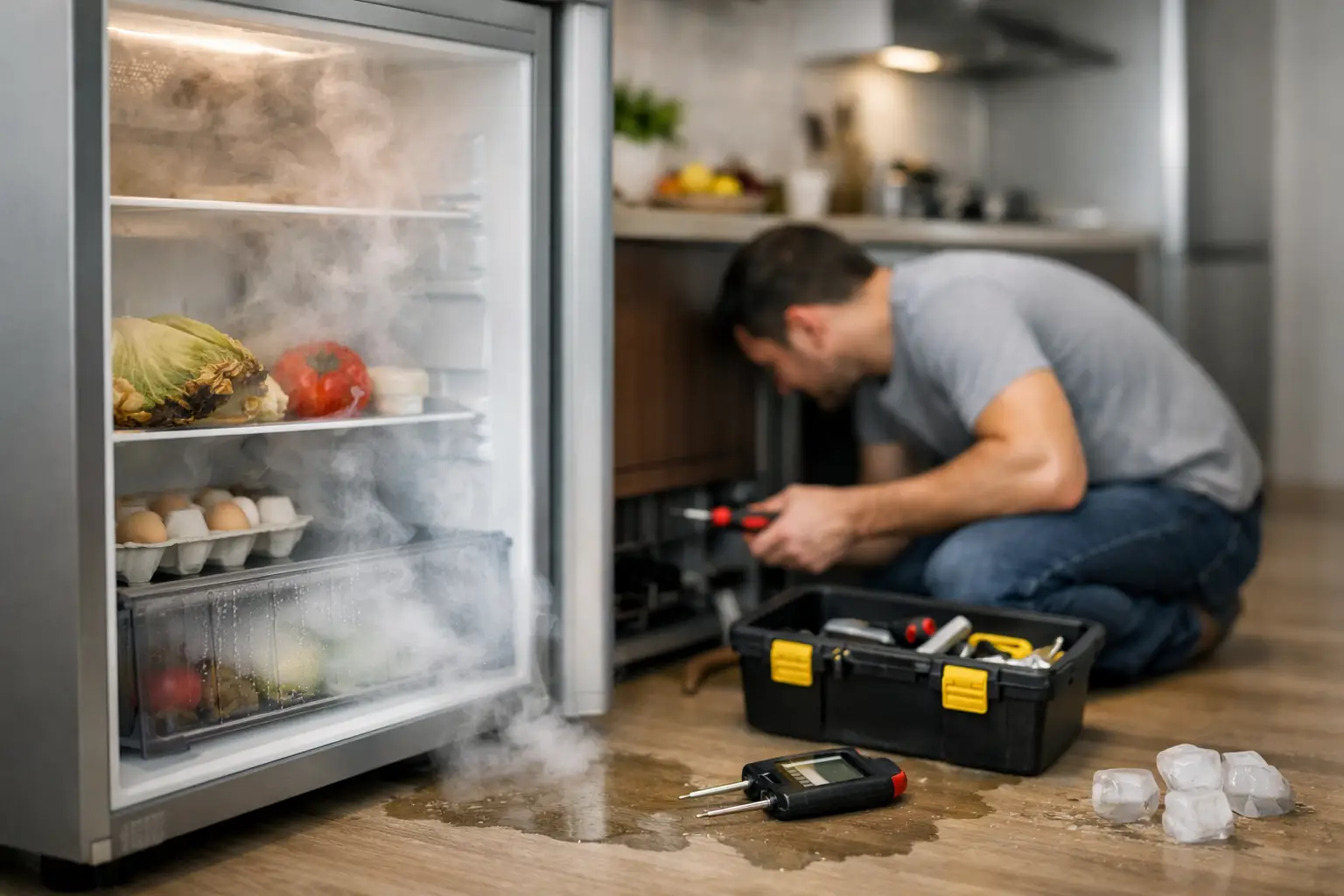

A refrigerator rarely quits at a convenient time. One day it is keeping milk cold and leftovers safe; the next, you notice sweating containers, a puddle near the door, or food that does not feel quite cold enough. Knowing the best signs your fridge needs repair can help you protect your groceries, avoid a larger breakdown, and make a clear decision before a small issue becomes an expensive one.
Some fridge problems are simple, such as a blocked air vent or a dirty door gasket. Others involve components that need professional testing, including the compressor, fan motor, thermostat, defrost system, or sealed refrigerant system. The key is recognizing when the appliance is telling you it needs attention.
1. Your Food Is Not Staying Cold
A refrigerator should keep the fresh-food section at or below 40 F. If milk spoils early, deli meat feels warmer than it should, or leftovers are not cold in the center, do not assume the problem will correct itself.
First, check the temperature setting and make sure large containers are not blocking interior vents. Also look for a door that may have been left slightly open. If the settings are correct and the fridge is still warm after several hours, it may have an airflow, fan, thermostat, compressor, or cooling-system issue.
This is a repair call worth making promptly. Food safety is the priority, especially in a busy household where the refrigerator door is opened often.
2. The Freezer Works, but the Refrigerator Is Warm
This is one of the more common and confusing refrigerator problems. A working freezer can make it seem like everything is fine, yet the refrigerator compartment depends on cold air moving from the freezer through vents and ducts.
When that airflow is restricted, frozen food may stay solid while produce, dairy, and drinks in the fresh-food section get too warm. Frost buildup behind the freezer panel, a failed evaporator fan, a damaged air damper, or a defrost problem can all contribute.
Avoid chipping at ice with a knife or sharp tool. It is easy to puncture an interior panel or damage hidden components. A proper diagnosis identifies why the airflow stopped instead of only treating the visible frost.
3. You See Water on the Floor or Inside the Fridge
A puddle under the refrigerator deserves attention, even if it is small. Water can damage flooring, create a slipping hazard, and point to an issue that will continue getting worse.
Sometimes the cause is a clogged defrost drain. During normal defrost cycles, melted water is meant to travel through a drain tube into a pan beneath the unit. When the drain becomes blocked, water may collect under crisper drawers or spill onto the kitchen floor.
Water can also come from a loose or damaged supply line on refrigerators with a water dispenser or ice maker. If you see ongoing leaking, turn off the water supply if you can safely access it, dry the area, and arrange service. A technician can determine whether the source is the drain system, water line, inlet valve, or another component.
4. The Refrigerator Is Much Louder Than Usual
Most refrigerators make some ordinary sounds. You may hear a low compressor hum, occasional clicks, water dripping during defrost, or ice dropping into the bin. What is not normal is a new, persistent, or noticeably louder noise.
Buzzing, grinding, rattling, squealing, or repeated clicking can each point in different directions. A rattling sound may be as simple as a refrigerator that is not level or is touching a wall. Grinding or squealing may come from a worn fan motor. Repeated clicking, particularly when the fridge is warm, can be associated with a compressor starting problem.
Do a quick check for anything vibrating against the back or sides of the appliance. If the noise continues after that, it is wise to schedule a diagnostic rather than wait for the unit to stop cooling entirely.
5. Frost Keeps Building Up
A thin layer of frost can happen if a freezer door was left open briefly. Heavy or recurring frost is different. Frost on food packages, freezer walls, or the back panel can reduce airflow and make the refrigerator work harder to maintain temperature.
Common causes include a door gasket that no longer seals tightly, a door that is out of alignment, or a failure in the automatic defrost system. A worn gasket can allow warm, humid Florida air to enter the freezer, creating moisture that turns to frost.
Try the simple paper test: close the door on a sheet of paper and gently pull it out. If it slides out with little resistance in several areas, the gasket may not be sealing well. Cleaning the gasket can help when it is dirty, but tears, cracks, and flattened sections usually require replacement.
6. The Motor Seems to Run All the Time
Refrigerators cycle on and off throughout the day, and they may run longer after groceries are loaded or during hot weather. But a unit that seems to run nearly nonstop, especially while failing to stay cold, needs a closer look.
Start by checking for easy-to-fix issues. Make sure the doors close fully, the seals are clean, and there is room around the appliance for heat to escape. Dust buildup on condenser coils can also make some models work harder, although coil location and cleaning methods vary by refrigerator.
If basic checks do not change the behavior, the issue may involve the condenser fan, evaporator fan, thermostat, compressor, or refrigerant system. Constant running can increase electric use and place extra strain on important parts, so it is better not to ignore it for weeks.
7. Your Ice Maker Has Changed Its Behavior
An ice maker that suddenly stops producing ice, makes tiny cubes, or dispenses clumped ice is often connected to a refrigerator issue rather than the ice maker alone. Low water flow, a frozen fill tube, a faulty inlet valve, freezer temperature problems, or a failed ice maker component can all be involved.
Check that the ice maker is switched on and that the water supply valve is open. If your refrigerator has a water filter, a due-for-replacement filter can affect water flow. Still, replacing a filter will not solve every ice problem.
If ice production remains inconsistent or the freezer is not cold enough to keep ice solid, a professional diagnostic can prevent you from replacing parts based on guesswork.
8. You Notice Condensation, Sweating, or a Hot Exterior
A little warmth along the front edge or sides of a refrigerator can be normal. Many units route heat through these areas to reduce moisture around the doors. What is concerning is excessive heat, heavy condensation inside the appliance, or moisture forming repeatedly around the door frame.
Condensation usually means warm, humid air is entering the refrigerator. Check for food packages holding the door open and inspect the gasket for dirt or damage. If the door closes properly but sweating continues, airflow or temperature-control problems may be involved.
In Tampa Bay’s humidity, this symptom can be especially noticeable. Acting early may help prevent moldy food, water damage, and an overloaded refrigerator that is struggling to keep up.
9. There Is a Burning Smell or Electrical Concern
A burning odor, visible smoke, frequent tripped breakers, or a damaged power cord is not a wait-and-see situation. Unplug the refrigerator if it is safe to do so, keep water away from the area, and seek qualified service.
Do not keep resetting a breaker or use an extension cord to get the refrigerator running again. Electrical problems can involve wiring, a start relay, a control board, or another component that requires safe testing.
10. The Fridge Is Old, but the Problem Is Specific
Age alone does not mean replacement is automatically the best choice. Many refrigerators can be repaired affordably when the problem is limited to a fan, seal, valve, sensor, switch, or other replaceable part. The decision depends on the unit’s age, condition, repair cost, cooling performance, and whether it has had repeated major failures.
A clear diagnosis gives you the information to compare repair with replacement honestly. For homeowners who would rather not make a rushed purchase after losing a refrigerator full of food, that clarity matters.
When to Call for Refrigerator Repair
The best signs your fridge needs repair are usually changes you can see, hear, or feel: warmer food, frost, leaks, unusual noises, nonstop running, and unreliable ice production. If the refrigerator is not holding a safe temperature, move perishable food to a cooler with ice or another working refrigerator while you arrange service.
For households in Tampa, Hillsborough County, and Pasco County, a licensed and insured technician can test the appliance at home and explain the cause in plain language. Tampa Bay Appliance Repair provides diagnostics for major refrigerator makes and models, including refrigerant-related work handled by EPA Section 608-certified professionals.
Your refrigerator does a quiet job every day until it cannot. Paying attention to the first unusual sound, puddle, or temperature change gives you the best chance to solve the problem on your terms, not after dinner plans and groceries have already been disrupted.