
A burner that will not heat can derail dinner. A gas smell, sparking control, or oven that runs far hotter than the dial says can feel much more serious. When your range stops doing its job, a dependable stove repair service can help you move from guesswork to a clear answer – and, in many cases, avoid replacing an appliance that still has useful life left.
For Tampa Bay households, a broken stove is more than an inconvenience. It affects busy weeknights, family meals, holiday plans, and the daily routine of keeping everyone fed. The right response depends on the symptom. Some issues are simple operating problems, while others involve gas, electrical components, high heat, or internal wiring that need professional attention.
Signs You Need a Stove Repair Service
A stove does not need to be completely dead to need service. Many repairable problems begin as an occasional issue: one burner takes too long to heat, the oven temperature seems inconsistent, or a control knob works only after several tries. Calling before the problem becomes a full failure can make the repair less disruptive.
Electric coil and smooth-top ranges often develop burner problems. The burner may not heat at all, heat only at one setting, cycle on and off unpredictably, or stay hot after it should have shut off. The cause could be the surface element, receptacle, switch, wiring, or control board. Those parts need to be diagnosed in the proper order. Replacing a visible part without testing the underlying circuit can waste time and money.
Gas ranges may have burners that click constantly, fail to ignite, produce an uneven flame, or light only when a match is used. A weak or yellow flame can point to buildup, a burner-cap issue, or a problem affecting the fuel and air mix. Since gas appliances involve combustion and ignition components, it is best not to treat a recurring burner issue as a simple cleaning project.
Oven problems deserve the same attention. If baking takes much longer than usual, food cooks unevenly, the broiler does not work, or the oven will not reach temperature, the trouble may be with a heating element, igniter, sensor, thermostat, relay, or electronic control. An oven that is off by 25 degrees can turn a reliable recipe into a repeated frustration.
Stop Using the Stove Immediately for These Problems
Some stove issues should not wait for a convenient appointment. Turn the appliance off and arrange professional help promptly if you notice any of these conditions:
- A gas odor near the stove, even if it comes and goes
- Smoke, a burning-plastic smell, scorch marks, or a tripped breaker
- A burner that remains hot or continues heating when set to off
- Sparking at the controls, damaged wiring, or a cracked glass cooktop
If you smell gas, avoid creating a spark. Do not light a match, turn electrical switches on or off, or try to relight the appliance. Leave the immediate area and follow the emergency guidance from your gas utility or local emergency services. A repair visit is appropriate after the area has been made safe.
What a Professional Stove Diagnosis Should Look Like
A good repair begins with listening. Before testing parts, a technician should ask what the stove is doing, when the issue started, whether it happens on every burner or only one, and whether there have been recent power outages or changes in performance. Those details can narrow the cause quickly.
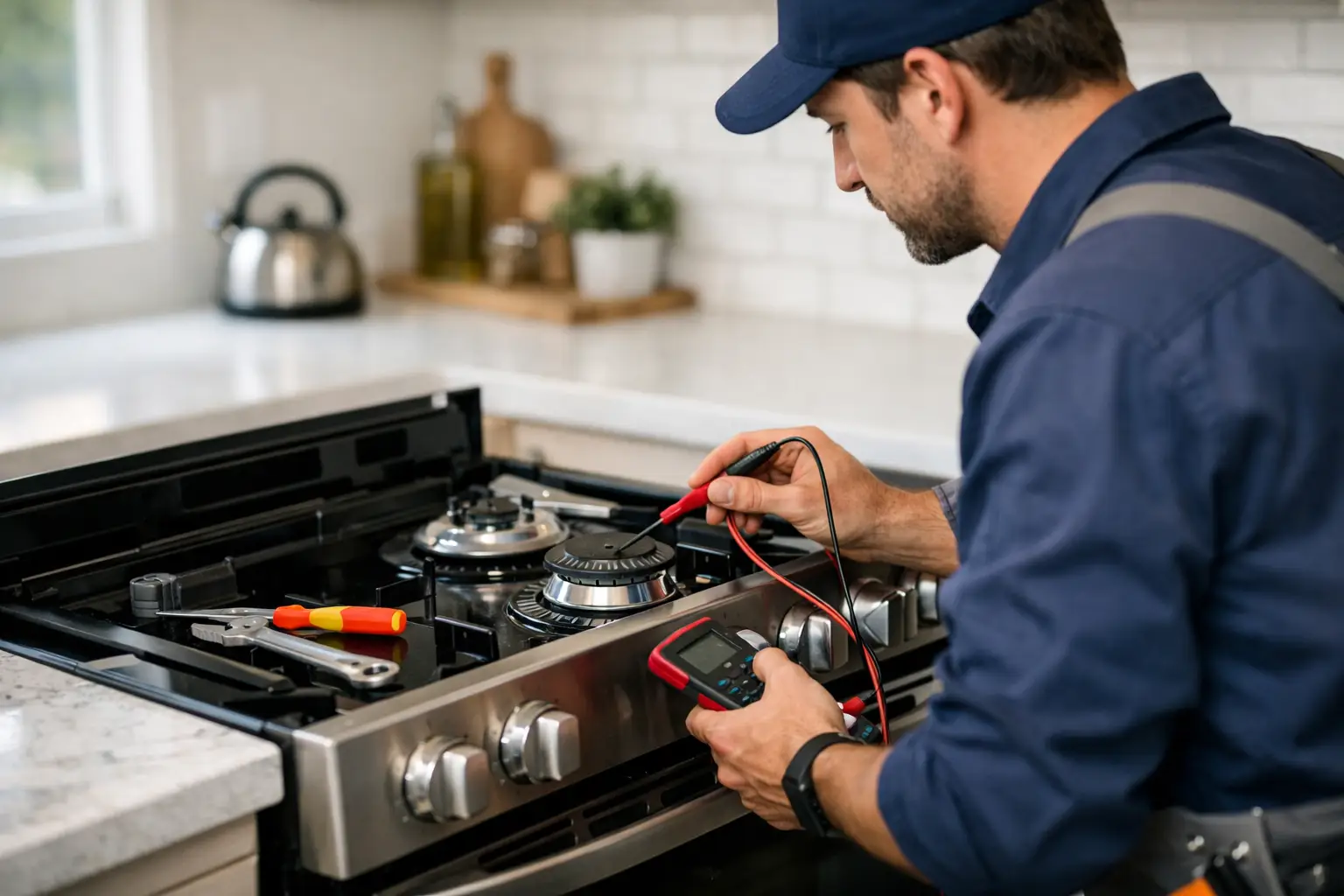
Next comes a hands-on inspection and testing process. For an electric stove, that may include checking the power supply, elements, switches, terminals, sensors, and controls. For a gas model, the technician may inspect ignition components, burner assembly parts, connections, and flame performance. The goal is not simply to make the appliance appear to work for a moment. It is to identify the failed component and verify that the stove operates safely afterward.
You should receive a plain-language explanation of the issue before work moves forward. A trustworthy technician can explain what failed, why the recommended repair makes sense, and what the repair is expected to cost. If a part must be ordered, you should also know what happens next and when to expect follow-up.
At Tampa Bay Appliance Repair, the diagnostic fee applies toward the completed repair. That approach gives homeowners a clear starting point while keeping the focus on solving the actual problem rather than guessing at parts.
Repair or Replace? The Decision Depends on More Than Age
Homeowners often assume an appliance that is acting up must be replaced. That is not always the most affordable choice. Stoves and ranges can often be repaired when the problem is limited to a burner, igniter, heating element, sensor, switch, or another serviceable component.
The better choice depends on the appliance’s age, overall condition, repair cost, safety, and the availability of replacement parts. A relatively newer range with one failed burner or igniter is usually a strong candidate for repair. A unit with multiple major failures, a badly damaged cooktop, extensive corrosion, or expensive unavailable parts may be harder to justify repairing.
There is also a practical factor: replacement is rarely just the price of a new appliance. It can include delivery, installation, electrical or gas connection work, disposal of the old unit, and time spent shopping. A professional diagnosis gives you the information needed to make that decision with confidence instead of replacing a stove based on one frustrating symptom.
Common Problems Homeowners Can Check Safely
There are a few basic checks that can be helpful before scheduling service, provided there is no gas smell, smoke, sparking, or visible damage. Confirm that the appliance has power and check whether a breaker has tripped. For a gas range, make sure the gas supply valve has not been accidentally turned off. If one burner is not lighting, wait until the appliance is cool and check that the burner cap is seated correctly and the area is free of obvious food debris.
Beyond that, it pays to be cautious. Do not take apart control panels, bypass safety components, probe electrical connections, or attempt to repair gas lines. Online videos can make a repair look simple while leaving out model-specific wiring, voltage risks, or safety checks. What seems like a bad burner can sometimes be a damaged terminal or failed control that needs a different repair entirely.
Choosing a Local Stove Repair Company
When you invite a technician into your home, technical skill matters, but so does how the company treats you. Look for a local provider that is licensed and insured, explains the diagnosis clearly, services your appliance make and model, and gives straightforward information about the next step.
Prompt communication is especially valuable when cooking routines are disrupted. You should not have to chase down an answer about a part, wonder whether your appointment is still on the schedule, or feel pressured into a repair you do not understand. Respectful in-home service means protecting your space, answering questions directly, and treating your time as valuable.
It also helps to have the stove’s brand, model number, and a description of the problem ready when you call. Note whether the issue affects the cooktop, oven, broiler, display, or a specific burner. If the problem is intermittent, mention what you were doing when it happened. Those details help the service team prepare and can make the appointment more efficient.
Keep Small Stove Problems From Becoming Bigger Ones
Routine care cannot prevent every failure, but it can reduce unnecessary wear. Clean up spills after the cooktop cools, keep burner areas free of grease and food residue, avoid slamming the oven door, and use cookware that sits flat on the cooking surface. For smooth-top models, use cleaners made for glass cooktops and avoid dragging rough-bottomed pans across the surface.
Pay attention when performance changes. A burner that starts clicking nonstop, an oven that suddenly takes longer to preheat, or a control that feels unusually loose is worth addressing early. Small changes are often easier to diagnose than a complete breakdown on the night you need the stove most.
A dependable stove should make mealtime easier, not add another problem to your week. If yours is not heating, igniting, or controlling temperature the way it should, scheduling a professional diagnostic is a practical next step toward a safer, more reliable kitchen.