
A dryer that quits halfway through laundry day creates a fast, frustrating question: should you fix it or start shopping for a new one? Dryer repair versus replacement is not always a simple age calculation. The right choice depends on what failed, how your dryer has performed over time, what a repair would cost, and whether the appliance is still safe and practical for your household.
For many Tampa Bay homeowners, a professional diagnosis is the best first step. A dryer may look like it has reached the end of its life when the actual issue is a worn belt, failed heating element, damaged roller, clogged vent path, faulty thermostat, or broken door switch. Those are very different situations from a major component failure on an older unit that has needed repeated service.
Start With the Actual Problem
Dryers are relatively straightforward appliances compared with many other major household systems, but several different issues can cause similar symptoms. A dryer that will not heat, will not tumble, shuts off early, makes a loud scraping sound, or takes two cycles to dry clothes may have a repairable part failure.
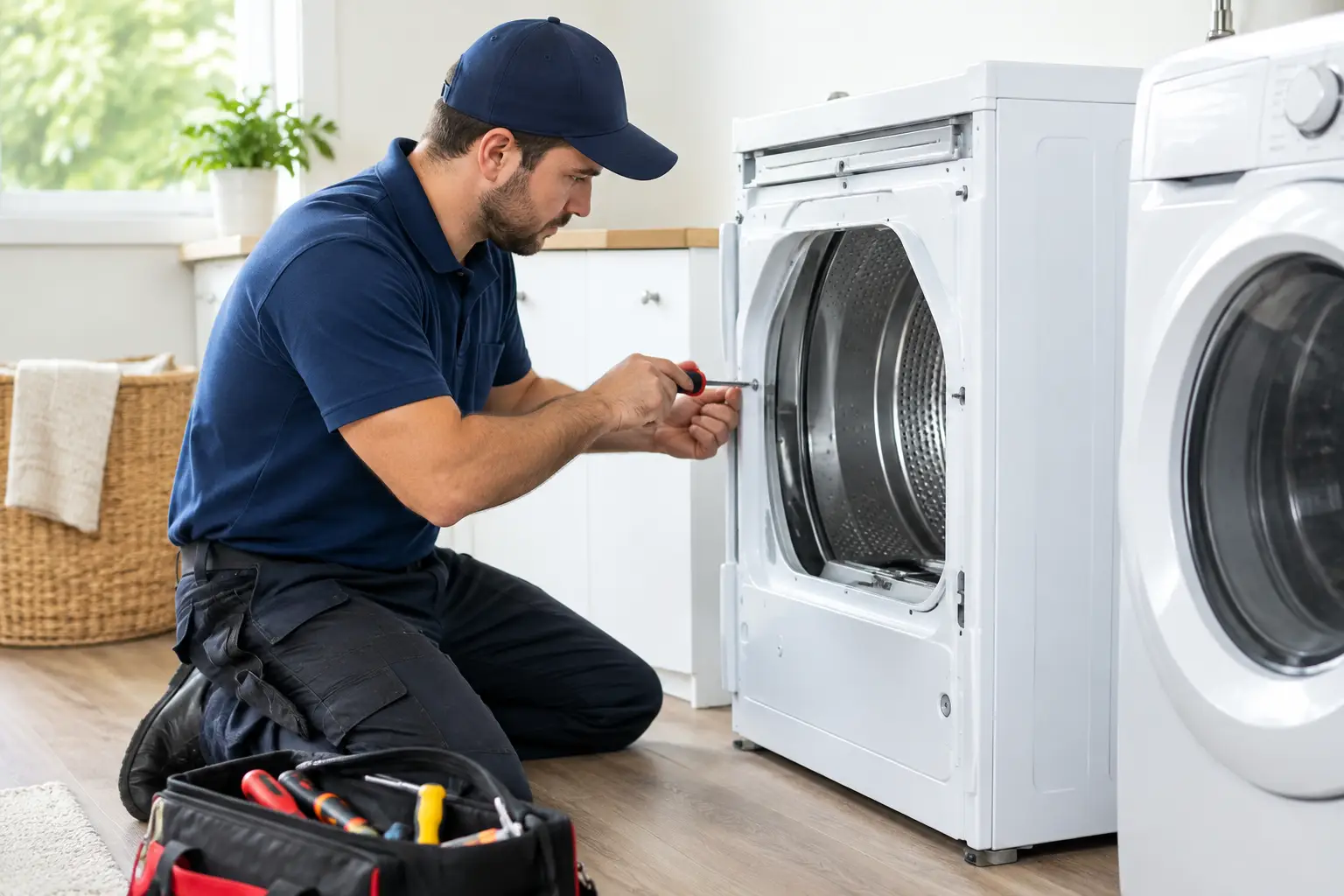
The symptom alone does not tell you whether replacement is necessary. For example, no heat could point to a heating element, thermal fuse, thermostat, power supply issue, or airflow restriction. A drum that will not turn may need a belt, idler pulley, rollers, motor, or control repair. A qualified technician can identify the failed component and check for related wear instead of replacing parts based on a guess.
That diagnosis also matters for safety. A dryer that runs too hot, smells like it is burning, trips breakers, or has poor airflow should be addressed promptly. Lint buildup and restricted venting can increase drying time, strain components, and create a fire risk. If you notice burning odors, visible smoke, sparking, or a hot outlet, stop using the dryer until it can be inspected.
Dryer Repair Versus Replacement: The Cost Test
Repair usually makes sense when the dryer is otherwise dependable and the repair cost is a reasonable share of a comparable replacement. There is no single percentage that applies to every home, but a smaller, isolated repair on a dryer with years of expected service left is often worth making.
Consider the full cost of replacement, not only the price tag on the sales floor. A new dryer can involve delivery, installation, removal of the old unit, a new power cord or vent connection, and possible adjustments to fit the laundry space. If you have a matching washer and dryer set, replacing only one appliance may also leave you with mismatched capacity, finish, or features.
On the other hand, paying for an expensive repair on a dryer that has already had multiple breakdowns can become frustrating and costly. If the machine needs a major repair now and has also had recent problems with heating, noise, controls, or drying performance, replacement may offer better value.
A clear repair estimate gives you something concrete to compare. Ask what part failed, whether other worn components were found, what the repair includes, and whether the technician sees signs that another major issue is likely soon. Straight answers make the decision less stressful.
Age Matters, But It Is Not the Whole Story
Most dryers can last roughly 10 to 13 years, although actual lifespan varies by brand, usage, maintenance, venting, and how heavily a household relies on laundry. A lightly used dryer in good condition may be worth repairing well into that range. A heavily used dryer with neglected airflow problems may wear out sooner.
A dryer under about seven years old is often a strong repair candidate, especially if this is its first meaningful issue. Between seven and 10 years, the decision depends more on the repair cost and service history. Once a dryer is beyond 10 years old, replacement becomes more reasonable when the repair is costly, parts are hard to obtain, or several systems are wearing out at once.
Still, age should not automatically send a dryer to the curb. Replacing a belt, roller, switch, or heating component can be sensible on an older appliance that has otherwise been reliable. The key is whether you are solving one contained problem or starting a pattern of repeat repairs.
Signs Repair Is Usually the Better Choice
Repair is often the practical route when your dryer has been dependable, the issue is limited to one component, and the estimate is comfortably below the cost of replacement. Common repair-friendly situations include a broken belt, worn drum rollers, failed thermostat, defective door switch, heating element issue, or a venting-related performance problem.
It can also make sense to repair when a replacement would disrupt your laundry setup. Some homes have tight closets, stacked units, cabinetry, or electrical and gas connections that make changing appliances more complicated. Keeping a familiar dryer in service can avoid added installation work when the repair is straightforward.
For busy families, repair can also be faster. The right part and a prompt in-home appointment may get laundry moving again sooner than researching models, waiting for delivery, and arranging installation. That convenience has real value when uniforms, school clothes, towels, and bedding are piling up.
When Replacement Is the Smarter Call
Replacement deserves serious consideration if your dryer is near or past its typical lifespan and has a costly motor, control board, or drum-related failure. It may also be the better choice when replacement parts are discontinued or unusually expensive.
Repeated service calls are another warning sign. One repair does not mean a dryer is unreliable. But if you have recently paid to address several unrelated problems, the appliance may be reaching the point where new failures are more likely. The same is true when the dryer has persistent performance problems that remain after proper vent cleaning and repair.
Energy use can factor into the decision, though it should not be the only reason to replace a working dryer. Newer dryers may offer sensor drying, improved efficiency, and settings that reduce overdrying. Those features can help lower utility use and protect fabrics, but the savings may take time to offset the purchase and installation cost of a new machine.
Safety concerns change the calculation. Major electrical damage, severe corrosion, recurring overheating, or a dryer that cannot be safely restored should not be treated as a bargain repair. A technician can explain whether the concern is a fixable component issue or a reason to replace the appliance.
Do Not Overlook the Vent System
A dryer that takes too long to dry is not always failing internally. In Florida’s humid climate, laundry already has more moisture to shed, and a clogged or restricted vent can make the problem much worse. Long drying cycles waste energy and can overheat the dryer, shortening the life of heating and drum components.
Keep the lint screen clean after every load, and have the venting checked when clothes stay damp, the laundry room feels unusually hot, or lint appears around the dryer connection. Never assume a new dryer will solve an airflow problem. Installing a replacement on a restricted vent can lead to the same poor performance and safety concerns.
A Fair Way to Make the Decision
Before deciding, compare three things: the diagnostic finding, the complete repair estimate, and the dryer’s overall condition. Think about its age, prior repairs, noise level, drying performance, and whether parts are readily available. Then compare that picture with the real installed cost of a suitable replacement, not simply the lowest advertised price.
A good service visit should leave you with clarity, not pressure. Tampa Bay Appliance Repair provides in-home dryer diagnostics and explains the repair options plainly, so homeowners can choose what fits their budget and household needs. The diagnostic fee applies toward an approved repair, helping you make a decision based on facts rather than frustration.
Your dryer does not have to be brand new to be worth saving. When the problem is contained and the rest of the machine is in good shape, a timely repair can keep a dependable appliance working for years. When the numbers and condition point the other way, replacing it with confidence is just as valuable.