
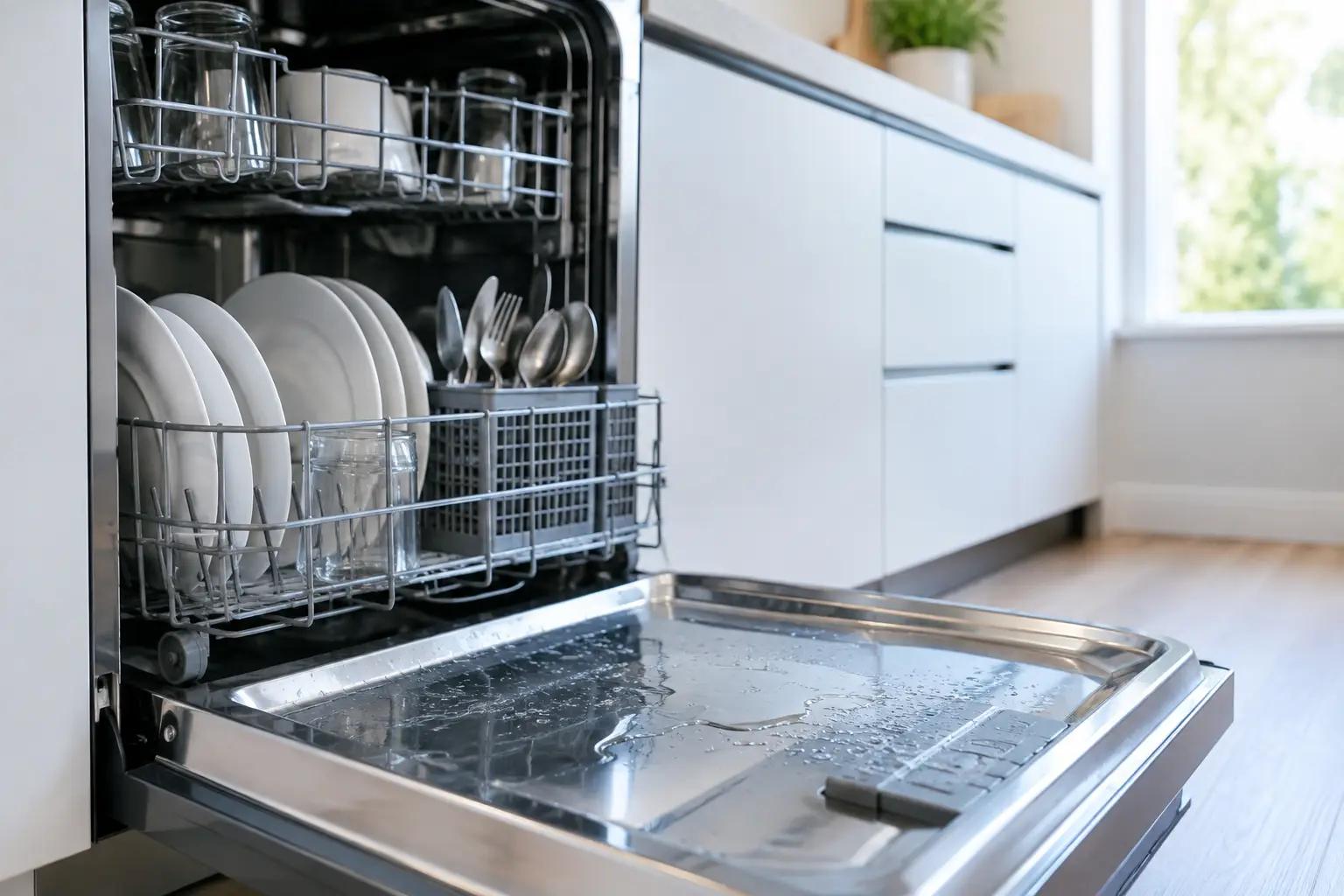

A dishwasher should leave dishes clean and the tub mostly dry after a completed cycle. If you are opening the door to a pool of dirty water, there is usually a drainage problem that needs attention. Understanding why dishwasher leaves water can help you decide whether a quick cleanup will solve it or whether it is time for a professional diagnosis.
A small amount of water beneath the filter or in the lowest part of the sump can be normal. That water helps keep internal seals from drying out. Water covering the bottom of the tub, however, is not normal. It can leave food debris behind, create odors, and eventually make the dishwasher less effective.
Why Dishwasher Leaves Water: Start With the Drain Area
Most standing-water problems happen because food particles, grease, or a blockage is stopping water from reaching the drain pump. Before assuming a major part has failed, remove the bottom rack and inspect the filter area.
Check for food debris in the filter
Many dishwashers have a round or rectangular filter at the bottom of the tub. It catches food particles before they can enter the pump. When that filter becomes packed with grease, rice, labels, glass fragments, or small bones, water may drain slowly or not at all.
Remove the filter according to your dishwasher’s instructions and rinse it under warm running water. A soft brush can loosen greasy buildup. Also look into the filter opening for visible debris, but do not reach into an area where broken glass may be present.
If the dishwasher drains normally after cleaning the filter, make filter cleaning part of your regular kitchen routine. Households that run several loads each week may need to check it monthly, especially if dishes are loaded without being scraped first.
Look at the drain opening and sump
With the filter removed, you may see a small drain opening or cover near the bottom of the tub. Food particles can collect there and restrict water flow. Carefully wipe away loose debris with a damp cloth.
Do not pour chemical drain cleaner into the dishwasher. These products can damage internal seals, hoses, and pump components. They also create a hazard for anyone who needs to service the appliance later.
A Clogged Sink or Garbage Disposal Can Affect the Dishwasher
Your dishwasher drain hose usually connects to the kitchen sink drain or garbage disposal. That means a sink-side clog can keep dishwasher water from leaving the appliance.
Run the kitchen faucet and see whether the sink drains freely. If it backs up or drains slowly, clear that issue first. Then run the garbage disposal with cold water for several seconds to flush out trapped food waste. Never place your hand inside a disposal, even when it is switched off.
A common issue occurs after a new garbage disposal is installed. The installer must remove a small knockout plug where the dishwasher drain hose connects. If that plug is still in place, the dishwasher cannot drain into the disposal. This is often noticed right after a disposal replacement, and it requires correction at the connection point.
Inspect the Drain Hose for Kinks or Blockages
The drain hose carries water from the dishwasher to the sink plumbing. If it is bent, crushed behind the appliance, or clogged with grease, the dishwasher may leave water in the bottom after every cycle.
Check the visible section beneath the sink for sharp bends. The hose should rise high under the countertop before connecting to the drain or disposal. This high loop helps prevent dirty sink water from flowing backward into the dishwasher. Some homes use an air gap instead, which is the small fitting near the sink faucet.
If an air gap is clogged, water may spill from it or drain poorly during a cycle. Its cap can often be removed for cleaning, but a hose blockage deeper in the system can be harder to reach. Pulling out a dishwasher without damaging flooring, cabinets, or water lines is not a good first-time project for most homeowners.
The Cycle May Not Be Draining Properly
Sometimes the dishwasher did not finish its cycle. A power interruption, a door that was opened mid-cycle, or a control issue can stop the machine before the drain phase.
Try selecting the Cancel/Drain function, if your model has one. Listen closely. A healthy dishwasher drain pump usually makes a steady humming or rushing-water sound as it pushes water out. If the water drains during this function, the original cycle may have been interrupted or the dishwasher may have a control-related problem.
If you hear a hum but no water moves, the pump could be blocked or failing. If there is no sound at all, the issue could involve the pump, wiring, door switch, control board, or a related electrical component. Those are situations where a diagnostic visit can prevent unnecessary part replacement.
When the Drain Pump Is the Problem
The drain pump is a small motor that removes water near the end of the wash cycle. Over time, its impeller can be blocked by debris, damaged by a foreign object, or worn out from normal use.
Signs of a possible drain pump issue include standing water after every cycle, a humming noise without draining, intermittent draining, or an error code related to drainage. Some models will also stop early because the dishwasher senses that water is still inside.
A failed pump is often repairable, but the right decision depends on the dishwasher’s age, condition, and the cost of the part. A technician can test the pump, check for voltage, inspect the drain path, and explain the repair clearly before work begins. That matters because replacing a pump will not solve a clogged hose or plumbing issue.
Other Causes of Water Remaining in a Dishwasher
Less common problems can also leave water behind. A stuck check valve may allow wastewater to flow back into the tub after the dishwasher drains. A faulty float switch can interfere with normal water-level sensing. In some cases, a control board does not send power to the drain pump at the correct time.
Drainage trouble can also come and go. For example, a partial blockage may let water drain during a light load but fail when grease and food debris build up during a heavier cycle. That is why the pattern matters. Note whether the problem happens on every cycle, only after using the disposal, or only with certain wash settings.
If water is dirty, has a sewage-like odor, or returns after the dishwasher finishes draining, stop using the appliance until the drain connection is checked. Backflow can point to a plumbing or hose-routing issue rather than a dishwasher failure.
What You Can Safely Try Before Scheduling Service
Start by removing standing water with a cup, towel, or sponge so you can inspect the filter area. Clean the filter, check that the sink drains properly, run the disposal, and look for a visibly kinked hose under the sink. Then run the dishwasher’s Cancel/Drain setting once.
Avoid repeatedly starting new wash cycles while water is standing in the tub. Repeated attempts can overflow the dishwasher or put extra strain on a struggling drain pump. If the unit is leaking, switch it off and turn off the water supply under the sink if you can do so safely.
A professional repair is usually the best next step if the filter is clean, the sink drains normally, and the dishwasher still will not remove water. Electrical testing, pump access, hose removal, and control diagnosis require more than a surface-level check.
For Tampa Bay homeowners, Tampa Bay Appliance Repair provides in-home dishwasher diagnostics for major makes and models. The diagnostic fee applies toward the repair, and a technician can help pinpoint the actual cause before you spend money on the wrong part.
Standing water does not always mean it is time to replace the dishwasher. In many cases, a blocked filter, drain-path issue, or repairable pump problem is the answer. Addressing it early keeps a manageable repair from becoming a smelly kitchen interruption.