
A refrigerator that is no longer keeping food cold or a dryer that quits midweek creates a problem that cannot wait for a lengthy research project. Still, spending a few focused minutes with an appliance repair company review checklist can help you avoid unclear pricing, missed appointments, and repairs that do not last.
Reviews are useful because they show what happens after a homeowner makes the call. Did the technician arrive when promised? Was the issue explained in plain language? Did the customer understand the cost before approving work? For Tampa Bay households, those practical details often matter more than a perfect star rating.
Why Appliance Repair Reviews Need Context
A company with hundreds of reviews and a high average rating may be a good choice, but the number alone does not tell the full story. Reviews can be old, brief, or focused on a service that has little to do with your appliance. A customer who needed a simple dishwasher adjustment may have had a very different experience from someone dealing with a refrigerator compressor or a washer that will not drain.
Look for recent reviews that describe the type of service you need. If your oven will not heat, comments about clear diagnostics, part availability, and follow-up are more useful than a general comment saying the company was nice. When a freezer, washer, or dryer has stopped working, you want evidence that the company can diagnose the issue accurately and communicate the next step without pressure.
It also helps to read both positive and critical reviews. No local service business can realistically satisfy every customer every time. What matters is whether concerns point to a repeated problem, such as surprise charges or poor communication, and whether the company responds professionally when something goes wrong.
Appliance Repair Company Review Checklist
Use this checklist while reading reviews and before scheduling a diagnostic appointment. It is designed to help homeowners compare providers on the things that affect the repair experience inside their home.
- Look for recent, detailed feedback. Prioritize reviews from the last several months that mention the appliance, the issue, arrival time, repair quality, and pricing communication. Specific details are harder to fake and give you a better sense of what to expect.
- Check for a pattern of punctuality. A technician may occasionally run behind because a previous repair takes longer than expected. Repeated comments about no-shows, long unexplained delays, or calls that are not returned are a different concern.
- Pay attention to how pricing is described. Good reviews often mention a diagnostic fee, an estimate before repairs begin, and a clear explanation of parts and labor. A diagnostic fee is common in in-home service. The key question is whether it is explained upfront and whether it applies toward an approved repair.
- Confirm professional credentials. Reviews may mention insured technicians, careful work practices, or confidence with complicated repairs. For refrigerator and freezer work involving refrigerant, ask whether the technician has EPA Section 608 certification. That qualification matters when refrigerant-related service is needed.
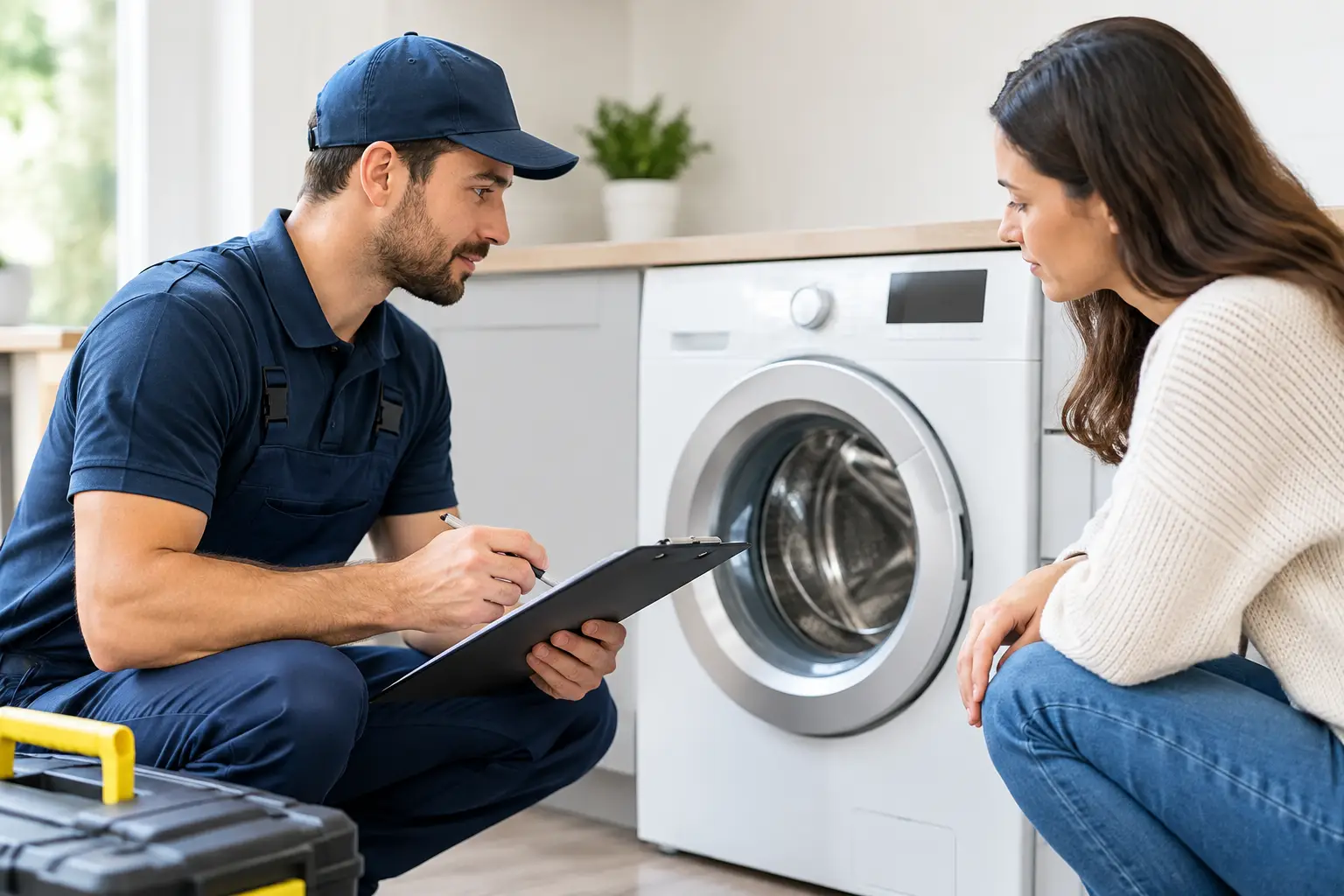
- Look for respect inside the home. Homeowners frequently remember whether a technician protected the work area, treated them courteously, explained the problem without talking down to them, and cleaned up before leaving. These are not extras. They are part of dependable in-home service.
- Notice the follow-up experience. Some repairs require a part order or a return visit. Read for comments about whether the company kept the customer informed, honored its commitments, and addressed concerns after the first appointment.
Read for the Details That Affect Your Repair
A strong review usually tells a short story. The customer had a dishwasher leaking, a technician identified a worn part, the price was discussed, and the appliance was tested before the visit ended. That kind of review gives you a practical view of the company’s process.
Be especially alert to reviews that mention diagnoses. Major appliances can show similar symptoms for very different reasons. A refrigerator that feels warm could have an airflow issue, a failing fan, a dirty condenser area, a control problem, or a sealed-system concern. A dependable technician should identify the cause rather than replacing parts based on a guess.
The same applies to laundry appliances. A washing machine that will not spin may have a drain issue, a lid-lock problem, a worn belt, or an electronic fault. A dryer that produces no heat can involve a heating component, thermostat, power supply, or venting issue. Reviews that describe a clear explanation of options are usually a good sign that the customer was treated fairly.
Verify What Reviews Cannot Tell You
Even thoughtful reviews have limits. Before booking, take a moment to confirm the details that matter for your household. Ask whether the company services your appliance brand and model, whether it works on the specific appliance category you own, and whether the technician can provide an estimate after diagnosing the problem.
You should also ask about the appointment window, diagnostic fee, and what happens if a part must be ordered. There is no single right answer for every repair. A company that stocks common parts may complete many jobs in one visit, while less common parts can take longer to obtain. Straightforward expectations are better than promises that sound convenient but cannot be kept.
For homeowners comparing repair against replacement, ask for an honest recommendation. Age, repair cost, energy use, part availability, and the overall condition of the appliance all matter. A fair repair company should be willing to explain when repairing makes sense and when putting money toward a replacement may be the wiser choice.
Watch for Review Red Flags
A few negative reviews do not automatically mean you should move on. Read them closely. A complaint about a repair that required a special-order part is not necessarily a warning if the company communicated clearly throughout the process. A complaint about a customer declining an estimate also does not prove the price was unfair.
Patterns deserve more weight. Be cautious if multiple reviewers describe charges that changed without explanation, pressure to approve work immediately, missed appointments without notice, or repairs that failed quickly with no follow-up. Also be wary of reviews that are overly vague in large numbers, especially if they all use similar wording.
On the other hand, a company that responds calmly to criticism can show accountability. The response should not reveal a customer’s private details or argue with them. It should show a willingness to understand the problem and make a reasonable effort to resolve it.
Make the Final Call With Confidence
Once you have narrowed your choices, choose the company that combines credible reviews with clear answers. The lowest advertised price is not always the lowest total cost if the diagnosis is rushed, the work is incomplete, or you are left uncertain about what was done. Value comes from accurate troubleshooting, honest recommendations, qualified service, and respect for your time and home.
For homeowners in the greater Tampa Bay area, Tampa Bay Appliance Repair focuses on that straightforward approach: in-home diagnostics, clear communication, and repair service for major kitchen and laundry appliances across makes and models. A quick conversation before scheduling should leave you feeling informed, not pressured.
The best review is still the one you never need to write because the visit went as promised. Choose a repair company that earns your trust before the technician arrives, then gives you a clear path forward once the appliance is diagnosed.