

Last Updated: October 23, 2026
Quick Summary
A freon leak on refrigerator disrupts the cooling cycle by allowing refrigerant to escape through pinhole leaks in copper tubing or faulty valves, preventing the system from cooling properly. Signs include oil residue on the compressor, hissing sounds, a warm refrigerator despite the compressor running, and food spoiling faster than normal. Only a licensed EPA Section 608 certified technician can safely locate, repair, and recharge the system.
- Stop using the refrigerator for food storage immediately and turn it off to prevent compressor damage.
- Do not attempt DIY repairs; refrigerant handling requires EPA certification and violates federal law without it.
- A pressure test and electronic leak detector confirm the leak location and whether repair or replacement is feasible.
- Repair costs depend on leak location, component damage, and refrigerant type, ranging from simple valve replacement to expensive compressor replacement.
- If repair costs exceed 50% of a new refrigerator’s price or the unit is 10+ years old, replacement is often the smarter choice.
Table of Contents
- What Freon Is and How Your Refrigerator’s Cooling System Works
- Signs of a Refrigerator Refrigerant Leak
- Health and Food Safety Concerns With a Freon Leak
- What to Do if a Refrigerator Is Leaking Refrigerant
- Refrigerator Refrigerant Leak Repair Cost and Options
- Is It Worth Repairing a Refrigerator Refrigerant Leak
- Prevention and When to Call a Professional
- Frequently Asked Questions
What Freon Is and How Your Refrigerator’s Cooling System Works
Your refrigerator’s Freon (or refrigerant) is the lifeblood of its cooling system. It’s a chemical compound that circulates through copper tubing to absorb heat from inside your fridge and release it outside. Without it, your appliance is just an insulated box.
Here’s how the sealed system works: the compressor pumps refrigerant through the condenser coil (where heat is released), then through the evaporator coil (where cooling happens inside your fridge).
A freon leak on refrigerator units disrupts this cycle. When refrigerant escapes, the system can’t cool properly.
Signs of a Refrigerator Refrigerant Leak
Visual and Auditory Warning Signs
The first clue often comes from what you see or hear.
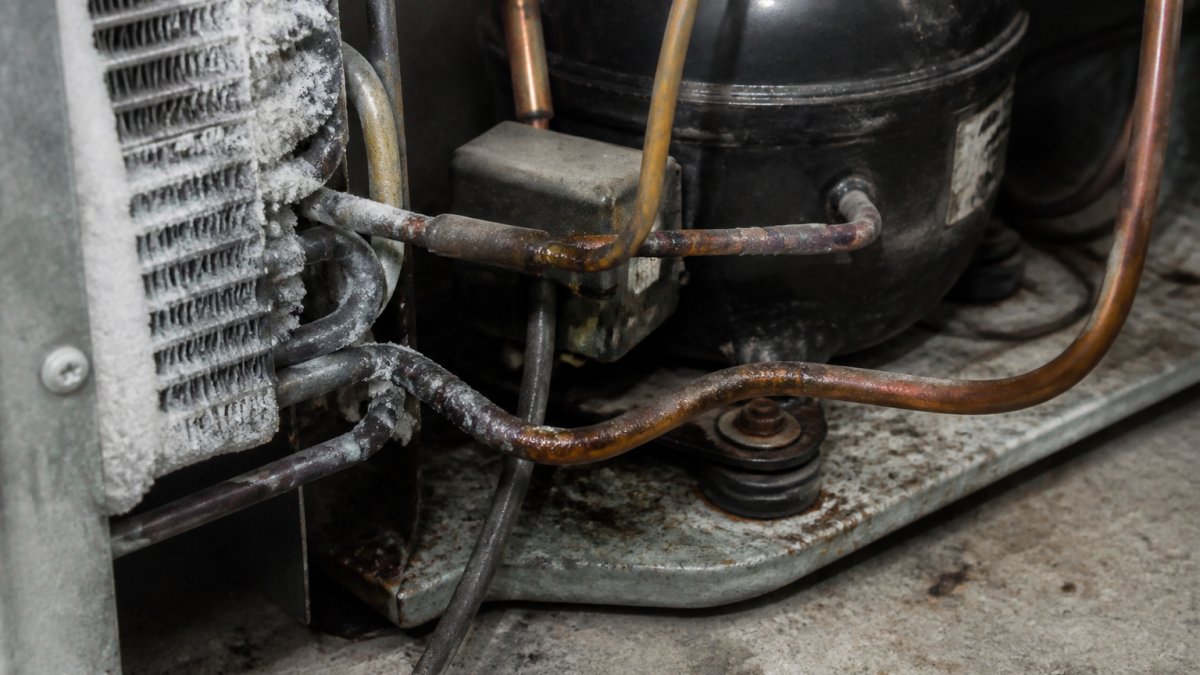
Listen for hissing or bubbling sounds coming from the compressor area. A hissing sound typically means refrigerant is actively leaking from a pressurized line. Some leaks are silent, but this auditory warning is worth taking seriously.
Check the copper tubing and refrigerant lines on the back or bottom of your unit.
Temperature and Performance Changes
The most obvious symptom is a warm refrigerator. If your fridge isn’t cooling but the compressor is running, low refrigerant is a leading suspect. The cooling performance drops noticeably, food warms up faster than it should.
You may also notice temperature imbalance. The freezer might still be cold while the refrigerator section sits at 50°F instead of the proper 40°F.
The compressor runs constantly. In a healthy system, the compressor cycles on and off. With low refrigerant, it runs almost continuously, trying to cool but never reaching the target temperature. This puts strain on the motor and wastes energy.
Health and Food Safety Concerns With a Freon Leak
A freon leak on refrigerator units raises legitimate food safety questions. Here’s what you need to know.
Freon itself (typically R-134a or R-600a in modern refrigerators) is relatively low-toxicity, but it’s not harmless. Inhaling large amounts can cause dizziness, headaches, and in extreme cases, cardiac arrhythmias.
The bigger concern is food spoilage. When your fridge warms above 40°F, bacterial growth accelerates rapidly. Perishable foods, dairy, meat, leftovers, become unsafe within 2 hours of temperature abuse.
If you suspect a leak, use an appliance thermometer to monitor the actual temperature.
What to Do if a Refrigerator Is Leaking Refrigerant
Immediate Steps to Take
Stop using the refrigerator for food storage immediately. Move perishables to a cooler with ice or to a friend’s fridge.
Turn off the refrigerator. Unplug it or switch it off at the breaker. Continuing to run a low-refrigerant system damages the compressor.
Ventilate the area. Open windows near the appliance if you notice a chemical smell.
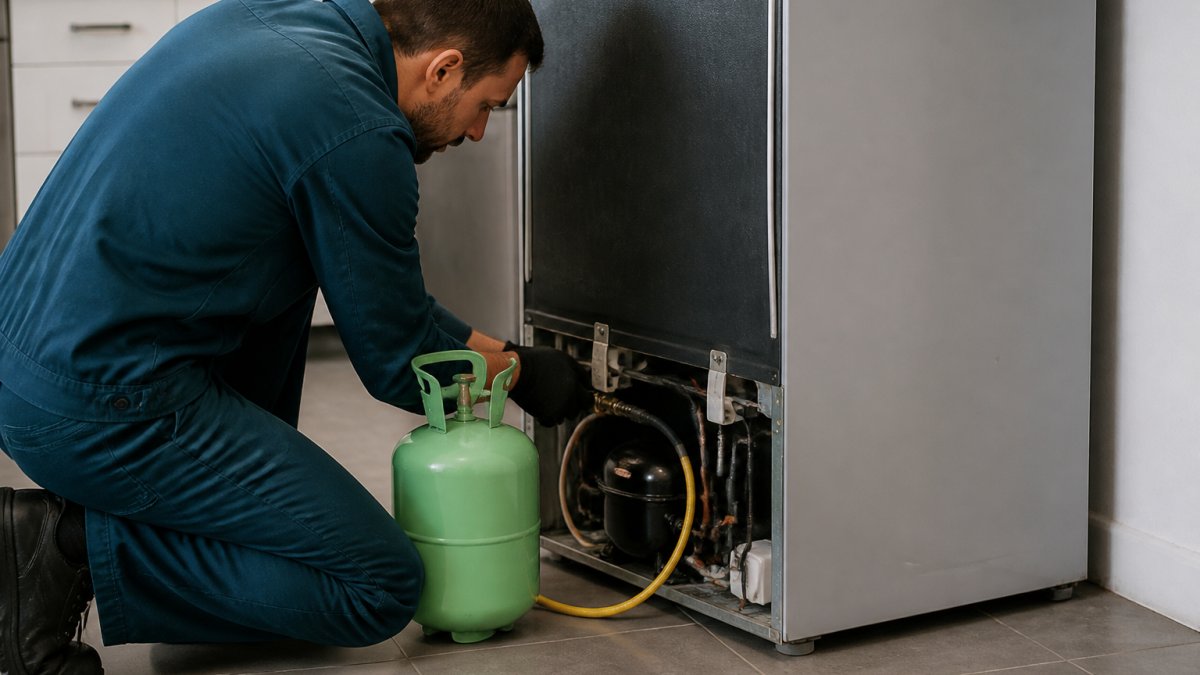
Do not attempt a DIY fix. Refrigerant handling requires EPA certification (Section 608 certification) (the EPA).
Call a licensed technician. A professional can confirm the leak, locate it, recover the old refrigerant properly, repair the leak, and recharge the system.
How Technicians Confirm and Locate a Leak
A qualified technician uses several methods to pinpoint a leak. The most common is a pressure test, the tech connects gauges to the refrigerant lines and checks system pressure. Low pressure confirms a leak exists.
Next comes leak detection. Technicians use electronic leak detectors that sense refrigerant vapor, or they apply soapy water to suspect areas. Bubbles form where refrigerant escapes.
Once located, the tech assesses whether repair is feasible. A pinhole leak in accessible copper tubing can sometimes be brazed (soldered) shut. A leak at a valve or compressor fitting may require component replacement.
Refrigerator Refrigerant Leak Repair Cost and Options
Repair costs for a freon leak on refrigerator units vary widely depending on the leak location and what needs replacement.
A simple valve replacement or accessible tubing repair typically costs less than replacing a compressor or condenser. However, the exact cost depends on your refrigerator’s make, model, and age. Older units may have parts that are expensive or hard to source.
Here’s what affects the price:
- Leak location: Accessible leaks (valve, accessible tubing) are cheaper to fix than leaks inside sealed walls
- Component damage: If the compressor or condenser is damaged, replacement is more expensive than a simple solder repair
- Refrigerant type: Some refrigerants cost more to recover and recharge than others
- Labor time: Leak detection and repair can take 2-4 hours depending on complexity
For specific pricing, contact Tampa Bay Appliance Repair LLC for a free diagnostic with repair. We’ll identify the leak, explain your repair options, and give you a transparent quote before any work begins.
Is It Worth Repairing a Refrigerator Refrigerant Leak
Repair vs. Replace Decision Framework
The decision hinges on three factors: refrigerator age, repair cost, and remaining useful life.
If your fridge is less than 7 years old: Repair usually makes sense. Most refrigerators last 10-15 years, so you have years of use ahead. A repair, even a major one, is typically cheaper than replacing the unit.
If your fridge is 10+ years old: Replacement may be smarter. Parts become harder to find and more expensive. A new refrigerator offers better energy efficiency and reliability.
If the repair cost exceeds 50% of a new refrigerator’s price: Replace it. Once repairs approach replacement cost, you’re throwing money at a dying appliance. A new unit comes with a warranty and efficiency gains.
Consider also:
- Is the refrigerator a specialty model (built-in, commercial-grade)? These cost more to replace.
- Are you planning to move soon? A repair keeps you in your current home longer without major expense.
- Is the compressor already failing? A compressor replacement is expensive, at that point, replacement is often the better choice.
Prevention and When to Call a Professional
Prevention is mostly about reducing stress on the sealed system, and knowing when to stop troubleshooting and call a professional is the other half of the equation. This section covers both, including the safe steps homeowners can take and the work they should never attempt.
Preventing a Refrigerant Leak
A sealed system does not “use up” refrigerant; it only loses charge when something leaks. The goal is to keep the system from being stressed into a leak.
- Keep the condenser coil clean. Dust and pet hair insulate the coil, forcing the compressor to run hotter and longer. Vacuum or brush the coil every 6-12 months.
- Maintain airflow. Leave clearance around the refrigerator and do not block interior vents with food.
- Check the door gasket. A worn gasket lets warm air in and makes the compressor work overtime. Clean it and replace it if it is cracked or no longer seals.
- Do not overfill. A packed fridge blocks airflow and raises interior temperatures.
- Watch for corrosion. Moisture and household cleaners can corrode copper tubing; keep the compressor area dry and clean.
Safe Immediate Steps If You Suspect a Leak
If you smell a chemical odor, hear hissing, or see oil residue, take these steps before calling anyone:
- Ventilate the area. Open windows and doors near the appliance.
- Keep people and pets away. Move children and pets out of the kitchen until the area is aired out.
- Avoid ignition sources. Do not flip light switches, use open flames, or run appliances that could spark near a suspected leak. Some refrigerants are flammable, and the appliance label tells you which type you have.
- Unplug the refrigerator if it is safe to reach the plug. Do not pull the unit out or open the sealed system.
- Leave the area if the odor is strong or anyone feels dizzy, lightheaded, or nauseated, and call for help from a safe location.
Symptoms alone do not confirm a leak. A warm fridge, a running compressor, or a hissing sound can have other causes. Only a technician with gauges and a leak detector can confirm refrigerant loss.
What Homeowners Should Not Do
Refrigerant handling and sealed-system repair require EPA Section 608 certification. Homeowners should not:
- Open, puncture, or braze refrigerant lines
- Add refrigerant from a can
- Use leak-sealer products in a sealed system
- Remove the compressor or coils
These tasks release refrigerant into the atmosphere, can damage the system beyond repair, and violate federal law when performed without certification.
When to Call a Professional
Call a licensed technician if:
- The refrigerator is not cooling and the compressor is running
- You see oil residue on the back or bottom of the unit
- You hear hissing or bubbling near the compressor
- Food is spoiling faster than normal
- The refrigerator section is noticeably warmer than the freezer
- You smell a chemical odor near the appliance
Do not wait. A small leak becomes a large repair bill quickly, and the longer a low-refrigerant system runs, the more damage it does to the compressor. Early diagnosis saves money and prevents food waste.
Tampa Bay Appliance Repair LLC responds within one business day for appointment requests. We diagnose the issue, confirm whether it is a refrigerant leak, and explain your repair or replacement options clearly. Book online or call to schedule, we serve the entire Tampa Bay area with licensed, insured technicians.
Frequently Asked Questions
What are the signs of a refrigerant leak in a refrigerator?
Common signs include warm refrigerator or freezer compartments, frost buildup on the evaporator coil, hissing or bubbling sounds, unusual odors, and visible oil residue around copper tubing or the compressor. Temperature imbalance between compartments is also a red flag. If your appliance thermometer reads above 40°F in the fridge or above 0°F in the freezer, a refrigerant leak may be the cause. Some leaks are slow and subtle, so multiple signs often appear together.
Is it safe to eat food from a refrigerator with a Freon leak?
Freon itself does not contaminate food directly, but a leaking refrigerant system cannot maintain safe food temperatures. Food stored above 40°F risks bacterial growth and spoilage within 2 hours. Discard perishables if your refrigerator has been warm for more than 2 hours. Do not rely on appearance or smell alone, bacteria that cause foodborne illness are not visible. If you suspect a refrigerant leak, stop using the appliance for food storage immediately and contact a technician.
Can I fix a refrigerator refrigerant leak myself?
No. Refrigerant handling is regulated by the EPA under Section 608 of the Clean Air Act. Only certified technicians are legally permitted to recover, recycle, or handle refrigerant. Attempting DIY repair risks environmental harm, legal penalties, and personal injury. A licensed technician will pressure-test the sealed system, locate the pinhole leak or corrosion point, repair or replace the damaged component, recover the old refrigerant, and recharge the system with the correct refrigerant type.
What should I do immediately if I suspect a refrigerator refrigerant leak?
Stop using the refrigerator for food storage to prevent spoilage. Move perishables to a cooler with ice or another working fridge. Turn off the appliance at the circuit breaker if you hear hissing or smell an unusual odor. Do not attempt to repair it yourself. Contact a licensed, EPA-certified technician to diagnose the leak. Many repair companies offer diagnostics or pressure tests to confirm the issue before you commit to repair costs.
A freon leak on refrigerator units is serious, but it’s also fixable. The key is acting quickly. Stop using the appliance, call a certified technician, and make an informed repair-versus-replace decision based on your unit’s age and the repair cost. At Tampa Bay Appliance Repair LLC, we handle refrigerant work safely and legally, with EPA certification and transparent pricing. Get started with a free diagnostic and take the guesswork out of your cooling problem.
