
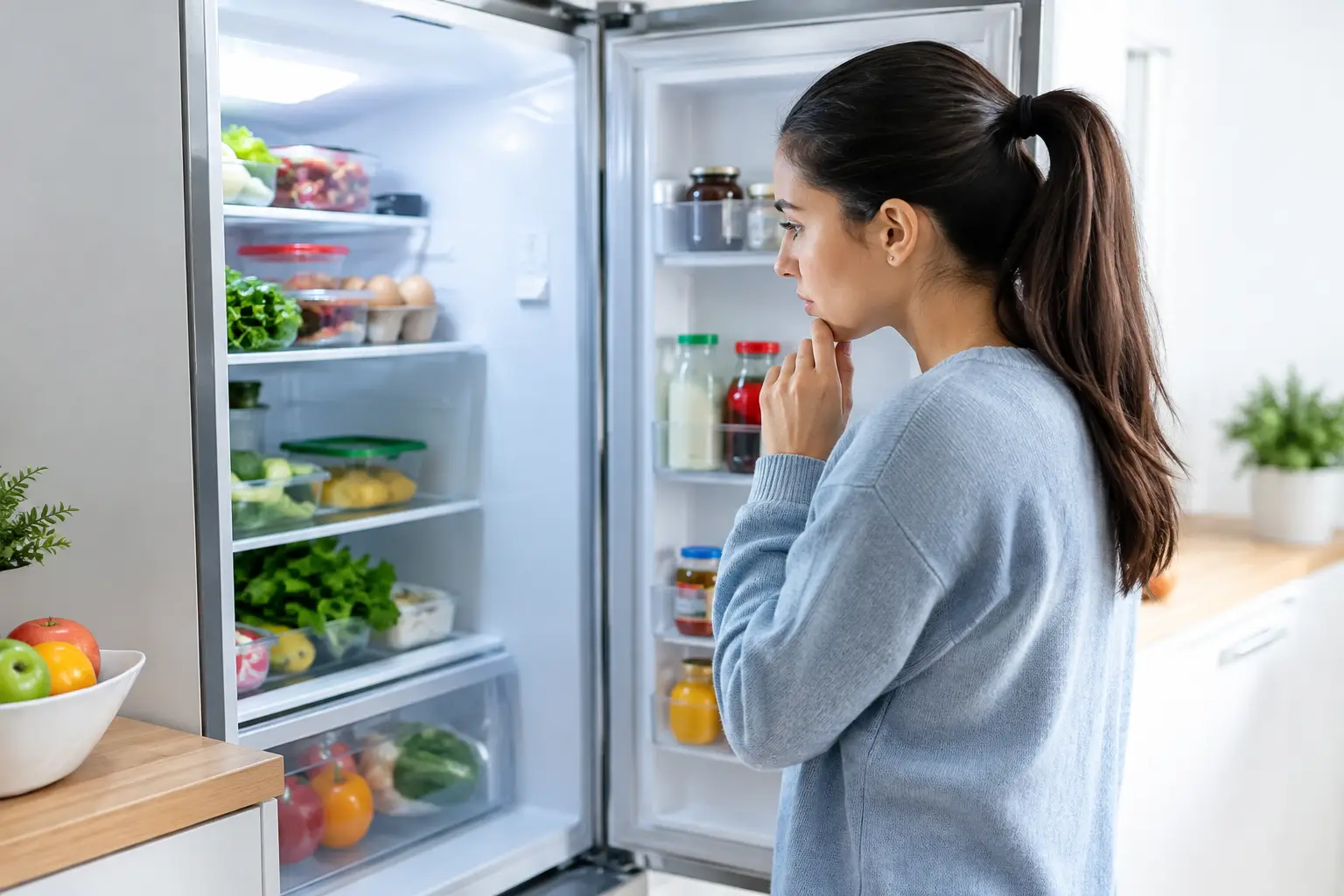

A refrigerator failure turns into a food-safety question fast, especially in Tampa Bay heat. Food safety after refrigerator failure is less about whether the food still looks normal and more about two facts: how warm it became and how long it stayed there. A refrigerator that stops cooling can often be repaired, but groceries exposed to unsafe temperatures may not be worth the risk.
The good news is that you do not have to guess blindly. Keep the doors closed, note the time you first noticed the problem, and use a thermometer if you have one. Those simple steps give you the best chance of saving safe food while protecting your household from foodborne illness.
First, Keep the Doors Closed
Every time the refrigerator door opens, cold air escapes. If the door stays shut, a refrigerator will generally keep food cold for about four hours during a power outage or cooling failure. A full freezer can hold its temperature for about 48 hours, while a half-full freezer may hold it for about 24 hours.
Those estimates depend on the appliance, the room temperature, and how often the doors are opened. In a warm Florida garage, laundry room, or kitchen, food may warm faster than it would in an air-conditioned home. If you know the refrigerator has been running warm for several hours before you discovered it, use the more cautious timeline.
Avoid opening the door repeatedly to check on things. Instead, write down the time, gather coolers and ice if available, and decide whether the refrigerator is cooling again. If it is still warm or completely silent, move quickly to protect the food that matters most.
Food Safety After Refrigerator Failure: The 4-Hour Rule
Refrigerated perishable food should be kept at 40°F or below. When foods such as meat, dairy, cooked leftovers, eggs, and cut produce sit above 40°F for two hours or more, bacteria can grow quickly. In temperatures above 90°F, that window drops to one hour. That can matter during a summer outage or when food is moved outdoors while you wait for service.
If your refrigerator has been above 40°F for four hours or longer, discard perishable foods. Do not rely on smell, appearance, or a small taste test. Harmful bacteria do not always change a food’s odor, flavor, or texture.
If the failure was brief and the refrigerator stayed at or below 40°F, most food can remain safe. A refrigerator thermometer is the clearest way to know. Without one, use the timeline conservatively. When you cannot tell how long the refrigerator was warm, it is usually safer to throw out high-risk items than to risk making someone sick.
Foods to Discard When They Have Been Warm Too Long
The highest-risk foods are the ones that need steady refrigeration. Discard raw or cooked meat, poultry, seafood, deli meat, bacon, hot dogs, eggs, milk, yogurt, soft cheese, cream cheese, sour cream, and prepared baby formula if they have been above 40°F for four hours or more.
Also discard cooked leftovers, casseroles, cooked rice or pasta, soups, prepared salads, cut fruit, cut vegetables, and opened refrigerated dips. These foods contain moisture and nutrients that allow bacteria to multiply once temperatures climb.
Be extra careful with food intended for young children, older adults, pregnant people, or anyone with a weakened immune system. For those households, a cautious decision is the right one.
Foods That May Be Safe to Keep
Some foods are less perishable and may be safe after a refrigerator problem, depending on their condition. Whole uncut fruits and vegetables, hard cheeses, butter, bread, and shelf-stable condiments are often lower risk. Ketchup, mustard, pickles, jams, jelly, and many bottled sauces can generally be kept if they have only been warm for a limited time.
That does not mean every item in the door is automatically safe. Refrigerated products labeled “keep refrigerated” should be handled according to the time and temperature rules. When in doubt, check the product label and choose caution for anything containing dairy, eggs, meat, or fresh-cut ingredients.
What to Do With Food in the Freezer
A freezer gives you more time, but it still needs attention. Check whether foods still have ice crystals or feel refrigerator-cold, meaning 40°F or below. Food in that condition can usually be refrozen or cooked, although its texture may suffer after refreezing.
If frozen food has completely thawed and has been above 40°F for more than two hours, discard it. This includes raw meat, seafood, frozen meals, ice cream, and leftovers. Ice cream is a particularly clear indicator: if it has melted into liquid and warmed, it should go.
Do not taste thawed food to judge safety. If you are uncertain whether it stayed cold enough, throw it away. Replacing groceries is frustrating, but treating food poisoning is worse.
Move Food Only When You Have a Cold Place for It
If you have a working cooler, use it for the most expensive and perishable items first. Pack it with ice, frozen gel packs, or bags of ice, and keep the cooler closed. Place raw meat in sealed bags or containers so juices cannot leak onto other food.
A neighbor’s refrigerator or freezer may also be a practical short-term option. Just make sure the food is moved promptly and stays cold during the trip. In Tampa Bay’s heat, a grocery bag sitting in a car can become unsafe much faster than people expect.
There is no need to move shelf-stable foods such as unopened canned goods, dry pasta, cereal, or unopened beverages. Focus your effort on refrigerated and frozen items.
Clean Up Before Restocking
Once the refrigerator is cooling properly again, remove discarded food and wipe up spills. Wash shelves, drawers, and interior surfaces with hot, soapy water. Then sanitize surfaces with a kitchen-safe sanitizer according to its label instructions. Dry everything before putting food back inside.
If raw meat juices leaked, clean that area carefully and wash your hands afterward. Replace any food packages that are torn, leaking, or coated with residue. This is also a good time to check the refrigerator temperature setting and place an appliance thermometer inside if you do not already have one.
Your refrigerator compartment should stay at 40°F or below, while the freezer should be at 0°F. A built-in display can be helpful, but a separate thermometer gives you a second point of reference if the appliance begins acting up again.
When the Refrigerator Needs Professional Repair
A refrigerator that has stopped cooling may have a simple issue, such as a failed door seal, dirty condenser area, faulty fan, defrost problem, thermostat issue, or damaged start component. Other failures can involve the compressor or sealed refrigerant system and require a trained technician.
Call for service promptly if the refrigerator is warm, the freezer is thawing, the appliance is clicking without starting, there is unusual frost buildup, or the motor is running constantly without getting cold. Unplug the unit if you notice burning smells, smoke, or damaged wiring, and do not attempt to take apart electrical or refrigerant components yourself.
Tampa Bay Appliance Repair provides in-home refrigerator diagnostics and repair for major makes and models. A clear diagnosis can help you decide whether a repair is the sensible, affordable choice before a temporary cooling problem becomes a larger loss of food and time.
Keep a simple refrigerator thermometer on hand and save a couple of cooler bags for emergencies. When a failure happens, those small preparations make it easier to act calmly, protect your family, and get the kitchen back to normal.