
A built in microwave not heating is more than an inconvenience when dinner is on the counter and a busy evening is already underway. The display may light up, the turntable may spin, and the timer may count down normally, yet your food comes out cold. That combination is frustrating, but it also gives a technician useful clues about where the problem may be.
Before assuming the microwave needs to be replaced, try a few safe checks. Some heating problems come down to power, settings, or cookware. Others involve high-voltage components that should only be diagnosed and repaired by a trained appliance technician.
Start With the Safe, Simple Checks
A microwave that appears to run but does not heat can sometimes be responding to something outside the appliance itself. Begin with a quick reset: unplug the unit or turn off its circuit breaker for one minute, then restore power. This can clear a minor control-board error after a power interruption or electrical surge.
Next, test it with a microwave-safe cup containing about one cup of water. Heat the water for one minute on full power. If the water is still cool, the issue is likely real rather than a result of a defrost setting, a low power level, or food that needed more time.
Also check that the door closes firmly and nothing is blocking the latch area. A microwave is designed not to produce heat unless its door safety switches confirm the door is shut. If the door feels loose, has to be lifted to close, or the display changes when you press on it, stop using the appliance until it can be inspected.
Finally, make sure the outlet and breaker are working properly. A built-in unit may have a dedicated circuit that can trip without affecting nearby kitchen outlets. If the microwave loses its clock, display, or interior light at times, an electrical supply issue is worth checking first.
Why a Built-In Microwave Is Not Heating
When the microwave runs normally but does not warm food, the cause is usually inside the heating system. Unlike a countertop unit, a built-in microwave is integrated into cabinetry, so access and ventilation matter during service. The repair itself still depends on the appliance’s make, model, age, and the failed part.
A failed magnetron
The magnetron is the component that creates the microwave energy used to heat food. When it fails, the microwave may still look and sound like it is operating, but it will not heat. In some cases, homeowners notice a louder-than-usual humming noise just before heating stops. In others, there is no obvious warning.
A magnetron can sometimes be replaced, but whether that makes financial sense depends on the age and overall condition of the microwave. A professional diagnosis helps separate a worthwhile repair from a unit nearing the end of its service life.
A problem with the high-voltage diode or capacitor
The diode and capacitor work with the magnetron to produce the power needed for heating. A failed diode may leave the microwave running without heating, sometimes with an unusual buzz. Capacitor problems can create similar symptoms.
These parts are not homeowner repair items. Microwaves can retain a dangerous electrical charge even after being unplugged. Do not remove cabinet trim, take off the microwave cover, or attempt to test internal high-voltage components yourself.
Door switch or latch trouble
A door can look closed while one or more internal safety switches are not engaging correctly. Depending on the failure, the microwave may refuse to start, stop during a cycle, trip the breaker, or run without producing heat.
Door-switch problems are often repairable. A technician can test the switches, inspect the latch mechanism, and make sure the door alignment is correct rather than replacing parts based on guesswork.
A faulty control board or inverter
Modern microwave models use electronic controls to manage cooking functions. If the control board is failing, it may send incorrect signals to the heating system even though the keypad and display appear normal. Some units use an inverter instead of a traditional high-voltage transformer, and inverter faults can also cause a no-heat condition.
These repairs require model-specific testing. Replacing a control board without confirming the cause can be expensive and may not solve the problem.
Signs You Should Stop Using the Microwave
A microwave that simply does not heat is reason to schedule service, but certain symptoms call for immediate caution. Stop using the unit if you notice a burning smell, smoke, sparks, popping sounds, repeated breaker trips, a damaged door, or a door that will not stay securely shut.
Do not continue testing a microwave that sparks inside, even if the sparking seems small. Remove any metal objects or damaged cookware only after the appliance is off, then arrange a diagnostic. Arcing can damage internal components and, in some cases, create a fire risk.
If the microwave has intermittent power, turn the breaker off if you can do so safely. A technician can determine whether the issue is in the appliance, its power cord, the outlet, or the dedicated circuit.
Is Repair Better Than Replacement?
For many homeowners, the real question is not just why the microwave stopped heating. It is whether putting money into a repair is the sensible choice.
Repair is often a good option when the microwave is relatively new, matches existing cabinetry, has been reliable otherwise, and needs a common component such as a door switch or diode. It can also prevent the added cost and hassle of finding a replacement that fits the existing built-in opening.
Replacement may be more practical when the unit is older, has multiple issues, has extensive door damage, or needs a costly major component. Fit matters here. Built-in microwave dimensions, trim kits, venting clearances, and cabinet openings can make a quick swap harder than expected. A diagnostic gives you the information needed to compare repair costs with realistic replacement costs.
What to Expect From a Professional Diagnostic
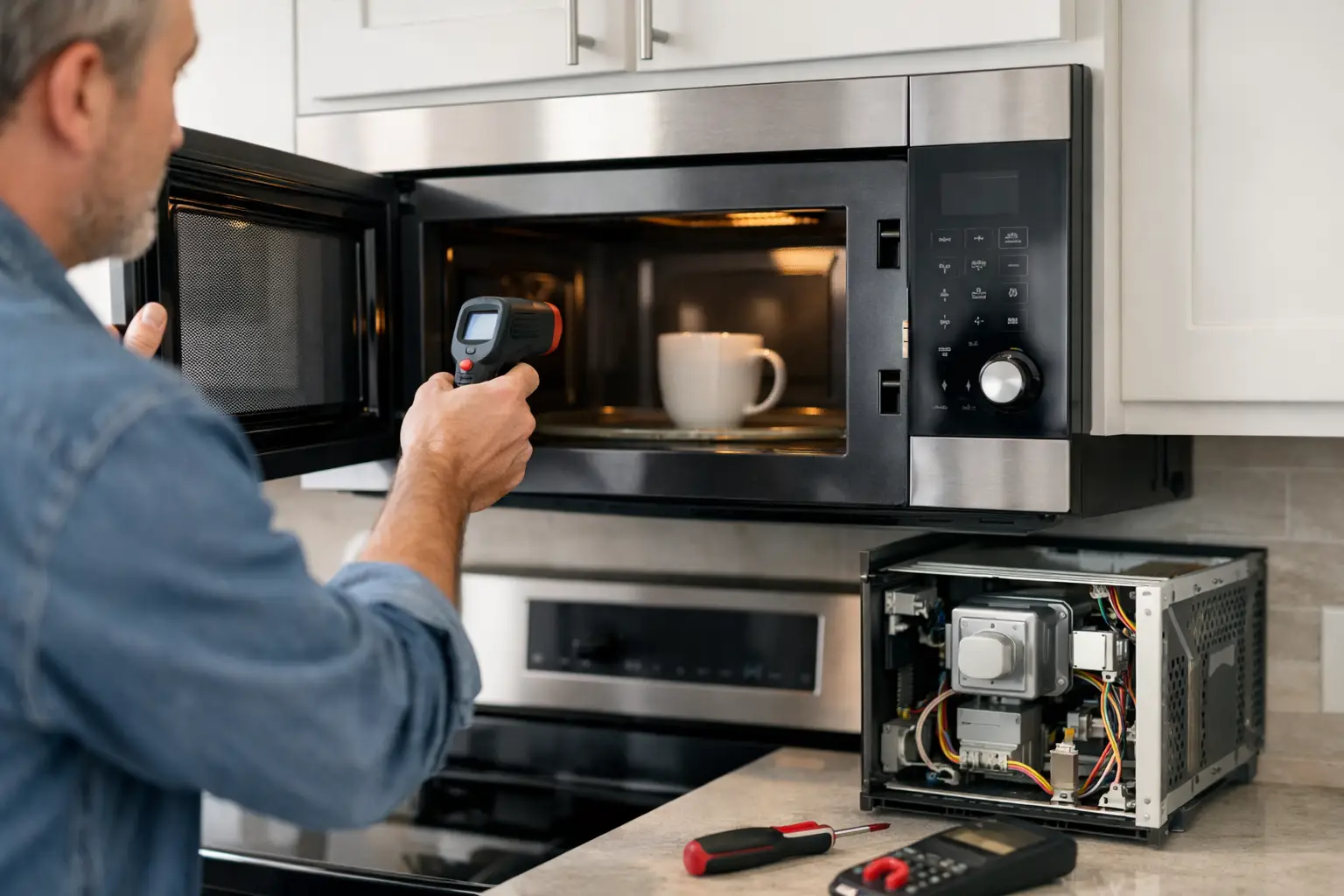
A qualified technician starts by confirming the symptom with a controlled heating test and checking the power supply, door operation, and visible condition of the appliance. From there, the technician can safely inspect and test the internal components associated with heating.
You should expect a straightforward explanation of what failed, what the repair involves, and whether repair is a fair value for your particular model. At Tampa Bay Appliance Repair, the diagnostic fee applies toward the repair, so homeowners can make a decision with a clearer picture of the cost rather than guessing at the problem.
Have the model number available before your appointment if possible. It is commonly found along the interior frame when the door is open or on a label in another accessible location. The model number helps identify compatible parts and lets the technician prepare for the type of unit in your kitchen.
Preventing Repeat Heating Problems
Not every microwave failure can be prevented, since electronic and high-voltage parts wear out over time. Still, a few habits can reduce unnecessary strain. Use microwave-safe containers, keep the interior clean, avoid running the microwave empty, and do not slam the door. Food splatters can trap moisture and grease around the interior, while repeated hard door closures can wear on latch components.
Give the microwave its required ventilation clearance and avoid storing items where they block air movement around the unit. If it has experienced a recent power surge, consider whether other kitchen appliances are showing unusual behavior as well.
A microwave that runs but leaves food cold is not a problem to work around for long. A safe diagnostic can identify whether a practical repair will get your kitchen routine back on track and help you avoid the uncertainty of replacing an appliance before it is truly necessary.