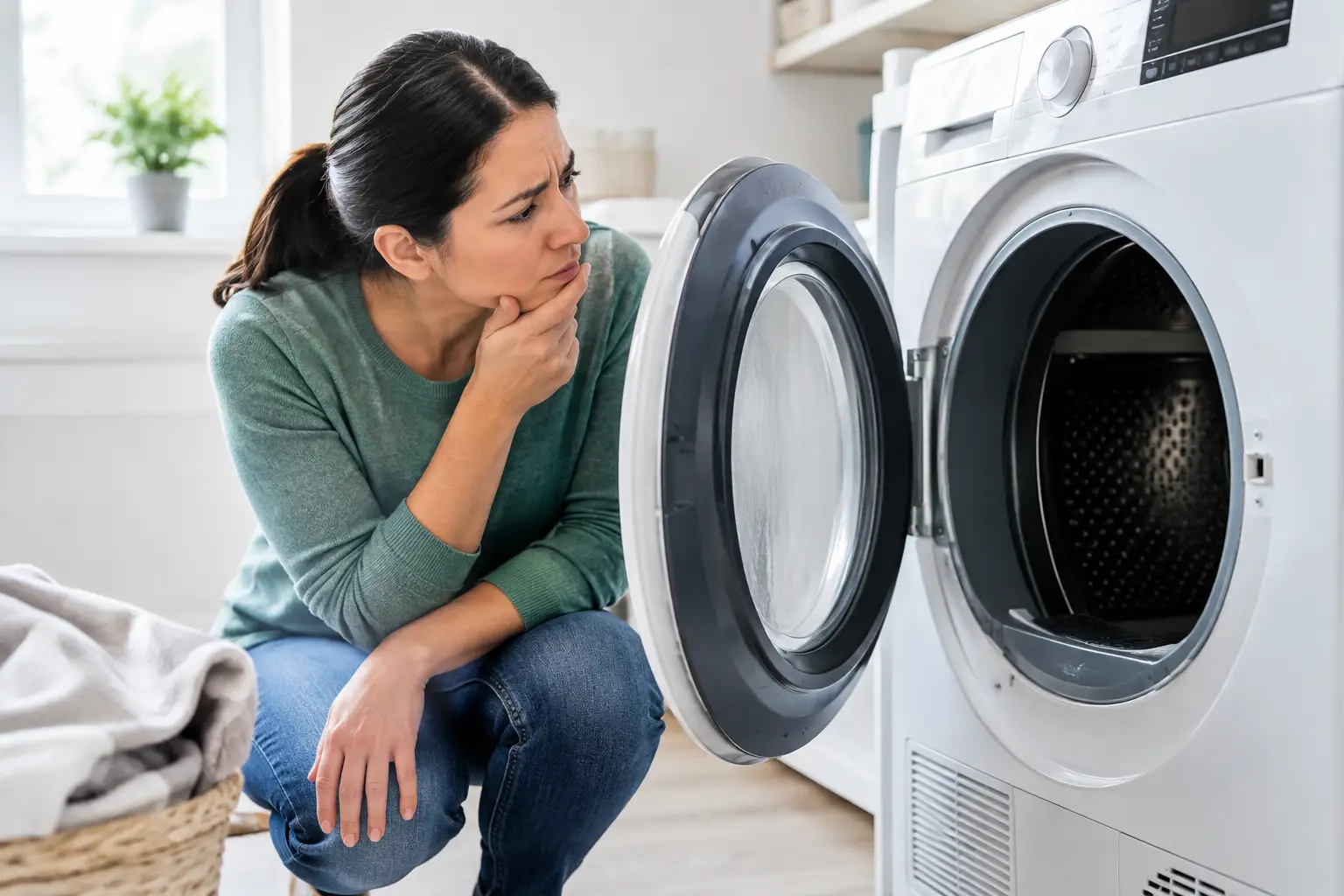

A dryer rarely quits at a convenient time. One day it takes two cycles to dry towels, the next it makes a loud scraping sound, and suddenly laundry starts piling up. If you are asking, “when should I replace my dryer?” the answer usually comes down to three things: safety, the type of failure, and whether the repair is still a fair value.
Many dryer problems can be repaired for far less than the cost of a new machine. A worn belt, failed heating element, faulty thermostat, or damaged drum roller does not automatically mean it is time to shop. But an aging dryer with recurring failures can turn into an expensive and frustrating cycle. A professional diagnosis gives you a clear picture before you spend money either way.
When Should I Replace My Dryer? Start With Its Age
Most dryers last about 10 to 13 years with normal household use. A well-maintained dryer may run longer, while a large family that runs several loads a day may see wear sooner. Age alone is not a reason to replace a dryer, especially if it has been dependable and needs one straightforward repair.
Still, age changes the decision. If your dryer is 12 years old and needs a modest repair for the first time, fixing it may make sense. If it is the same age, has already needed several repairs, and now has a costly motor or control-board issue, replacement may be the better long-term choice.
The make, model, and availability of replacement parts matter too. Some older units remain practical to repair because parts are available and the machine has a simple, durable design. Others become harder to keep running when key parts are discontinued or unusually expensive.
7 Signs Your Dryer May Be Near the End
1. Repairs are becoming a regular expense
One repair does not make a dryer unreliable. Repeated service calls within a year are different. When belts, rollers, sensors, heating components, or electrical parts keep failing, the appliance may be showing broader wear.
A useful rule of thumb is to compare the repair estimate with the cost of a comparable replacement dryer. If a single repair approaches half the price of a new unit, replacement deserves serious consideration. This is not a hard rule. A newer, higher-quality dryer may still be worth repairing, while an older basic model may not be.
2. It takes multiple cycles to dry a normal load
Long drying times can be caused by a repairable issue, including a clogged vent, restricted exterior vent hood, weak heating element, or failing thermostat. That is why it is wise not to assume the dryer itself is finished before it is inspected.
However, if the vent is clear and the dryer still cannot maintain proper heat or airflow, the repair may be more involved. Clothes that remain damp after a standard cycle also increase utility costs and put more wear on fabrics.
3. The dryer makes loud or unfamiliar noises
Thumping, squealing, scraping, grinding, or repeated banging is not normal. A small object caught in the drum can sometimes be the simple explanation. More often, the sound points to worn drum rollers, a damaged idler pulley, a loose blower wheel, or a failing motor.
These repairs can be worthwhile when caught early. Continuing to run a noisy dryer can allow a smaller part failure to damage the drum or motor, raising the final cost. If the dryer is older and the noise comes with poor performance or repeated breakdowns, replacement may be the more dependable route.
4. You smell burning or see signs of overheating
A burning smell, excessive heat around the machine, scorch marks, or a dryer that shuts off unexpectedly should be treated as a safety concern. Stop using the appliance until the cause is identified. Lint buildup, airflow restrictions, electrical wiring problems, and failing components can all contribute to overheating.
For gas dryers, a gas odor requires immediate attention. Leave the area if the smell is strong, avoid switches or open flames, and contact your gas utility or emergency services as appropriate. Do not keep testing the dryer to see if the smell goes away.
Not every overheating issue means replacement. A venting issue or failed safety component may be repairable. But a severely damaged electrical system, repeated overheating, or a unit with major internal deterioration may make replacement the safer choice.
5. The drum will not turn, or the dryer will not start
A dryer that hums but will not tumble may have a broken belt, worn rollers, or a motor problem. A dryer that will not start could have a door-switch issue, thermal fuse, control problem, or power-supply concern. These are not diagnoses homeowners should guess at, but several are common repairs.
The decision changes when the failed part is expensive and the dryer is already near the end of its expected lifespan. For example, replacing a motor on an older dryer may not offer the same value as replacing a belt or switch on a machine that is only a few years old.
6. Clothing comes out unusually hot, damaged, or musty
A dryer that overheats can shrink fabrics, fade clothing, and damage elastic materials. On the other hand, a dryer that does not heat consistently can leave clothes damp and musty. Either problem can stem from repairable parts, but both deserve attention before they become worse.
If your dryer has electronic moisture sensors, inaccurate readings can also cause it to stop too soon or run longer than needed. Cleaning the sensor area and having the machine checked can be less expensive than replacing the appliance based on one frustrating symptom.
7. The repair cannot address the bigger problem
Sometimes a technician can repair the immediate failure, but the rest of the dryer has clear signs of decline. Rust around the cabinet, a damaged drum, deteriorating wiring, unavailable parts, or multiple worn internal components can make another breakdown likely.
This is the point where a fair repair professional should be direct with you. A low-cost repair is not a bargain if it only buys a few weeks before another major issue appears. The best choice is the one that gives your household reliable laundry service without wasting money.
Repair or Replace: How to Make a Fair Decision
Before replacing a dryer, consider the full situation rather than one symptom. Start with the unit’s age, the diagnostic findings, and the total repair estimate. Then think about its history. Has it been dependable until now, or has it become a source of repeated inconvenience?
Energy savings can be a factor, but they should not be the only reason to replace a working dryer. Newer models may offer sensor drying and improved efficiency, yet a properly repaired dryer can still be the most affordable option in the short term. For many homeowners, avoiding unnecessary replacement is the practical choice.
A repair makes the most sense when the dryer is relatively young, the issue is isolated, parts are readily available, and the cost is reasonable compared with replacement. Replacement becomes more sensible when the appliance is old, unsafe, costly to repair, or likely to need more work soon.
Do Not Overlook the Dryer Vent
A blocked or poorly maintained dryer vent can mimic a failing dryer. It can lead to long dry times, hot clothing, moisture in the laundry room, and higher energy bills. It also creates a fire risk when lint builds up in the venting path.
Clean the lint screen after every load, but remember that the screen is only the first line of defense. The vent behind the dryer and the exterior exhaust point need attention as well. In Tampa Bay’s humid climate, good airflow matters even more when you are trying to keep laundry from staying damp.
If your dryer is acting up, a qualified technician can help separate a venting problem from an appliance failure. That distinction can save you from replacing a dryer that still has plenty of useful life left.
Get a Clear Answer Before You Buy a New Dryer
A dryer diagnosis should give you more than a price. You should know what failed, whether the repair is likely to restore dependable operation, and how the cost compares with replacement. Tampa Bay Appliance Repair provides in-home dryer diagnostics and straightforward repair recommendations for major makes and models.
When laundry is backing up, the goal is not to pressure you into a new appliance or an unnecessary repair. It is to give you an honest path forward, so you can get back to dry towels, clean uniforms, and a home routine that works.