
Table of Contents
- What You’ll Need Before You Start
- Common Causes of a Washing Machine Leaking From the Bottom
- Step-by-Step: How to Diagnose a Washing Machine Leaking From Bottom
- How to Replace a Washing Machine Drain Pump
- Cost of Appliance Repair Services for Washing Machine Leaks
- Preventing Washing Machine Water Damage in Your Home
- When to Call a Professional Technician
- Frequently Asked Questions
Last Updated: September 22, 2026
What You’ll Need Before You Start
A washing machine leaking from the bottom is one of the most common calls we get at Tampa Bay Appliance Repair LLC. The good news: most bottom leaks trace back to a handful of fixable parts, not a dead machine.
Before you pull the washer out, gather a few basics:
- Towels and a shallow pan to catch water
- A flashlight for dark corners
- Adjustable pliers and a screwdriver
- A level for checking balance
- Gloves to keep your hands clean
Unplug the machine and shut off both water supply valves first. Water and electricity don’t mix, and you’ll want the pressure off before you touch any hose.
Most diagnostic work takes 20 to 30 minutes. You can handle the simple checks yourself.
Never tip a front-loader onto its side with water still inside. The leftover water can flood your floor and damage the door boot seal. Drain the drum first with a shop vac or a shallow pan under the filter.
Common Causes of a Washing Machine Leaking From the Bottom
Water pooling under a washer almost always comes from one of three sources: a loose connection, a worn seal, or an unbalanced machine. Finding which one takes a little detective work.
Here’s the short version of what you’re hunting for:
| Symptom | Likely Cause | Quick Fix |
|---|---|---|
| Leak only during fill | Loose fill hose or water inlet valve | Tighten or replace hose |
| Leak during drain/spin | Clogged drain pump filter or cracked drain hose | Clean filter, swap hose |
| Leak from the door area | Worn door boot seal or gasket | Clean or replace gasket |
| Machine rocks and leaks | Unlevel floor or bad leveling feet | Adjust feet, re-level |
| Constant drip, any cycle | Tub seal or outer tub damage | Call a technician |
That table covers the vast majority of cases. Now let’s dig into each one.
Loose Hose Connections and Kinked Hoses
Loose hose connections are the easiest fix and the first thing to check. A fill hose that’s hand-tight instead of snug will weep water every time the machine fills.
Look behind the washer. Check both the hot and cold fill hoses where they meet the wall and the machine. If you see moisture or white mineral crust, that connection is your leak.
A kinked drain hose causes a different problem. When the drain hose bends too sharply, water backs up and spills out the bottom during the drain cycle.
Run your hand along the full length of each hose, not just the ends. Pinhole leaks in the middle of a hose are easy to miss but show up as a slow drip that only appears during a spin cycle.
Door Boot Seal and Gasket Wear
On a front-loader, the door boot seal is the rubber ring around the door opening. It keeps water inside the drum. When it wears out, water escapes down the front and pools underneath.
Check for these signs of gasket wear:
- Visible cracks or tears in the rubber
- Black mold or mildew buildup in the folds
- Water streaks running down the front of the machine
- A door that no longer seals tight
Leveling Feet and Machine Balance
An unbalanced washer shakes hard during the spin cycle (Front Load Washer). That vibration works screws and connections loose over time and can push water past seals that would otherwise hold.
Step-by-Step: How to Diagnose a Washing Machine Leaking From Bottom
Diagnosing a bottom leak is a process of elimination. Work from the simplest checks to the most involved, and stop when you find the source.
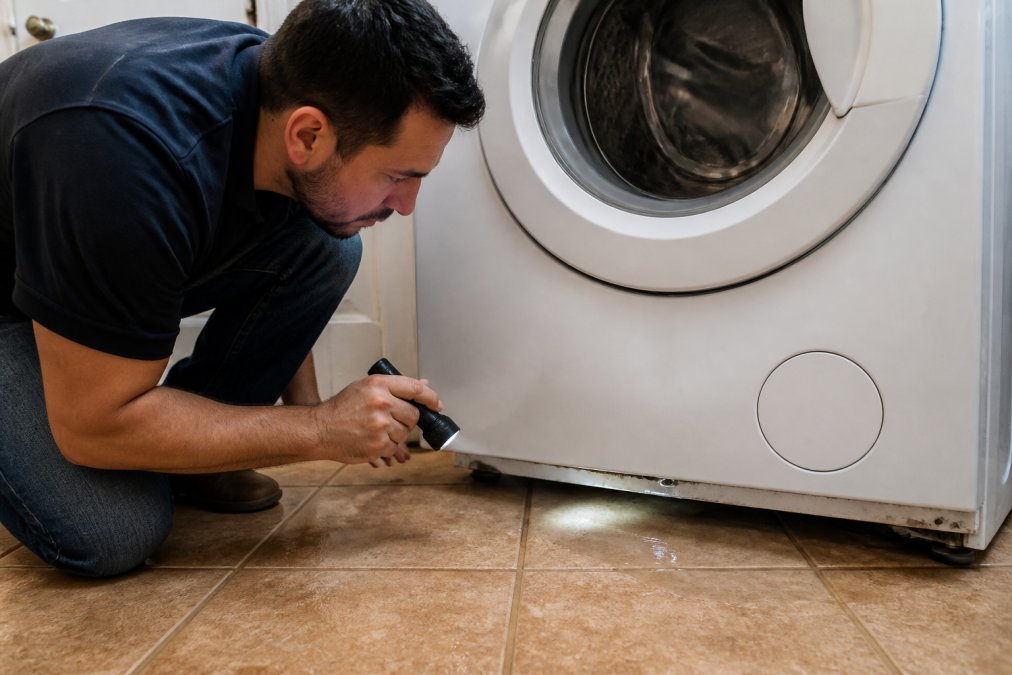
Follow these steps in order:
- Dry the floor completely. Run a short cycle and watch where water first appears.
- Check the hoses and connections. Tighten anything loose and look for cracks.
- Inspect the door boot seal. Wipe it down and check for tears.
- Clean the drain pump filter. This catches most drain-cycle leaks.
- Test the balance. Rock the machine and adjust the feet.
- Look at the tub seal. If everything above checks out, this is the likely culprit.
Check the Drain Pump Filter for Debris
The drain pump filter traps lint, coins, and small objects before they reach the pump. When it clogs, water can’t drain fast enough and backs up out the bottom.
Here’s how to clean it:
- Unplug the washer and pull it away from the wall.
- Find the filter door, usually at the bottom front corner.
- Place towels and a shallow pan underneath.
- Unscrew the filter cap slowly and let the water drain.
- Pull out debris, rinse the filter, and screw it back in.
Inspect Fill and Drain Hoses for Cracks
Fill hoses carry water into the machine. Drain hoses carry it out. Both can crack with age, and both can leak from a loose connection.
Examine Tub Seals and the Outer Tub
The tub seal sits between the inner and outer tub. It keeps water from escaping the drum assembly. When the seal wears, water drips down and out the bottom, often during the spin cycle.
Signs of a failing tub seal include:
- A leak that appears only during high-speed spin
- Rust or corrosion around the outer tub
- Water pooling directly under the center of the machine
How to Replace a Washing Machine Drain Pump
Replacing a drain pump is a mid-level repair. It’s doable for a handy homeowner, but it requires patience and the right part number for your model.
The general process looks like this:
- Unplug the machine and shut off the water.
- Drain any remaining water from the drum and filter.
- Tip the washer back or access the pump from the front panel.
- Disconnect the hoses and wire harness from the old pump.
- Remove the mounting screws and pull the pump out.
- Install the new pump and reconnect hoses and wiring.
- Run a test cycle and check for leaks.
Cost of Appliance Repair Services for Washing Machine Leaks
The cost of appliance repair services depends on the part, the model, and how deep the technician has to go. A loose hose costs far less to fix than a tub seal.
Pricing depends on several factors:
- The specific part that failed
- Whether the machine is a top-loader or front-loader
- How accessible the part is on your model
- Whether the repair is done same-day or scheduled
Preventing Washing Machine Water Damage in Your Home
Preventing washing machine water damage is cheaper than fixing it. A small drip left alone can rot flooring, warp cabinets, and grow mold.
Build a simple maintenance schedule and stick to it:
| Task | How Often | Why It Matters |
|---|---|---|
| Inspect hoses for cracks | Every 3 months | Catches leaks before they burst |
| Clean drain pump filter | Every 2-3 months | Prevents clogs and drain leaks |
| Wipe door boot seal | Monthly | Stops mold and gasket wear |
| Check machine balance | Every 6 months | Reduces vibration damage |
| Replace supply hoses | Every 3-5 years | Old rubber fails without warning |
The cheapest leak fix is the one you prevent. A quarterly hose check and a clean drain filter stop most bottom leaks before they start.
When to Call a Professional Technician
Call a professional when the leak involves the tub seal, the outer tub, or the drain pump. These repairs require pulling the machine apart, and a mistake can cause more damage than the original leak.
Reach out to a technician if:
- You’ve checked hoses, filter, and gasket and still see water
- The leak appears only during the spin cycle
- You see rust or corrosion on the outer tub
- The machine is a front-loader with a sealed drum
- Water is pooling fast and you can’t find the source
Frequently Asked Questions
Can I still use my washing machine if it’s leaking?
No. Stop using it immediately. Even a small leak can cause floor damage, mold growth, and electrical hazards. If the leak is from a loose hose clamp, you might tighten it and run a test cycle. But if water appears during the spin cycle or drain cycle, internal parts like the tub seal or drain pump may be faulty. Continuing to run the machine risks water damage and more expensive repairs.
How much does it cost to fix a washing machine leak?
The cost of appliance repair services varies based on the faulty part and your machine’s make and model. Simple fixes like tightening a hose clamp or replacing a drain hose cost less than replacing a drain pump or tub seal. For an accurate quote, schedule a diagnostic with a licensed technician who can inspect the machine and provide a clear estimate before any work begins.
Is a leaking washing machine dangerous?
Yes. Water near electrical components creates a shock hazard. Standing water can also damage flooring, subfloors, and nearby walls, leading to mold. If the leak is from a cracked outer tub or a faulty water inlet valve, the machine may release water even when not in use. Unplug the washer and shut off the water supply valves before investigating. If you smell burning or see exposed wiring, call a professional immediately.
How do I know if my washing machine pump is failing?
Signs of a failing drain pump include water pooling under the machine during the drain cycle, unusual grinding or humming noises, and standing water left in the drum after a cycle. A clogged debris filter can mimic these symptoms, so check that first. If the filter is clean and the pump still leaks or fails to drain, the pump likely needs replacement.
A leaking washer rarely fixes itself, and the damage it causes gets worse by the day. If you’ve checked the easy things and the water is still coming, it’s time to bring in help. Tampa Bay Appliance Repair LLC offers free diagnostics with any repair, licensed and insured technicians, and convenient online scheduling to get your laundry room dry again. Get started with Tampa Bay Appliance Repair LLC and book your appointment online today.