

Table of Contents
- Is Professional Dryer Vent Cleaning Worth It? The Short Answer
- Professional Dryer Vent Cleaning Cost: What You Actually Pay For
- DIY vs. Professional Dryer Vent Cleaning: Where Each One Wins
- Signs Your Dryer Vent Is Clogged (and Why It Matters for Fire Risk)
- How Often to Clean a Dryer Vent: A Home-by-Home Schedule
- Dryer Vent Cleaning vs. Air Duct Cleaning: Not the Same Service
- When Cleaning Is Not Enough: Repair and Vent Replacement
- Conclusion: Making the Call for Your Home
- Frequently Asked Questions
Last Updated: October 5, 2026
Is Professional Dryer Vent Cleaning Worth It? The Short Answer
For most households, yes: professional dryer vent cleaning is worth it when your vent run is long, your ductwork is older, or your dryer has started taking two cycles to finish a load. This guide from Tampa Bay Appliance Repair LLC breaks down the real cost factors, the break-even math, and when DIY is genuinely enough.
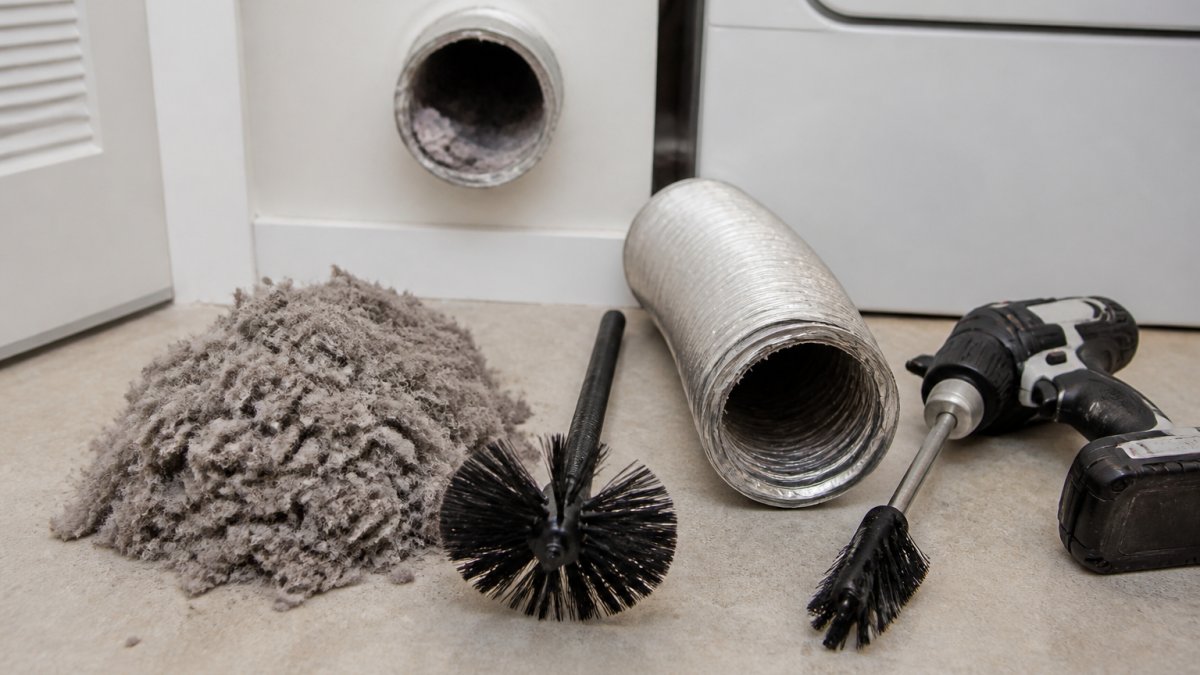
Dryer vent cleaning is the process of removing lint, dust, and debris from the exhaust duct that carries hot, moist air from your dryer to the outside of your home. It is not the same as air duct cleaning, and it is not optional maintenance.
Here is the part most articles skip: the decision is not “clean or don’t clean.” It is “clean now, clean on a schedule, or replace a vent that was never installed correctly.” Below, we walk through the numbers, the warning signs, and a home-by-home schedule so you can make the call in under ten minutes.
Professional Dryer Vent Cleaning Cost: What You Actually Pay For
Professional dryer vent cleaning cost depends on vent length, duct complexity, and how much labor the job requires. Published industry guides place typical service in a broad range. Gage Home’s guide to dryer vent cleaning costs reports a range of roughly $100 to $300, with many standard cleanings landing around $150 to $200. Oxi Fresh’s overview of professional dryer vent cleaning cites a typical range of about $140 to $250 for most homes.
Treat those as national reference points, not quotes. Your actual price depends on your home.
Typical Price Ranges and What Drives Them
- Vent length: A short, straight run behind the dryer is the cheapest job. Runs over 25 feet cost more.
- Duct complexity: Every 90-degree elbow, transition, or crushed flex section adds labor.
- Roof termination: Vents that exit through the roof take longer and often need two technicians.
- Access: A dryer packed into a closet or stacked unit slows everything down.
Ask any provider to confirm the vent termination point before they start. If a technician cannot tell you where the duct exits the house, they cannot verify the job is complete.
The Break-Even Math: When the Service Pays for Itself
The honest answer is that a specific dollar figure cannot be promised, because energy rates and dryer models vary too much. What we can give you is the framework.
Add up three numbers: your dryer’s energy use per load, how many loads you run per week, and your local electricity rate. A clogged vent forces longer cycles and sometimes a second run.
DIY vs. Professional Dryer Vent Cleaning: Where Each One Wins
DIY wins on cost and convenience for short, straight, easily reached vents. Professional cleaning wins on thoroughness, safety, and verification for anything longer or more complex. Sears Clean’s DIY versus professional comparison frames the decision around exactly those trade-offs.
What DIY Cleaning Can and Cannot Reach
A vacuum attachment and a brush kit handle the first few feet. Beyond that, most homeowners hit a wall.
- Reachable: The lint trap housing, the first section of duct behind the dryer, and the exterior flap if it is at ground level.
- Not reachable: Long horizontal runs, ducts routed through walls or ceilings, roof terminations, and any section with multiple elbows.
- Risky: Rodding a duct yourself can disconnect a joint or tear flex duct, which then leaks hot air into a wall cavity.
| Situation | Best Approach | Why |
|---|---|---|
| Vent under 10 feet, straight, ground-level exit | DIY | Simple access, low risk |
| Vent 10-25 feet with one or two elbows | Professional | Rotary equipment reaches full length |
| Vent over 25 feet or roof-terminated | Professional | Requires proper tooling and two people |
| Crushed or disconnected duct | Professional repair | Cleaning alone will not fix it |
| Repeated clogging within months | Professional inspection | Signals a design or installation problem |
Never run a dryer with a disconnected or torn duct. Hot, moist air vents directly into the wall cavity, and lint settles around the motor and wiring. That is how dryer fires start.
Signs Your Dryer Vent Is Clogged (and Why It Matters for Fire Risk)
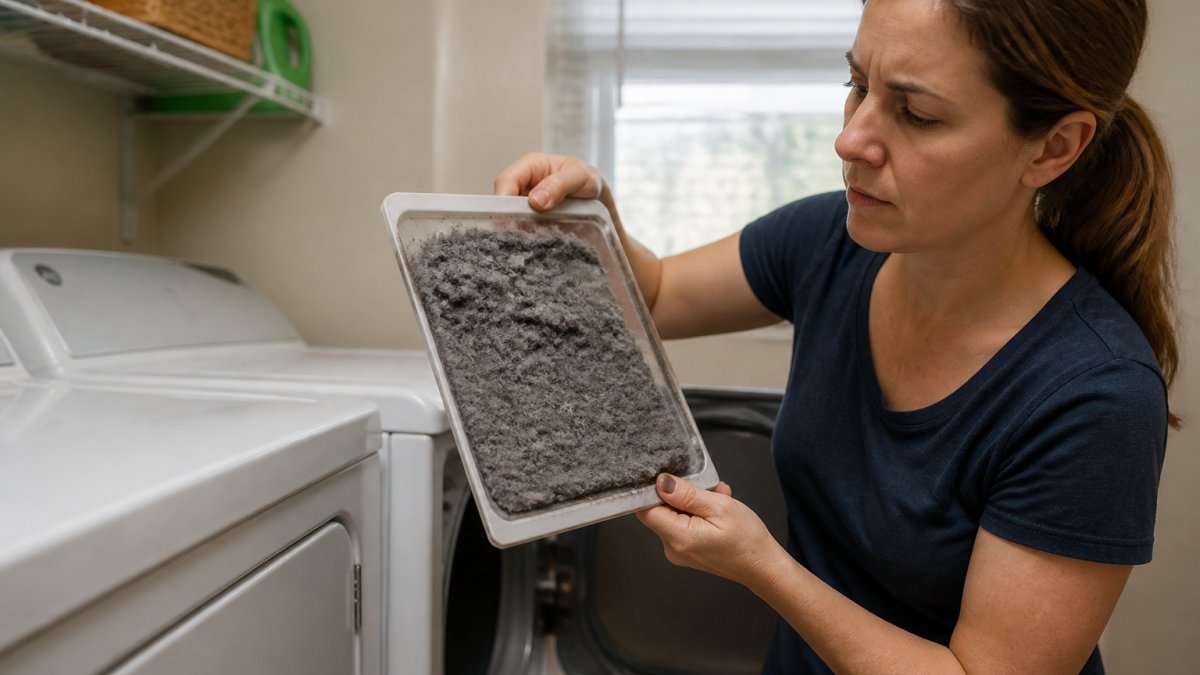
The clearest sign is a load that used to dry in one cycle now taking two. Other reliable indicators include a hot dryer cabinet, a burning smell, and excess lint around the lint trap or behind the appliance.
Watch for these:
- Long drying cycles: Clothes still damp after a full cycle.
- Overheating: The top or sides of the dryer feel unusually hot.
- Burning smell: A sharp, scorched odor during operation.
- Excess lint: Lint accumulating outside the trap or around the vent hood.
What the Fire Data Actually Shows
The U.S. Fire Administration and the National Fire Protection Association both publish annual estimates of residential dryer and washing machine fires.
Those figures are estimates, not exact counts, and they shift year to year. The point is not the precise number. The point is that this is a well-documented, recurring, and largely preventable category of home fire, and that lint accumulation is the single most frequently identified contributing factor.
How the Mechanism Works
A dryer fire needs three things: fuel, heat, and oxygen. Lint provides the fuel. The heating element or a worn motor bearing provides the heat. The duct provides airflow. When lint builds up inside the duct, three things happen at once:
- Airflow drops, so heat cannot escape the drum as quickly.
- Internal temperatures rise, pushing the thermal cutoff closer to its limit.
- Lint sits directly in the hot exhaust path, where a spark from a failing element or a metal fragment striking the blower wheel can ignite it.
The fire often starts inside the duct or at the point where the duct meets the dryer, not in the lint trap. That is why cleaning the trap every load is necessary but not sufficient.
What Cleaning Does, and Does Not, Guarantee
Professional cleaning removes accumulated lint from the exhaust path. That materially reduces fire risk by removing the most common fuel source and restoring airflow so the dryer runs cooler.
It does not eliminate fire risk. A dryer with a failing heating element, a worn drum bearing, a damaged power cord, or a crushed transition duct can still ignite lint that accumulates after the cleaning.
If your dryer has a scorched smell, trips a breaker, or the vent hood shows no airflow even after cleaning, stop using it and have the appliance inspected. Those are appliance-failure signals, not maintenance signals.
A Practical Safety Routine
- Clean the lint trap before every load.
- Check the exterior vent hood monthly for airflow and visible lint.
- Keep the area behind and under the dryer clear of stored lint and flammable items.
- Never run the dryer while you are asleep or away from home if you have any known vent restriction.
How Often to Clean a Dryer Vent: A Home-by-Home Schedule
Annual cleaning is the standard recommendation for most homes, but that interval shortens with specific conditions. Homes with long vent runs, older ductwork, or heavy use should be cleaned more often.
| Home Situation | Recommended Interval |
|---|---|
| Short vent, 1-2 person household, light use | Every 12-18 months |
| Average family, standard vent length | Every 12 months |
| Long vent run or multiple elbows | Every 6-12 months |
| Heavy use, pets, or large household | Every 6 months |
| Older ductwork or previous clogging issues | Every 6 months, with inspection |
A humid climate accelerates lint clumping inside the duct, so coastal and inland homes in this region often sit at the shorter end of these intervals. If you notice any warning sign from the previous section, clean immediately regardless of the calendar.
Dryer Vent Cleaning vs. Air Duct Cleaning: Not the Same Service
Dryer vent cleaning and air duct cleaning are two different services with different equipment, different risks, and different purposes. Mr. Duct Cleaning’s explanation of the difference makes the distinction clear: dryer vent cleaning addresses the exhaust path from one appliance, while air duct cleaning addresses the HVAC system that heats and cools the whole house.
Why it matters: some companies bundle the two, and homeowners assume one price covers both. It does not. If you call for dryer vent cleaning, confirm the quote covers the dryer exhaust duct from the appliance to the exterior termination.
A proper dryer vent cleaning ends with a check at the exterior termination point. If nobody looked outside, the job is unverified.
When Cleaning Is Not Enough: Repair and Vent Replacement
Cleaning cannot fix a duct that was installed wrong, crushed, or disconnected. In those cases, repair or full vent replacement is the correct call, and cleaning alone will just delay the same problem.
Signs you need more than a cleaning:
- Crushed or kinked flex duct: Restricted airflow that cleaning cannot restore.
- Disconnected joints: Hidden behind walls, leaking hot air and lint.
- Excessive length or too many elbows: A design problem, not a maintenance problem.
- Plastic or foil accordion duct: Many building codes now restrict these materials for dryer exhaust.
- Repeated clogging within months: Usually points to a routing or material issue.
A qualified technician should inspect the full run, not just vacuum the visible section. If replacement is needed, ask for the proposed route in writing before work begins.
This is also where our own service fits. At Tampa Bay Appliance Repair LLC, our licensed and insured technicians handle dryer diagnostics and vent issues alongside the appliance itself, and our diagnostic fee is applied toward the repair when you proceed.
Conclusion: Making the Call for Your Home
The decision comes down to three questions: how long is your vent run, how old is your ductwork, and has your drying time changed? If the answers point to a long run, older materials, or longer cycles, professional cleaning is worth it.
What cleaning cannot solve is a vent that was installed wrong or an appliance that is failing. Tampa Bay Appliance Repair LLC handles both sides of that equation: licensed and insured technicians, EPA Clean Air section 608 certification for refrigerant work, free diagnostics with repair, and convenient online scheduling.
Frequently Asked Questions
Is professional dryer vent cleaning necessary?
It depends on your vent setup. Short, straight vents with a nearby exterior wall are easier to maintain with DIY tools, but longer runs, multiple elbows, and roof-terminated vents trap lint beyond what a vacuum or brush kit can reach. The case for hiring out gets stronger when your drying times have crept up or your last cleaning was more than a year ago.
How much does professional dryer vent cleaning cost?
Factors that push the price up include vent length, the number of bends in the ductwork, roof access, and heavy lint buildup. Ask for a flat quote based on your specific vent run before booking so the final bill matches the estimate.
Can I clean my dryer vent myself?
You can handle part of it. Pull the dryer out, vacuum the lint trap housing and the first few feet of duct, and clear the exterior flapper of visible lint. What DIY kits struggle with is the middle of a long run and the inside of every elbow, which is exactly where clogs form. If your vent runs more than about 10 feet or has several turns, a technician with rotary equipment will clear what a brush kit leaves behind.
What are the signs that a dryer vent needs professional cleaning?
Watch for long drying cycles, a dryer that feels hot to the touch, a burning smell, excess lint around the lint trap or behind the dryer, and clothes that stay damp after a full cycle. A flapper on the exterior wall that no longer opens fully during operation is another clear signal. Two or more of these together usually mean the vent is obstructed and needs inspection before the next load.
What does a professional dryer vent cleaning include?
A complete service involves disconnecting the dryer, running rotary brushes or high-powered vacuums through the full duct run, clearing the exterior termination, and verifying airflow afterward. Ask the technician to show you the before-and-after airflow reading and the lint removed. If a company only vacuums at the exterior wall without accessing the duct from inside, the job is incomplete.