

Table of Contents
- Start With the Sound: What Each Noise Tells You
- Safety First: Cut the Power and Water Before You Touch Anything
- How to Clean a Dishwasher Filter (and Stop the Grinding)
- Dishwasher Grinding Noise Repair: Impeller and Spray Arm Checks
- When to Call a Dishwasher Repair Service
- Preventative Maintenance Schedule to Keep It Quiet
- Conclusion
- Frequently Asked Questions
Last Updated: September 23, 2026
Start With the Sound: What Each Noise Tells You
A dishwasher making loud noise repair starts with listening, not disassembly. The type of sound points you to the failing part before you remove a single screw. We often hear four main complaints: grinding, buzzing, whining, and rattling. Each one has a short list of likely causes.
Dishwasher grinding noise repair usually points to debris in the filter or a failing impeller. Buzzing often means the drain pump is jammed or the motor is struggling. A high-pitched whine can signal worn circulation pump bearings. Rattling is the easiest fix: a loose component, a dish, or a utensil blocking the spray arm.
Here is the quick map we use on service calls:
| Sound | Most Likely Cause | First Check |
|---|---|---|
| Grinding | Debris in filter, bad impeller | Filter assembly |
| Buzzing | Jammed drain pump, weak motor | Drain pump |
| High-pitched whine | Worn bearings | Circulation pump |
| Rattling | Loose part, blocked spray arm | Spray arm, racks |
Sound is your first diagnostic tool. Before you touch anything, run a short cycle and stand close to the unit. Note when the noise starts: during the wash cycle, the rinse cycle, or the drain cycle. That timing narrows the culprit fast.
Record a short video of the noise on your phone. Play it back near each part. Matching the pitch to the source saves time and helps a technician diagnose over the phone.
Safety First: Cut the Power and Water Before You Touch Anything
Power and water off, always. This is the step most DIY guides skip, and it is the one that causes injuries. Before you remove a panel or reach into the tub, do this:
- Unplug the dishwasher or flip the breaker at your panel
- Shut off the water supply valve under the sink
- Let the unit cool if it just ran a hot cycle
- Keep a towel and bucket nearby for residual water
- Never reach into the tub while the unit is plugged in
Water and electricity together are a serious hazard. The U.S. Consumer Product Safety Commission tracks home appliance injuries, and most are preventable with basic precautions.
Once power and water are off, you can safely inspect.
How to Clean a Dishwasher Filter (and Stop the Grinding)
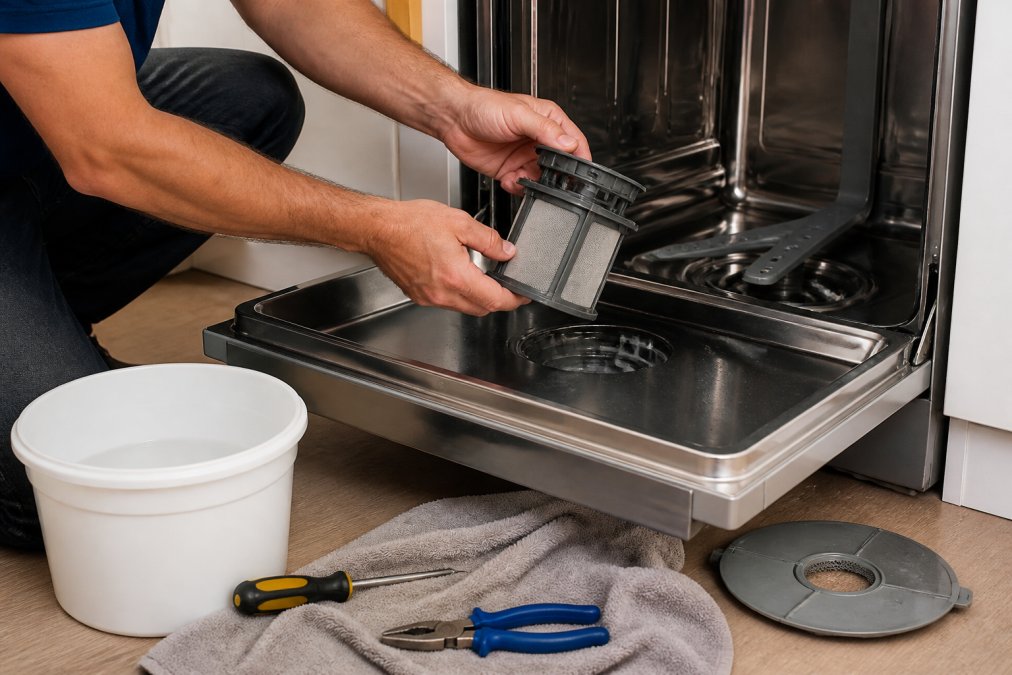
Learning how to clean dishwasher filter parts is the single best fix for grinding noise. Food debris, glass shards, and grease collect in the filter assembly. When that buildup reaches the impeller, you get a grinding sound on every wash cycle.
Step-by-Step Filter Cleaning
- Remove the lower rack so you can reach the tub floor
- Twist the filter assembly counterclockwise and lift it out
- Pull apart the coarse and fine filter sections
- Rinse both under warm running water
- Scrub away grease with a soft brush and dish soap
- Check the filter housing for debris and wipe it clean
- Reassemble and lock the filter back into place
- Run a rinse cycle and listen for the grinding to stop
Most grinding noise disappears after this. If it does not, the problem is deeper: the impeller or a pump.
Never run the dishwasher without the filter assembly installed. Loose debris will travel straight into the pump and turn a simple cleaning job into a full pump replacement.
Dishwasher Grinding Noise Repair: Impeller and Spray Arm Checks
If cleaning the filter did not fix it, inspect the impeller and spray arm. The impeller is the spinning blade inside the pump that moves water. A cracked or jammed impeller grinds against the housing. To check it, remove the filter and look into the pump intake. Spin the impeller by hand. It should turn freely with no scraping.
- Cracked impeller: replace the pump
- Blocked spray arm holes: soak in white vinegar
- Loose spray arm nut: tighten by hand
- Worn gasket or seal: replace to stop leaks and noise
Replacing Circulation Pump Bearings
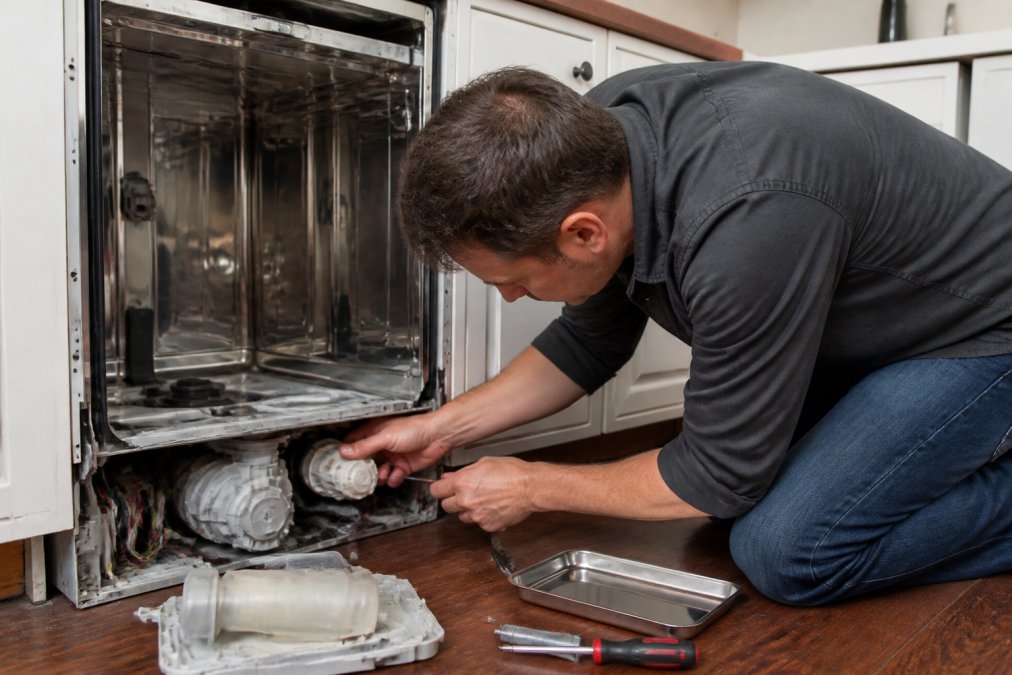
A high-pitched whine that rises and falls with the wash cycle usually means the circulation pump bearings are worn. The bearings sit inside the pump housing and support the motor shaft. Once the grease breaks down or water seeps past the shaft seal, the metal-on-metal contact produces a steady squeal that gets louder as the pump heats up.
- Kill power at the breaker and shut the water supply valve.
- Pull the unit from the cabinet and lay it on its back on a moving blanket.
- Remove the toe kick and the lower access panel.
- Disconnect the wiring harness and the hose clamps feeding the pump.
- Unbolt the pump housing from the sump and lift the assembly out.
- Transfer any reusable brackets and seals to the new pump.
- Reinstall in reverse, reconnect water and power, and run a short cycle to check for leaks.
Circulation pump replacement means working around standing water in the sump and live wiring at the junction box. If you are not comfortable with either, stop and call a technician. A miswired pump can damage the control board.
Drain Pump vs. Circulation Pump: Which One Is Failing?
The two pumps fail differently, and the sound tells you which is which.
- Drain pump: runs at the end of the cycle to empty water. A buzzing or humming that never drains points here. Usually a jammed impeller from debris.
- Circulation pump: runs during the wash and rinse cycles to spray water. A grinding or high-pitched whine during washing points here. Often worn bearings or a failing motor assembly.
Match the sound to the cycle. Mid-wash grinding means the circulation pump. End-of-cycle buzzing means the drain pump. That single clue tells a technician which part to bring.
When to Call a Dishwasher Repair Service
Call a professional when the noise continues after cleaning, when you see water leaking, or when the unit will not drain or fill. These point to pump, motor, or valve failures that need parts and testing tools.
Some jobs are not DIY-friendly:
- Replacing the circulation pump or motor assembly
- Diagnosing electrical faults in the power supply
- Replacing the water inlet valve
- Any repair that requires pulling the unit from the cabinet
Repair or Replace? A Cost-Based Decision
Most guides stop at “call a pro.” The harder question is whether the repair is worth the money at all. Use the rule of thumb appliance technicians apply: if the repair cost exceeds roughly half the price of a comparable new unit, replace it. A standard built-in dishwasher runs a few hundred dollars, so a single pump or valve repair usually stays on the repair side of that line.
Weigh these factors before you decide:
- Age of the unit. Under five years old, repair almost always wins. Past ten years, parts get scarce and the next failure is usually close behind.
- Number of failing systems. One noise source is a repair. A grinding pump plus a leaking door plus a dead heating element is a replacement.
- Parts availability. If the model is discontinued and the part is backordered, the downtime may not be worth it.
- Energy and water use. Older units use more of both. A new unit can offset part of its price through lower utility bills over its life.
Before you authorize any repair, ask for the parts cost and labor cost separately. That split lets you compare the quote against the price of a new unit and make the call on real numbers instead of a gut feeling.
Preventative Maintenance Schedule to Keep It Quiet
A little upkeep prevents most loud noise problems. Build these habits into your routine.
| Frequency | Task | Why It Matters |
|---|---|---|
| Weekly | Rinse the filter assembly | Stops debris buildup |
| Monthly | Run a vinegar rinse cycle | Removes scale and grease |
| Monthly | Wipe the door gasket | Prevents leaks and odor |
| Quarterly | Check the spray arm holes | Keeps water flow even |
| Yearly | Inspect the drain pump area | Catches wear early |
Run a hot water tap in the sink before starting the dishwasher. The unit fills with hot water from the first second, so the motor works less and the cycle runs quieter.
Conclusion
Loud dishwasher noise is a symptom, not a mystery. Match the sound to the part, cut the power and water, and clean the filter first. That solves most grinding and rattling complaints in under an hour.
Frequently Asked Questions
Is it worth repairing a noisy dishwasher?
It depends on the cause and the age of the unit. A filter clean, spray arm adjustment, or debris removal is inexpensive and often restores quiet operation. A failed circulation pump is a bigger job, so ask a technician for a real quote before deciding. If the dishwasher is over 10 years old and the repair cost approaches half the price of a new unit, replacement may make more sense than a repair.
What could be causing my dishwasher to make a loud noise?
The most common causes are debris in the filter assembly, a blocked or warped spray arm, a damaged pump impeller, worn motor bearings, or loose components rattling during the wash cycle. A grinding sound usually points to something hard near the impeller. A buzzing sound often means the drain pump or water inlet valve is struggling. A high-pitched whine can indicate failing bearings.
Can a clogged filter cause a dishwasher to make noise?
Yes. A clogged filter assembly restricts water flow, which makes the circulation pump work harder and produce a grinding or humming sound. Food particles and grease trapped in the filter can also rattle against the spray arm during the wash cycle. Cleaning the filter every one to three months is one of the simplest steps in dishwasher making loud noise repair, and it costs nothing but a few minutes.
How much does it cost to fix a noisy dishwasher?
Cost depends on the failed part and the labor required. A simple filter or spray arm fix is on the low end, while replacing a circulation pump or motor assembly is a more involved job with higher parts and labor costs. Tampa Bay Appliance Repair LLC offers free diagnostics with any repair, so you get a clear price before work begins. Book online for an appointment request, and we will respond within one business day.