
When a refrigerator compressor starts failing, the first sign is often not a dramatic breakdown. Milk is a little warmer than usual, ice cream turns soft, or the refrigerator seems to run all day without reaching the set temperature. In a Tampa Bay home, where a warm kitchen and frequent door openings can already make a refrigerator work harder, those warning signs deserve prompt attention.
The compressor is one of the most important parts of the cooling system, but it is not always the part that needs replacement. Several less expensive components can cause symptoms that look like compressor trouble. A professional diagnosis can separate a repairable electrical issue from a major sealed-system problem and help you make a fair decision before food is lost or the appliance stops cooling altogether.
What a Refrigerator Compressor Does
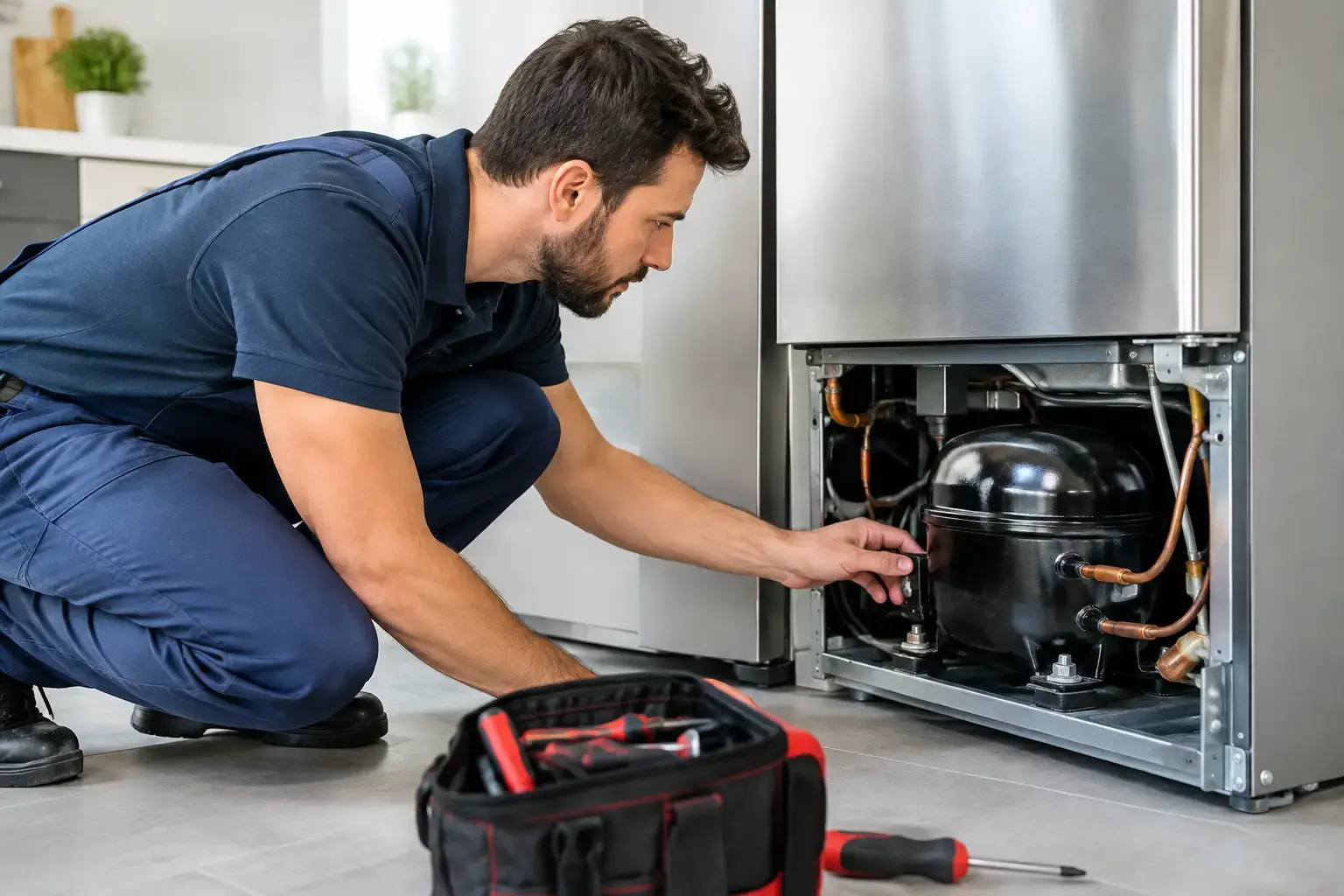
Think of the compressor as the pump that moves refrigerant through the refrigerator’s sealed cooling system. It compresses refrigerant gas, which allows heat to be carried out of the refrigerator and released through the condenser system. That process lets the refrigerator and freezer compartments stay cold.
Because it works alongside the condenser fan, evaporator fan, thermostat controls, defrost system, and electronic board, a cooling problem is not automatically a failed compressor. A dirty condenser area, a faulty start relay, a failed fan, or a control issue may produce similar symptoms. The right repair starts with testing, not guessing.
Signs Your Refrigerator Compressor May Need Attention
A compressor rarely gives homeowners a simple message that it has failed. Instead, the refrigerator may show a pattern of performance problems. If the unit is still running but food is not staying safely cold, move perishable items to another refrigerator or cooler while arranging service.
Common warning signs include:
- The refrigerator or freezer is warm even though the lights and display still work.
- The appliance runs nearly nonstop or cycles on and off repeatedly.
- You hear a click, hum, then another click as it tries to start.
- The compressor area at the back or bottom of the refrigerator feels unusually hot.
- Frost patterns inside the freezer look uneven, or only part of the evaporator coil gets cold.
- The refrigerator trips a breaker, makes a new loud buzzing sound, or has a burning electrical smell.
A steady low hum can be normal. Refrigerators are not silent, especially during hot Florida weather. What matters is a noticeable change: louder operation, repeated clicking, excessive heat, or declining cooling performance.
Why clicking does not always mean compressor failure
Repeated clicking is often associated with a compressor that cannot start, but the compressor itself may not be the root cause. The start relay and overload protector provide the initial electrical boost and protection needed for operation. If one of those parts fails, the compressor may click off before it gets going.
That distinction matters because a relay repair is very different from replacing a compressor. An experienced technician checks the electrical components, compressor windings, voltage, and cooling-system performance before recommending major work.
Problems That Can Look Like a Bad Compressor
Homeowners understandably focus on the compressor when a refrigerator is warm. It is the best-known cooling component, but it is only one possible cause.
A condenser fan that has stopped running can prevent heat from leaving the system. Dust, pet hair, and debris around the condenser can also make the refrigerator work harder and run longer. A failed evaporator fan may leave the freezer cold while the fresh-food section becomes warm. Defrost failures can cause ice buildup that blocks airflow, while a bad temperature sensor or control board may prevent the system from operating at the right time.
There can also be a sealed-system issue such as a refrigerant leak or restriction. These problems require specialized testing and proper refrigerant handling. They should not be treated as a DIY repair. Refrigerant work must be handled by a qualified technician with the appropriate EPA Section 608 certification.
Can a Refrigerator Compressor Be Repaired?
The compressor itself is a sealed mechanical and electrical component. In most household refrigerators, an internally failed compressor is replaced rather than rebuilt. However, surrounding parts that affect its operation may be repaired or replaced, including the start relay, overload protector, capacitor on applicable models, fan motor, thermostat, or control board.
Whether compressor replacement is worthwhile depends on the refrigerator’s age, overall condition, brand and model, availability of parts, and the cost of the sealed-system repair. A newer, higher-value refrigerator with a clean service history may be a good candidate for repair. An older unit with multiple problems, corrosion, door seal issues, or repeated repairs may be better replaced.
Warranty coverage can change the decision as well. Some manufacturers provide longer limited coverage on sealed-system components than on other refrigerator parts. Coverage varies by model and may have labor limitations, so it is worth locating the model number and purchase information before scheduling service.
What to Do Before Calling for Service
A few safe checks can provide useful information and sometimes solve a simple airflow problem. First, confirm the temperature settings have not been changed accidentally. The refrigerator compartment should generally be around 37 to 40 degrees Fahrenheit, and the freezer should be at 0 degrees.
Make sure vents inside the refrigerator and freezer are not blocked by containers or overpacked food. Check that the doors close fully and that the gaskets are clean and making contact. If your refrigerator has accessible condenser coils, gently remove visible dust with the power disconnected, following the appliance manufacturer’s care instructions.
Do not puncture ice, force a fan blade, bypass electrical parts, or attempt to add refrigerant. Those actions can create a bigger repair, damage the appliance, or create a safety hazard. If there is a burning smell, sparking, or a breaker that repeatedly trips, unplug the refrigerator if it is safe to do so and arrange professional service.
What a Professional Compressor Diagnosis Includes
A complete diagnosis should do more than confirm that the refrigerator is warm. The technician should inspect airflow, fans, frost patterns, electrical connections, controls, and the condition of the condenser area. They may test the start device, compressor electrical readings, and whether the cooling system is developing the proper temperature change.
For suspected sealed-system trouble, additional testing may be needed to identify a leak, restriction, or compressor failure. This is why a low upfront guess can become costly. Replacing a part without confirming the cause may not restore cooling and can waste money.
At Tampa Bay Appliance Repair, the diagnostic fee applies toward the repair, so homeowners can get a clear explanation of the problem before deciding how to proceed. A straightforward estimate should outline the recommended repair, expected parts and labor, and whether replacement is a more sensible option.
Repair or Replace: Making the Practical Call
There is no single age at which every refrigerator should be replaced. A simple electrical repair on an older unit may still make good financial sense. On the other hand, a compressor replacement can be a significant investment because it involves sealed-system work, refrigerant recovery, part replacement, and careful testing.
Consider the refrigerator’s reliability beyond the current issue. If it has cooled well, the doors seal properly, and there are no other major concerns, repair may extend its life comfortably. If it has needed frequent service, has obvious rust or cabinet damage, or needs several expensive repairs at once, replacement may provide better value.
Food loss is another factor. A refrigerator that is intermittently cooling may fail completely with little warning. If temperatures are rising, do not wait several days to see whether it improves. Quick service can sometimes prevent a minor starting or airflow issue from turning into a more stressful emergency.
Keeping the Cooling System Under Less Strain
No maintenance routine can guarantee that a compressor will never fail, but a few habits can reduce unnecessary strain. Keep airflow around the appliance clear, avoid packing interior vents tightly, and clean reachable condenser dust periodically. Replace worn door gaskets when they no longer seal well, and give the refrigerator space to release heat rather than pushing it tightly against a wall.
If your refrigerator is humming constantly, clicking repeatedly, or no longer keeping food cold, a timely diagnosis is the best next step. A clear answer from a qualified local technician is more useful than guessing at the compressor, and it gives you the information to choose the repair that makes sense for your home.