
Table of Contents
- When You Need Same-Day Washer Repair
- DIY Washing Machine Troubleshooting Tips
- Washing Machine Leaking From Bottom: Causes and Solutions
- Average Cost of Washer Repair and What Affects Pricing
- How to Schedule Same-Day Service
- Maintenance Tips to Prevent Future Breakdowns
- Frequently Asked Questions
Last Updated: October 4, 2026
When You Need Same-Day Washer Repair
A washing machine breakdown disrupts your household. Same-day washer repair gets your appliance working again before the day ends.
When you need same-day washer repair, you’re looking for a technician who can diagnose the problem quickly, explain what’s wrong, and fix it without unnecessary delays or surprise costs.
The reality is that most washer issues fall into a few predictable categories: leaks, drainage problems, spin cycle failures, or error codes that leave you guessing. Some of these you can troubleshoot yourself. Others require a licensed and insured technician to handle safely and correctly. Knowing the difference saves you time and money.
DIY Washing Machine Troubleshooting Tips
Before calling for professional help, run through basic checks that often reveal the problem or resolve it without a service call. This guide helps you determine whether you’re dealing with a quick fix or a job requiring a licensed technician.
Quick Checks Before Calling a Technician
Check if the washer is plugged in and the outlet is working. A tripped circuit breaker or loose plug accounts for many service calls. Check your home’s electrical panel for a tripped breaker and reset it by switching it fully off, then back on.
Check that both hot and cold water valves behind the machine are fully on. Look for kinks in inlet hoses, which restrict water flow and trigger error codes. Straighten any kinked hose and run a test cycle.
Inspect the drain hose for clogs. If water backs up into the tub or leaks from the drain area, disconnect the hose and blow through it or run water backward to clear lint, detergent buildup, or debris. Reconnect and test.
Check the drum for foreign objects like coins, bobby pins, or underwire that can jam the pump or prevent spinning. For top-load machines, remove the agitator and check underneath. For front-load machines, check the rubber gasket around the door. Remove anything found and run a test cycle.
For top-load washers, inspect the agitator for cracks or looseness. For front-load washers, check if the drum rotates freely by hand with the door open and machine unplugged.
Common Error Codes and What They Mean
Error codes are diagnostic messages that pinpoint the issue so you know whether it’s a quick fix or a job for a technician.
Drainage and water-level codes (“E2,” “dE,” “FE,” or “OE”) indicate a problem with water entering or leaving the tub. Check hose connections and drain blockage first. If clear and connected, the sensor or valve likely needs professional diagnosis.
Motor and spin codes (“E3,” “SE,” or “UE”) indicate the drum isn’t spinning or is spinning unevenly. Check for jammed objects first. If the drum is clear and moves freely, this requires professional repair.
Door lock codes (“dL” or “LE”) mean the door won’t lock or unlock. Try opening and closing the door firmly several times. If the code persists, the latch mechanism or electronic lock needs replacement.
A code appearing once may be a temporary glitch. If it repeats, unplug the machine for 5 minutes to reset it. If the code returns after a test cycle, it’s time to call for same-day washer repair service.
The DIY vs. Professional Repair Decision Tree
Use this framework to decide whether to troubleshoot further or call a technician:
If the problem is: Water not entering the tub → Check: Inlet valves turned on? Hoses kinked? Water supply to your home working? → DIY fixable: Yes, if it’s a kinked hose or closed valve. Call a pro if: Valves are on, hoses are straight, and water still won’t enter.
If the problem is: Water not draining → Check: Drain hose clogged? Drain hose kinked or disconnected? → DIY fixable: Yes, if you can clear the clog or reconnect the hose. Call a pro if: Hose is clear and connected but water still won’t drain.
If the problem is: Drum not spinning → Check: Foreign objects jamming the drum? Drive belt visibly broken? → DIY fixable: Yes, if you remove a jammed object. Call a pro if: Drum is clear but won’t spin, or you see a broken belt.
If the problem is: Leaking from the bottom → Check: Drain hose connections loose? Pump visibly cracked? → DIY fixable: Maybe, if you can tighten a hose clamp. Call a pro if: Connections are tight but water still leaks, or the pump is cracked.
If the problem is: Error code on display → Check: Is it a one-time code or repeating? Can you identify the code type (drainage, motor, door, temperature)? → DIY fixable: Yes, if it’s a one-time code; reset the machine. Call a pro if: Code repeats after reset, or it indicates motor, door, or sensor failure.
If the problem is: Unusual noise (grinding, squealing, thumping) → Check: Foreign object in drum? Drum bearing worn? → DIY fixable: Yes, if you find and remove a jammed object. Call a pro if: Drum is clear but noise continues; this usually indicates bearing or belt wear.
If none of your checks reveal the problem or resolve it, or if the issue falls into the “call a pro” category, it’s time to schedule same-day washer repair service. A licensed technician has diagnostic tools and experience to identify problems you can’t see and repair them safely.
Washing Machine Leaking From Bottom: Causes and Solutions
A washer leaking from the bottom is a common repair issue that requires professional attention to prevent water damage to floors or substructure.
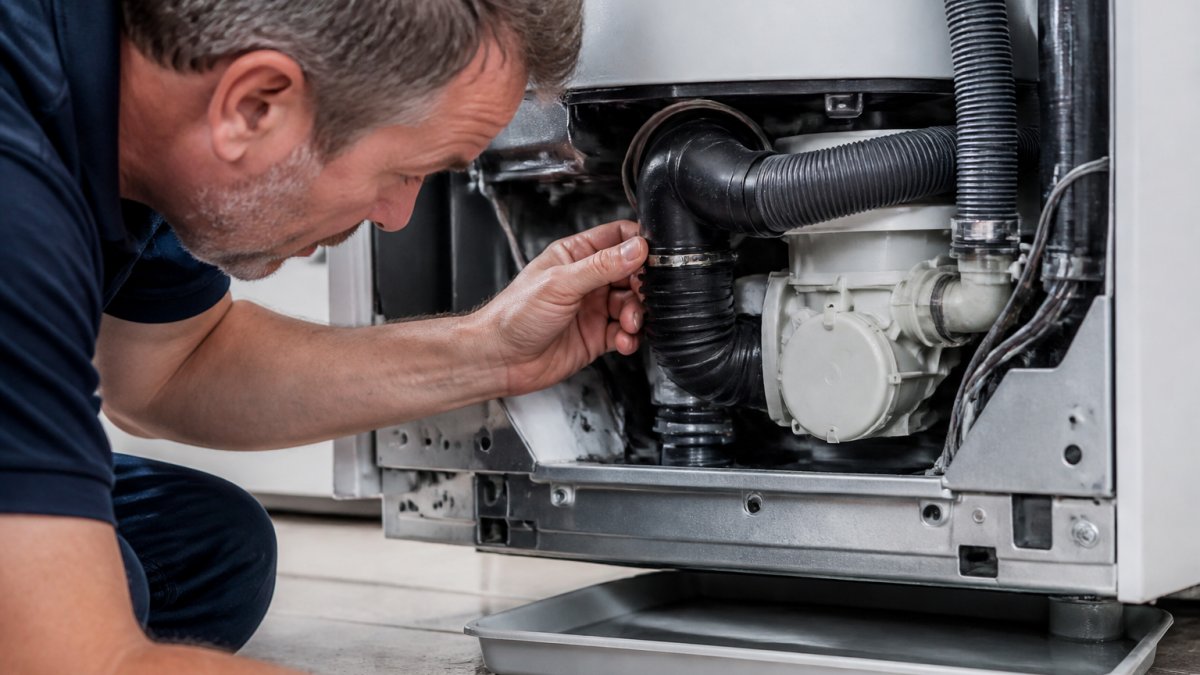
The drain pump handles water exiting during spin and drain cycles. When it fails, cracks, or clogs, water leaks from underneath. Pump seals also wear out over time, allowing water to seep past.
Drain hose connection points are another frequent leak source. Check these connections first, they’re often visible underneath. A loose clamp can sometimes be tightened by hand, but a cracked hose needs replacement.
The tub can develop cracks or pinholes, especially in older machines or those with hard water mineral buildup. A technician can identify tub damage during diagnostic inspection.
Door seals on front-load washers wear out and allow water to escape. If water leaks from around the door, the rubber gasket likely needs replacement.
Same-day washer repair for leaks prevents secondary damage like mold growth, rot in wooden subfloors, or electrical hazards if water reaches outlets or wiring. Don’t wait on this one.
Average Cost of Washer Repair and What Affects Pricing
Understanding typical repair costs helps you budget for same-day washer repair and recognize when a quote is reasonable.
Typical Repair Cost Ranges by Issue Type
Diagnostic fees are typically credited toward repair cost if you proceed.
What Drives Price Variation
Your machine’s brand affects parts cost. Premium brands sometimes cost more than budget brands. Older machines may require harder-to-source parts, increasing cost or delaying repair.
Machine design determines labor time. Top-load washers are often faster to repair than front-load models. Technicians experienced with your brand and model work more efficiently.
Problem severity influences cost. Simple adjustments may cost only the diagnostic fee. Repairs requiring multiple parts or extensive disassembly cost more.
How to Get an Accurate Quote
When you call for same-day washer repair, provide your machine’s brand, model number, and age. Describe the exact problem, not draining, leaking, grinding noise, or error codes. Specificity helps technicians estimate repair cost accurately.
Ask whether the diagnostic fee is credited toward repair cost. Reputable companies credit it.
Confirm whether the quote includes parts and labor. Ask about warranty on parts and labor.
Get the quote in writing before work begins.
How to Schedule Same-Day Service
When you call or book online, have your machine’s brand, model number, and age ready. Describe the problem, leaking, noise, not draining, not spinning, or error codes. Specificity helps technicians prepare.
Ask about same-day availability. Morning appointments often have better availability. If same-day isn’t possible, ask when the next appointment is available.
Confirm the repair company serves your location. Tampa Bay Appliance Repair LLC responds to appointment requests within one business day.
Ask about the diagnostic fee. It should be credited toward repair cost if you proceed. Know this upfront to avoid surprises.
Clear the area around the washer for easy access. Secure pets in another room. Have water shut-off valves accessible.
Book online when possible for convenience. Many repair companies now offer scheduling through their websites, which is faster than phone calls and creates a confirmation record.
Maintenance Tips to Prevent Future Breakdowns
Regular maintenance extends your washer’s lifespan and reduces the frequency of repairs. Small preventative steps now save you from emergency same-day washer repair calls later.
Clean the detergent dispenser regularly. Detergent and fabric softener buildup restricts water flow and can trigger error codes. Remove the dispenser drawer (most pull straight out) and rinse it thoroughly under running water. Use an old toothbrush to scrub away hardened residue.
Run a cleaning cycle monthly (Consumer information on clothes washers and odor, mold and mildew). Many modern washers have a dedicated cleaning or maintenance cycle. If yours does, run it without clothes once a month to flush out detergent residue, lint, and mineral deposits. For machines without a cleaning cycle, run a hot water cycle with two cups of white vinegar or a commercial washer cleaner.
Leave the door open between cycles. Moisture trapped inside the drum promotes mold and mildew growth, especially in front-load machines. Leaving the door or lid open for a few hours after each load allows the interior to dry completely. This simple habit prevents odors and extends the life of seals and gaskets.
Check inlet hoses annually. Look for cracks, bulges, or discoloration in the rubber hoses that supply water to the machine. Hoses typically last 5-10 years before they become brittle and prone to failure. Replace them proactively rather than waiting for a burst that floods your laundry room.
Clean the drain filter if your machine has one. Front-load and some top-load washers have a small filter designed to catch lint and debris before they reach the pump. Check your manual for the filter location. Most are accessible from the front or bottom of the machine and can be rinsed clean under running water.
Don’t overload the machine. Cramming too many clothes into one load forces the motor to work harder and prevents proper rinsing and spinning. Follow the manufacturer’s capacity guidelines. Smaller loads run more efficiently and put less stress on internal components.
Use the correct detergent type and amount. High-efficiency machines require HE detergent, which produces fewer suds. Using regular detergent in an HE machine leaves residue that clogs the pump and drain. Use the recommended amount, more detergent doesn’t clean better and leaves buildup that triggers problems.
A broken washer disrupts your routine and leaves you scrambling for solutions. Same-day washer repair gets your machine working again quickly, but the best approach is preventing problems before they start. Basic troubleshooting can resolve some issues yourself, while others require professional diagnosis and repair.
Tampa Bay Appliance Repair LLC specializes in same-day washer repair with licensed and insured technicians who diagnose problems accurately and explain your options clearly. Free diagnostics mean you understand the cost before work begins. When your washer needs attention, book online or contact us for prompt, reliable repair that fits your schedule and budget.
Frequently Asked Questions
What is the average cost to repair a washing machine?
The cost of washer repair depends on the specific issue, the brand, and which parts need replacement. Diagnostic fees are typically applied toward the final repair cost if you proceed. Contact a licensed technician for an upfront quote based on your washing machine’s symptoms.
Can I fix a leaking washing machine myself?
Some leaks have simple fixes: check that inlet hoses are connected securely, ensure the drain hose isn’t kinked, and verify the detergent dispenser isn’t clogged. However, if water leaks from the bottom during the spin cycle, the issue likely involves the drain pump or tub seal, parts that require professional repair tools and expertise to replace safely without causing additional damage.
How long does same-day washer repair usually take?
Same-day service means a technician can visit within 24 hours to diagnose the problem. The actual repair time depends on the issue. Licensed and insured technicians provide time estimates before beginning work.
What are the most common signs a washing machine needs professional repair?
Watch for water leaking from the bottom, failure to drain or spin, unusual noises during the cycle, error codes on the display, and clothes remaining soaking wet after the cycle ends. These symptoms often point to issues with the drain pump, drive belt, agitator, or control board, all requiring professional appliance diagnostics and repair.