
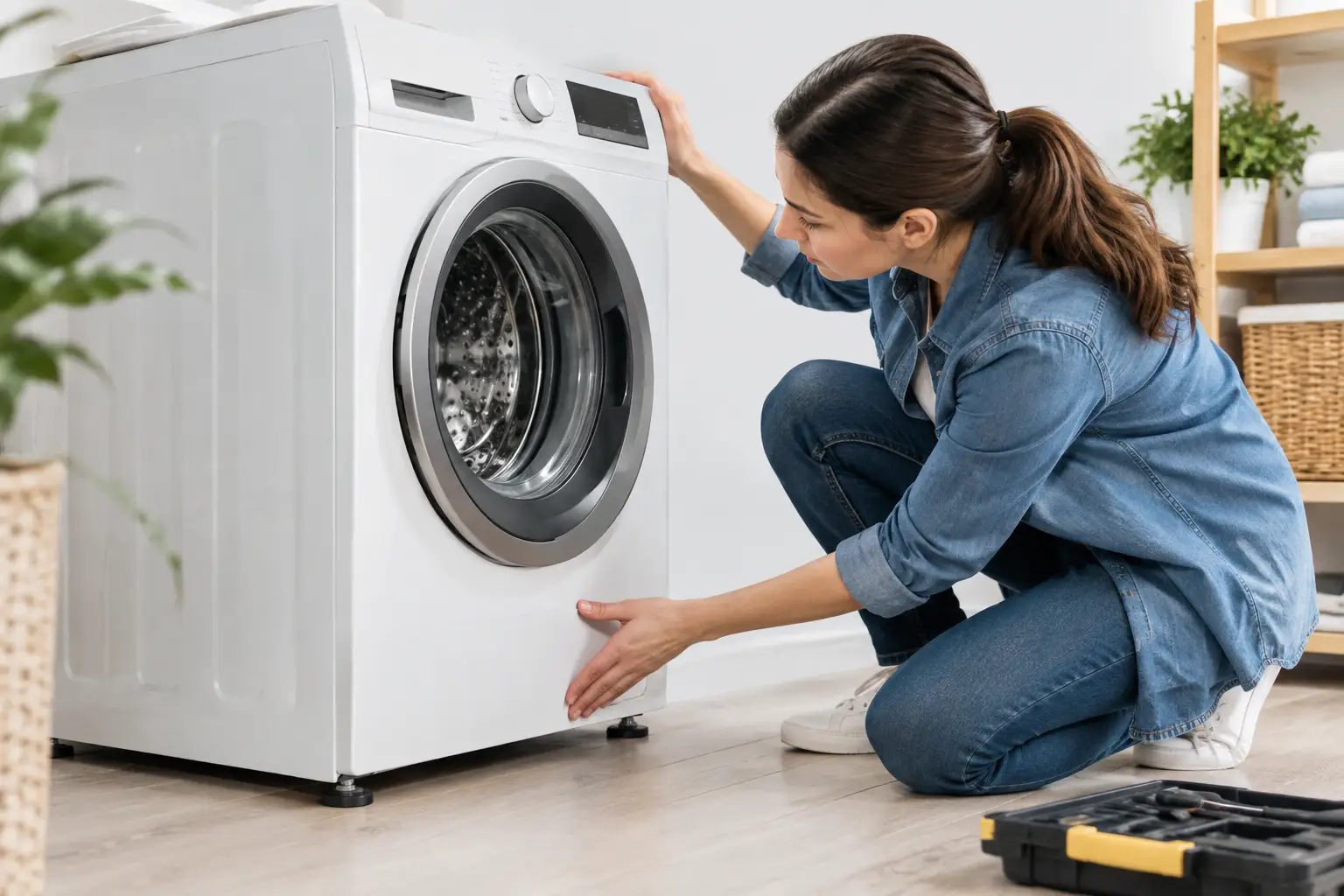

When a washer starts shaking hard enough to rattle the laundry room door or creep across the floor during spin, it is more than an annoyance. Washer vibration causes can be as simple as an off-balance towel load, but repeated or violent shaking can also point to a leveling problem or a worn internal part. Knowing the difference can protect your flooring, your appliance, and your peace of mind.
A little movement and normal spinning noise are expected, especially during a high-speed spin cycle. What is not normal is a machine that bangs, hops, leaks, stops mid-cycle, or needs to be pushed back into place after every wash. Start with the easy checks, then know when it is time for a professional diagnostic.
Common Washer Vibration Causes
An uneven or overloaded laundry load
An uneven load is one of the most common reasons a washer suddenly thumps or shakes. Heavy items such as bath towels, blankets, jeans, and comforters can gather on one side of the drum. When the washer reaches high-speed spin, that concentrated weight pulls the drum out of balance.
Pause the cycle if your washer allows it, open the lid or door after the drum stops, and redistribute the items evenly. For a bulky item, adding one or two similar towels can sometimes help balance the load. Avoid packing the drum tightly, but do not wash a single heavy item by itself unless the manufacturer specifically recommends it.
Front-load washers can be especially sensitive to uneven loads because they spin at very high speeds. Top-load models can also shake when large items wrap around the agitator or settle to one side of the basket.
The washer is not level
A washer needs all four feet to sit firmly on the floor. If one foot is slightly raised, the cabinet can rock as the drum spins. Over time, normal floor movement, a washer being bumped, or an improper installation can leave the machine unlevel.
With the washer empty and turned off, gently press each top corner. If it rocks, the leveling feet need adjustment. Most washers have adjustable front feet and locking nuts. A basic level placed across the top of the machine can help, but the important test is whether the washer sits solidly without rocking.
In many Tampa Bay homes, laundry areas may have tile, concrete, or floors that are not perfectly even. That does not automatically mean the washer cannot be stabilized. It does mean the feet must be adjusted carefully rather than relying on cardboard, wood scraps, or loose shims. Those temporary fixes can slide, collect moisture, and make vibration worse.
The floor is flexing beneath the washer
Sometimes the washer is level, but the floor is the issue. A second-floor laundry area, older subfloor, raised platform, or weak pedestal can amplify normal spin vibration. You may notice that the machine seems stable during washing but becomes loud only in the final spin cycle.
A firm, flat surface is best. Anti-vibration pads may reduce minor noise and help protect certain floor types, but they will not correct a badly unbalanced washer or failing suspension components. If the floor visibly moves or the appliance shifts despite being level, it is worth having both the washer setup and the flooring situation evaluated.
Shipping bolts were left in place
This cause applies mainly to a newly installed front-load washer. Shipping bolts secure the drum during delivery so it is not damaged in transit. They must be removed before the washer is operated.
A washer run with shipping bolts installed can shake aggressively, make harsh banging sounds, and potentially suffer damage. If the vibration began immediately after installation, check the installation instructions or contact the installer. Do not keep running the machine in hopes that it will settle down.
Internal Washer Vibration Causes That Need Attention
If the load is balanced, the washer is level, and the problem continues, the source may be inside the appliance. These repairs are usually not good do-it-yourself projects because accessing the tub, suspension, and drive components involves heavy parts, electrical connections, and precise reassembly.
Worn suspension rods, springs, or shock absorbers
Washers use suspension components to keep the tub stable while it moves. Many top-load machines use suspension rods or springs. Many front-load models use shock absorbers. As these parts wear, the tub can bounce too freely and strike the cabinet during spin.
A common clue is a washer that has gradually become louder over months rather than suddenly shaking after one unusual load. You may also hear repeated banging even with a small, evenly distributed load. Replacing worn suspension parts can restore a stable spin, but the correct parts and repair method depend on the make and model.
A damaged tub bearing or drive system
A failing tub bearing can create a low rumbling, roaring, or grinding sound that gets louder as the spin speed increases. In more advanced cases, the inner basket may have noticeable play or wobble. This is a more significant repair because the bearing is tied to the rotating tub assembly.
Other drive-related problems, such as a worn belt, loose pulley, damaged motor coupling, or failing rotor components, can also cause vibration. The symptoms can overlap, which is why a diagnosis matters. Replacing a part without confirming the failure can turn an affordable repair into unnecessary expense.
Loose counterweights or cabinet components
Front-load washers often use heavy counterweights to control drum movement. If a mounting point loosens or a component cracks, the washer may bang sharply during spin. Loose panels, brackets, hoses, or internal hardware can create rattling that sounds like a major failure even when the drum itself is stable.
Because counterweights are heavy and mounted near moving parts, this is not a repair to postpone. Stop using the washer if you hear loud metal-on-metal impacts, smell burning, see water leaking, or notice the machine moving several inches across the floor.
What You Can Safely Check Before Scheduling Service
Before calling for repair, run through a few simple checks. First, make sure the washer is not overloaded and redistribute the load. Next, confirm that the appliance does not rock when empty. Then inspect the floor around it for water, loose mats, or anything trapped under a foot.
Also look behind the washer for pinched drain hoses, loose water lines, or anything rubbing against the cabinet. Do not remove major panels, reach under the washer while it is plugged in, or try to hold the machine in place during a spin cycle. A shaking washer can shift unexpectedly and cause injury.
If the issue happens only with comforters or bulky loads, changing how those items are washed may solve the problem. If it happens with ordinary loads every time, or the shaking is getting worse, service is the practical next step.
When Washer Vibration Means You Should Stop Using It
Stop the washer and arrange a diagnostic if it walks across the room, repeatedly trips a breaker, leaks water, makes grinding or scraping noises, or has a burning smell. Continuing to run it can damage hoses, flooring, nearby walls, and the washer itself.
A trained technician can determine whether the repair is a straightforward leveling adjustment, a suspension issue, or a more involved tub or drive problem. Tampa Bay Appliance Repair provides in-home washer diagnostics with straightforward explanations, so you can decide on a repair with a clear understanding of the cost and condition of your appliance.
A washer should make laundry easier, not leave you listening for the next violent spin cycle. Addressing unusual vibration early often gives you more repair options and helps keep a manageable problem from becoming a bigger household disruption.