
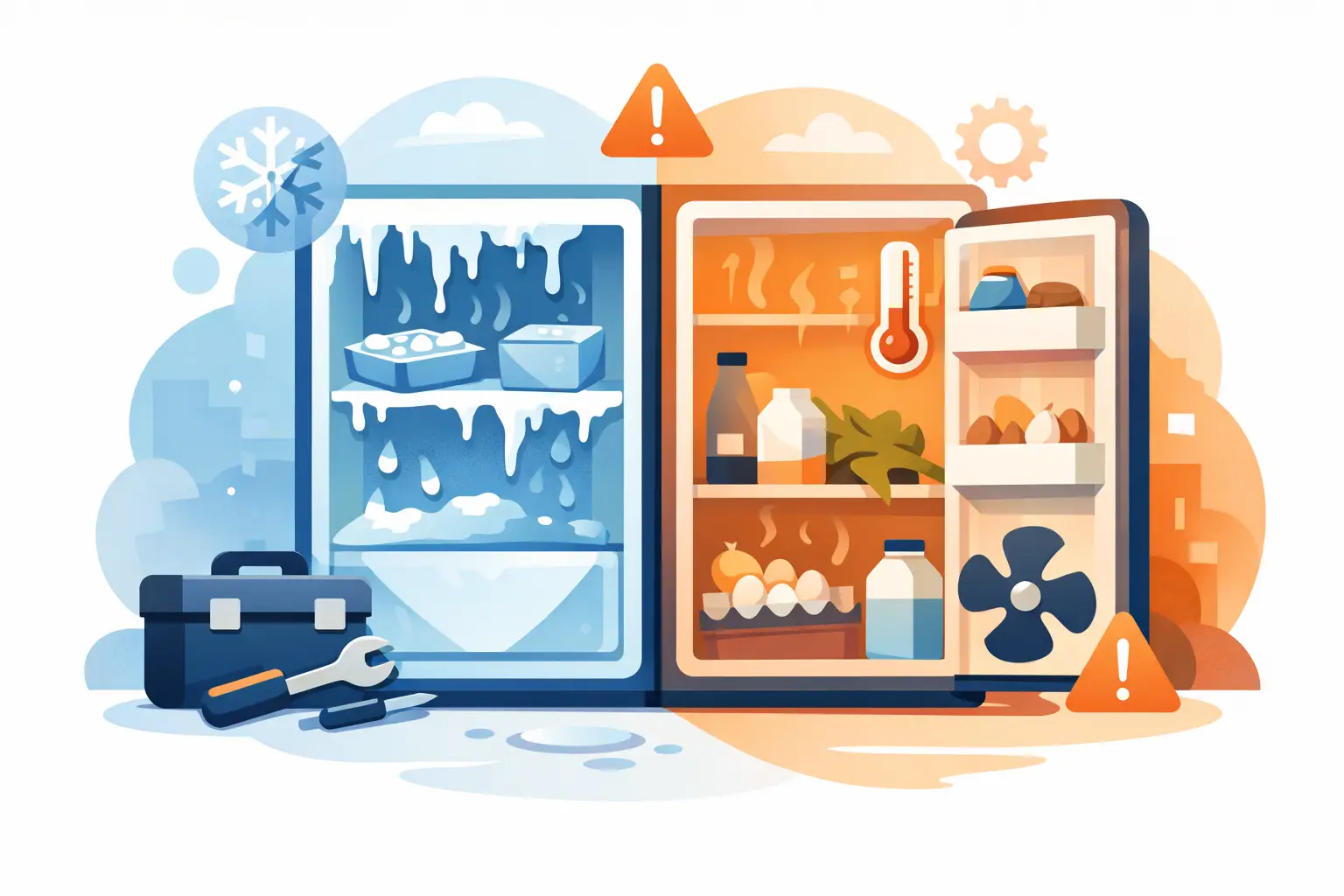

You usually notice it all at once – the milk feels warm, the ice cream turns soft, and suddenly you are wondering what would cause a refrigerator and freezer to stop getting cold at the same time. That kind of failure can feel urgent because it is. Food starts going bad fast in Florida heat, and what looks like a major breakdown is sometimes a simple fix, but not always.
If both sections have stopped cooling, the problem is often tied to power, airflow, the defrost system, the compressor, or sealed system components. A refrigerator and freezer work together, so when one core part stops doing its job, both compartments can lose temperature. The key is knowing which signs point to something minor and which ones mean it is time to schedule a professional diagnosis.
What would cause a refrigerator and freezer to stop getting cold at the same time?
When both compartments are warm, start by thinking bigger than just the freezer or just the fresh food section. Most refrigerators cool the freezer first, then move cold air into the refrigerator side. If that airflow is blocked or the cooling system itself is failing, neither side will stay cold enough.
A total cooling loss can happen because the unit is not getting proper power, the thermostat or control board is not sending the right signals, the evaporator fan is not moving cold air, the condenser is clogged or overheating, or the compressor is struggling to run. In some cases, the refrigerator may sound like it is working even though it is not actually cooling.
That is why symptoms matter. A fridge that is completely silent points you in one direction. A fridge that clicks, hums, or runs nonstop points you in another.
Start with the simple causes first
Before assuming the worst, check the basics. It sounds obvious, but refrigerators do get unplugged slightly, especially after cleaning, moving, or storing groceries. A loose plug, a tripped breaker, or a dead outlet can shut the whole appliance down.
Next, look at the temperature settings. Controls can get bumped without anyone noticing. If the refrigerator is set too warm or switched into a demo or vacation mode on some models, it may appear to have failed when the issue is really a control setting.
Door sealing matters too. If the doors are not closing tightly because of worn gaskets, overloaded shelves, or items sticking out, warm air keeps entering the unit. That usually causes gradual cooling problems rather than an instant total shutdown, but it can still push both compartments out of safe range.
Airflow problems are one of the most common reasons
Refrigerators depend on steady airflow. Cold air is created around the evaporator coils in the freezer and then pushed through the appliance by fans. If the vents are blocked by food containers, frost buildup, or a failed fan motor, the temperature starts rising.
A failed evaporator fan motor
The evaporator fan pulls air across cold coils and circulates it through the freezer and refrigerator. If that fan stops, the freezer may get a little cold near the back while the refrigerator side turns warm first. Soon after, both sections can struggle.
You may notice the compressor running but little to no air movement inside. Some homeowners describe it as the fridge sounding alive but not doing its job.
Blocked air vents
Overpacking the freezer can block vents and reduce circulation. This is more common than people think, especially after a big grocery trip or holiday prep. If air cannot move freely, temperatures become uneven and cooling drops off.
This is one of the few causes you can sometimes correct on your own by reorganizing the contents and allowing space around vents and the back wall.
Frost buildup can choke the cooling system
If your refrigerator has a defrost problem, ice can build up around the evaporator coils until air can no longer pass through. That leaves the appliance running longer and cooling less.
What the defrost system does
Most modern refrigerators automatically melt frost off the evaporator coils at set intervals. If the defrost heater, defrost thermostat, or control board fails, frost keeps building instead of clearing away.
At first, the freezer may still seem somewhat cold. Then airflow drops, the refrigerator side warms up, and eventually both sections stop performing the way they should. If you see heavy frost on the back freezer panel, that is a strong clue.
A temporary unplug-and-thaw may buy time, but it does not solve the failed part behind the ice buildup. If the defrost system is the issue, the problem usually comes back.
Dirty condenser coils can cause overheating
Condenser coils release heat from the refrigerator. When they are covered in dust, pet hair, or debris, the appliance has a harder time getting rid of that heat. That strain can reduce cooling and overwork the compressor.
In some homes, especially with pets or a garage location, dirty coils build up fast. The refrigerator may run constantly, feel hot underneath or near the back, and still fail to keep food cold.
Cleaning the coils can help if buildup is the main problem. But if the compressor has already been stressed for too long, cleaning alone may not fully restore normal cooling.
Compressor and start device failures are more serious
The compressor is the heart of the cooling system. It compresses refrigerant and keeps the cooling cycle moving. If it fails, both the refrigerator and freezer will stop getting cold.
Bad start relay or capacitor
Sometimes the compressor itself is still good, but the start relay or capacitor has failed. In that case, the compressor may click, try to start, and shut off again. Homeowners often hear repeated clicking from the back of the fridge.
This can look like a dead refrigerator even though the lights are on and some fans may still work. The distinction matters because a bad start device is generally less expensive than a failed compressor.
Failed compressor
A failed compressor is a bigger repair decision. It depends on the refrigerator’s age, brand, condition, and warranty coverage. For some units, repair makes sense. For others, replacement may be the more practical move.
That is where an honest diagnosis matters. You do not want to replace a refrigerator over a relay, and you do not want to keep pouring money into a unit with a failing sealed system.
Refrigerant leaks and sealed system issues
If refrigerant is leaking or there is a restriction in the sealed system, the refrigerator cannot cool properly. These problems often develop gradually but can reach a point where both compartments become warm.
Signs can include weak cooling, a compressor that runs nonstop, partial frost patterns on the evaporator, or no meaningful cooling at all. These repairs require specialized tools and EPA-certified refrigerant handling. They are not DIY territory.
For homeowners, the main takeaway is simple: if the easy checks are not revealing anything and the unit still is not cooling, sealed system trouble is a real possibility.
Control board and thermostat issues can mimic bigger failures
Modern refrigerators rely on electronic control boards, sensors, and thermostats to coordinate cooling cycles, fans, and defrost functions. When one of these components fails, the refrigerator may stop cooling even though the major mechanical parts are still intact.
This is one reason guessing can get expensive. A control issue can look like a compressor problem from the outside. Proper testing is what separates a precise repair from replacing parts that were never bad.
When you should call for refrigerator repair
If the fridge has been warm for more than a few hours, food safety becomes part of the problem. Perishable food in the refrigerator can spoil quickly, and a soft freezer means items may no longer be safe to refreeze depending on how long they have been thawing.
Call for service if the unit has power but is not cooling, if you hear clicking or buzzing from the back, if there is heavy frost inside the freezer, or if the appliance is running nonstop without getting cold. Those signs usually mean the issue goes beyond a setting change or blocked shelf.
For households in Tampa Bay, speed matters. A fair, in-home diagnosis can tell you whether the problem is a fan motor, defrost failure, control issue, compressor start problem, or something more serious in the sealed system. Tampa Bay Appliance Repair handles all major brands and models, and that kind of clear answer helps you decide whether to repair now or start planning for replacement.
A quick word on repair versus replacement
Not every warm refrigerator is headed for the curb. Many no-cooling calls come down to repairable issues like failed fans, relays, thermostats, or defrost parts. On the other hand, older units with compressor or sealed system problems can be a tougher value decision.
It depends on the refrigerator’s age, the repair cost, and the overall condition of the appliance. A good technician should walk you through that plainly, without pushing you one way or the other.
When both your refrigerator and freezer stop getting cold, the most helpful next step is not guessing – it is getting a real diagnosis before you lose more food or spend money in the wrong direction.